Toddler waking up at night: the common causes and what to do
Brief wakings, bad dreams, night terrors, a stuffy nose. How to work out what is behind the 2 a.m. call, and how to respond so everyone gets back to sleep.

In this guide
The short answer
A toddler waking up at night is usually waking briefly between sleep cycles and needing help to resettle, often in the same way they fell asleep at bedtime. Nightmares (later in the night, your child is awake and wants comfort) and night terrors (earlier in the night, your child seems awake but is not) are other common causes, along with illness and big changes. Respond calmly and briefly, keep the lights low, and comfort without waking a child in a night terror. Talk to your pediatrician about loud snoring or pauses in breathing.
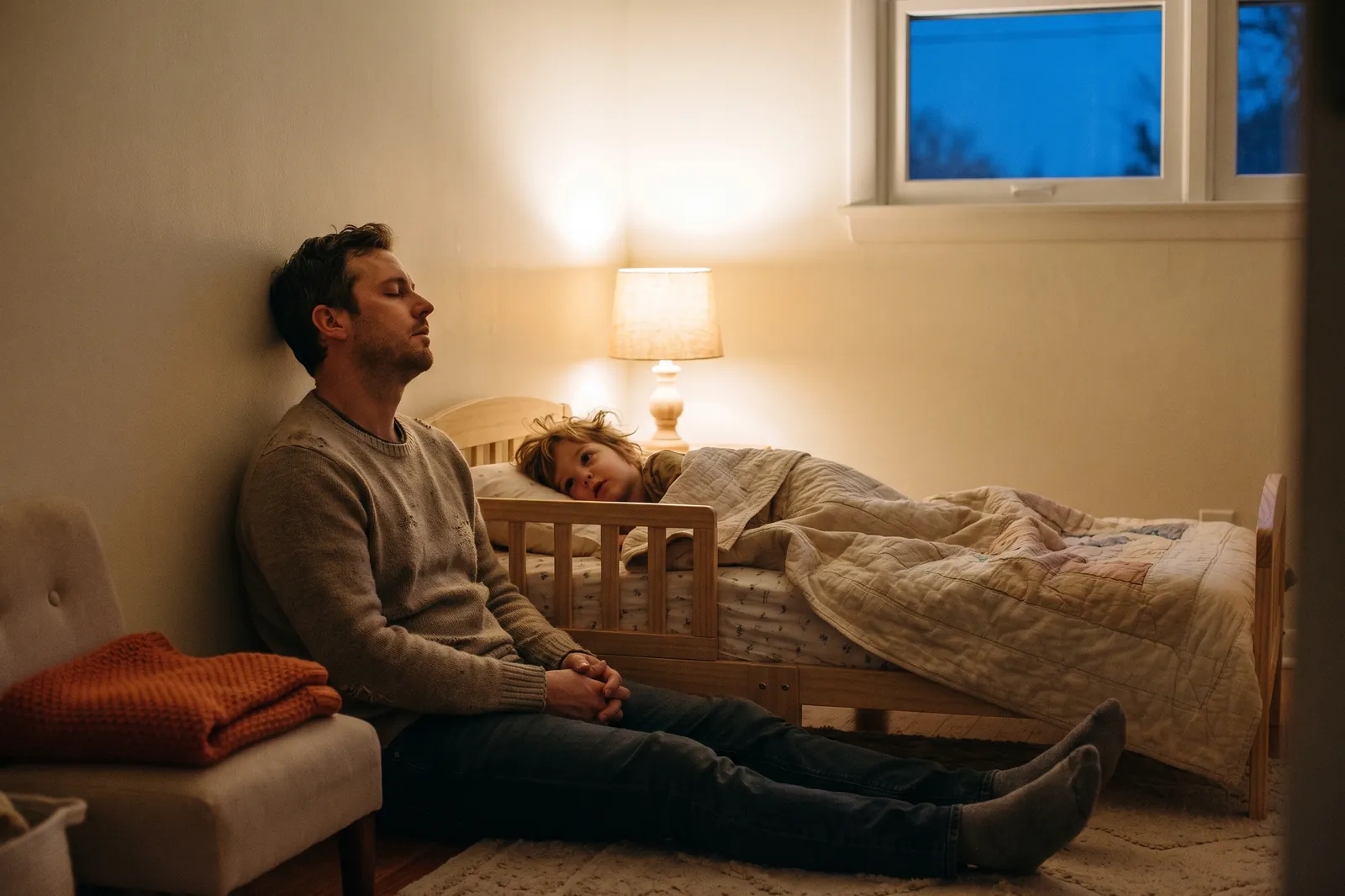
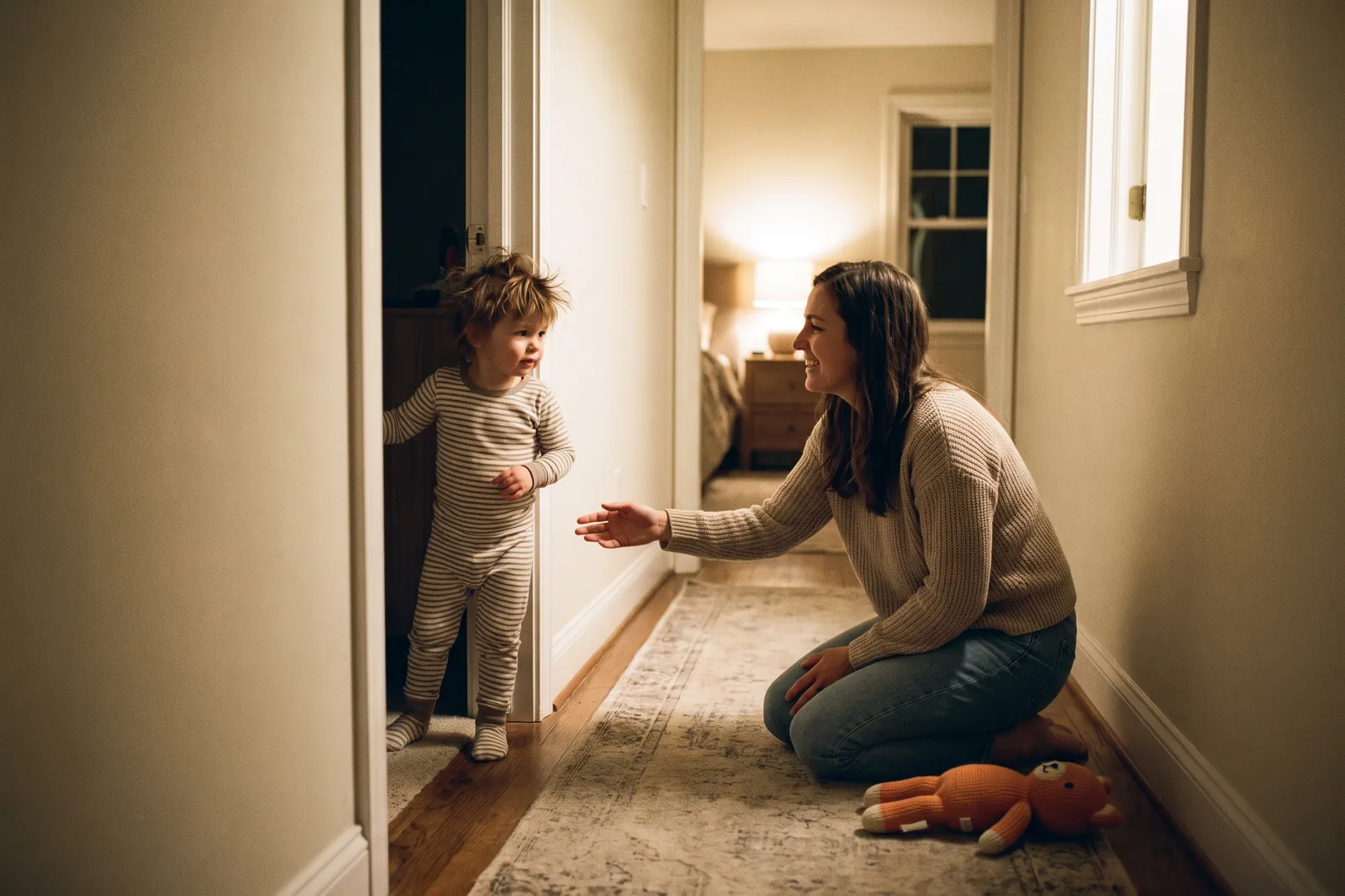
The cry comes at 2:13 a.m., again. Your toddler went down fine, and now they are wide awake, or crying, or standing at the bedroom door. A toddler waking up at night is one of the most common reasons parents of young children lose sleep, and there is rarely a single cause. The good news is that most of the causes are normal, and each has a response that helps.
The common causes of a toddler waking up at night
Normal wakings they cannot settle from yet
Everyone surfaces briefly during the night between cycles of sleep. Adults roll over and drift off without remembering. Toddlers often need to learn that skill. The American Academy of Pediatrics notes that children need the time and opportunity to find out how to go back to sleep on their own when they wake during the night. If your child falls asleep at bedtime with you lying beside them, a bottle or a song, they may look for the same help at 2 a.m.
Nightmares
Nightmares are scary dreams. According to HealthyChildren.org, they tend to happen in the second half of the night, when dreaming is most intense, and they are most common between ages 3 and 12, though they can start much younger. A child who has had a nightmare is truly awake, upset, wants you, and may remember the dream.
Night terrors
Night terrors look frightening, but they are harder on parents than on children. They happen during the deepest stage of sleep, usually early in the night, often before parents’ own bedtime. Your child may scream, thrash, sweat or stare with a glassy look, and may not recognize you. They are not actually awake, and most fall right back to sleep. MedlinePlus, from the National Library of Medicine, notes that night terrors most often affect children between 3 and 7.
Feeling sick or uncomfortable
A cold, an earache, teething, a wet diaper or a room that is too warm can all wake a toddler. HealthyChildren.org recommends a room temperature between 68°F and 72°F for infants and children. If night waking starts suddenly along with other signs of illness, that is usually the explanation, and it often passes when they are well.
Changes and separation
A new sibling, a move, a new bed, starting child care, or a parent traveling can all show up as night waking. Separation anxiety, which HealthyChildren.org describes from the second half of the first year to around the second birthday, can make waking alone in the dark feel bigger. Extra connection during the day, and a calm, predictable response at night, usually helps it pass.
Why does my toddler wake up crying?
Crying is how a toddler says “something is wrong and I need you,” which can mean any of the causes above. A quick way to sort them out:
- Early in the night, inconsolable, does not seem to see you, falls back asleep and remembers nothing in the morning: likely a night terror.
- Later in the night, awake, scared, calms down when you hold them: likely a nightmare.
- Fussy, pulling at ears, stuffy, warm or unusually clingy: possibly illness. Check in with your pediatrician if you are unsure.
- Calls out every night around the same time and settles quickly once you appear: likely a normal waking plus a learned need for help to resettle.
What to do when your toddler wakes up at night
- Go calmly, keep it dim. Low light, quiet voice, few words. Night visits should be the most boring part of the day.
- Check for safety and comfort first. Is anything hurting, wet, too hot or too cold? Fix it.
- For a nightmare, comfort. HealthyChildren.org advises going to your child quickly and reassuring them that you are there and will not let anything harm them. Leaving a light on and helping them back to sleep once calm are both fine. Talk about the dream in the morning if they want to.
- For a night terror, do not wake them. HealthyChildren.org’s advice is to stay calm, make sure your child cannot hurt themselves, and wait. Your child will probably relax and sleep quietly again. Let babysitters know what a night terror looks like, too.
- For a routine waking, settle and go. A pat, a few words (“It’s still sleep time. I love you.”), and out again. Use the same response every time so your toddler knows exactly what to expect.
Toddler waking up at night and not going back to sleep
Long, wide-awake stretches in the middle of the night are exhausting, and they usually have a fixable cause during the day.
- Match bedtime to 2 a.m. Whatever helps your child fall asleep at bedtime is what they will ask for in the night. If you would like them to resettle alone, practice falling asleep with a little less help at bedtime first.
- Look at the total sleep. The American Academy of Sleep Medicine recommends 11 to 14 hours per 24 hours (including naps) for ages 1 to 2, and 10 to 13 hours for ages 3 to 5. If daytime naps plus night sleep already add up, a very long nap may be borrowing from the night.
- Keep the night uneventful. Snacks, screens, play or a move to the couch can turn a short waking into a long one, and into a habit.
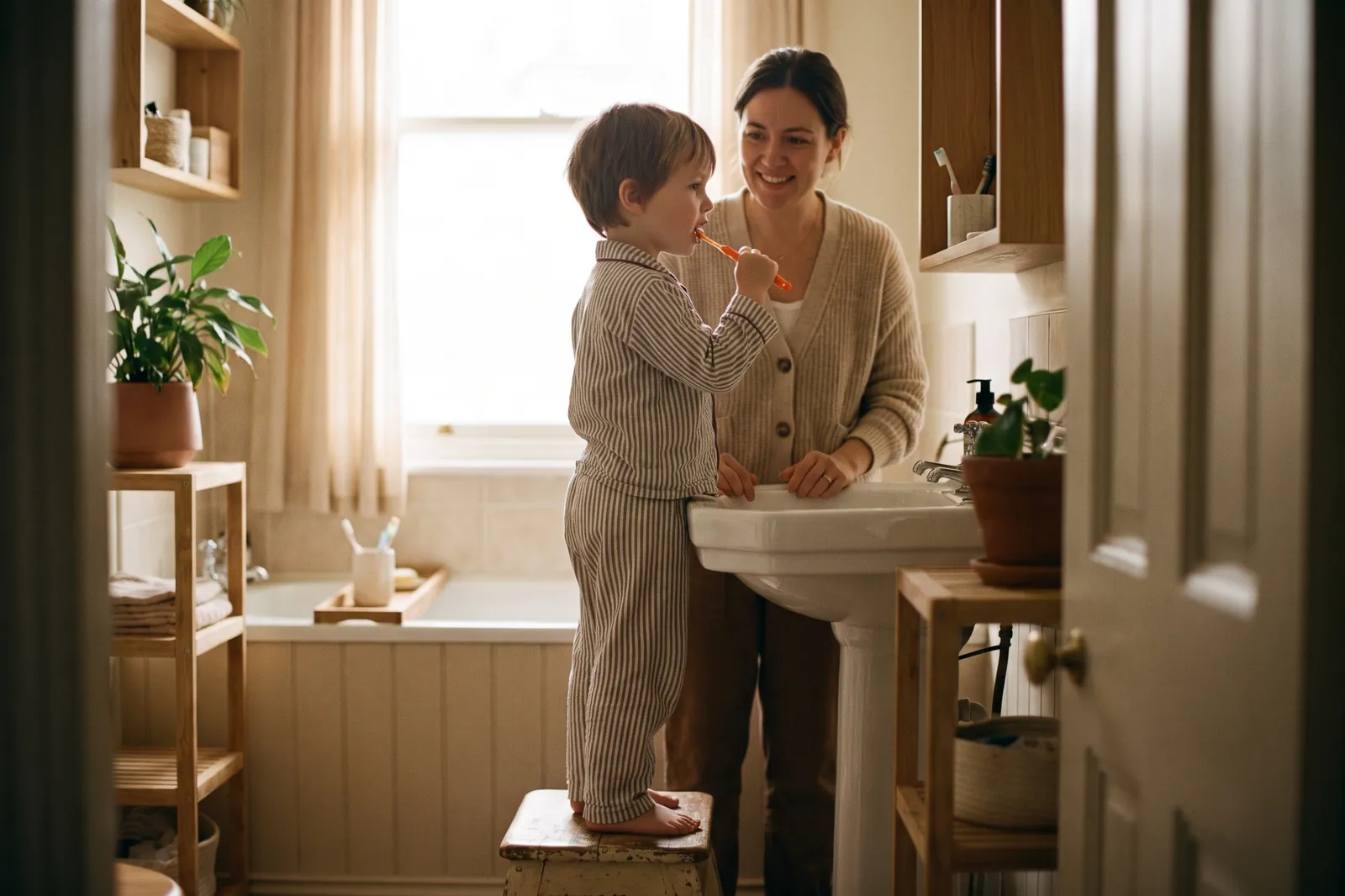
- Keep the routine steady. A short, calm, same-every-night bedtime routine makes the whole night more predictable.
If the bigger battle is getting your toddler to sleep in the first place, see toddler won’t sleep. If they keep coming out of the room, try our calm plan for the toddler who won’t stay in bed.
When to talk to your pediatrician
Most night waking in toddlers is a normal phase. Talk with your pediatrician if:
- your child snores loudly, or you notice breathing that starts and stops during sleep. The National Heart, Lung, and Blood Institute lists these among the signs of sleep apnea in children;
- night terrors keep happening, are frequent, or your child could get hurt during them;
- the waking comes with fever, ear pain or other signs of illness;
- poor sleep is affecting your child’s mood or behavior during the day, or you are running on empty.
Night waking is hard because it happens when you have the least left to give. It does pass. Until it does, take turns with a partner if you can, and go to bed early yourself on the nights you can manage it.
Questions parents ask
Why does my toddler wake up screaming and not recognize me?
That is typical of a night terror. It happens in deep sleep, usually early in the night, and your child is not actually awake. Do not try to wake them: stay calm, keep them safe and wait. Most children fall back asleep and remember nothing in the morning.
Is it normal for a 2 year old to wake up at night?
Yes. Brief wakings between sleep cycles are normal at every age, and many toddlers are still learning to settle themselves. Illness, teething, changes at home and separation anxiety can all make wakings more frequent for a while.
How do I get my toddler to go back to sleep at night?
Keep visits calm, dim and short, check that nothing is wrong, then use the same few words and leave. Whatever helps your child fall asleep at bedtime is what they will look for at night, so practicing falling asleep with less help at bedtime often reduces night wakings too.
When should I worry about my toddler waking up at night?
Talk to your pediatrician if your child snores loudly or seems to stop breathing in sleep, if night terrors keep happening, if wakings come with fever or pain, or if poor sleep is affecting their daytime mood and behavior.
Sources
- Toddler Won't Go to Sleep? 7 Tips to Help End Bedtime Battles American Academy of Pediatrics, HealthyChildren.org
- Nightmares and Night Terrors in Preschoolers American Academy of Pediatrics, HealthyChildren.org
- Night terrors MedlinePlus Medical Encyclopedia, National Library of Medicine
- Healthy Sleep Habits: How Many Hours Does Your Child Need? American Academy of Pediatrics, HealthyChildren.org
- Recommended Amount of Sleep for Pediatric Populations: A Consensus Statement of the American Academy of Sleep Medicine (2016), Paruthi S. et al., Journal of Clinical Sleep Medicine American Academy of Sleep Medicine, via PubMed Central (National Library of Medicine)
- Sleep Apnea: Symptoms National Heart, Lung, and Blood Institute, National Institutes of Health
- Separation Anxiety & Sleeping Trouble in Young Children American Academy of Pediatrics, HealthyChildren.org
Links checked on October 12, 2026. Guidance changes; the publishers above keep the current version.
Written by the WonderLab Journal editorial desk and checked against the sources above. Found something out of date? Tell us through the corrections page.