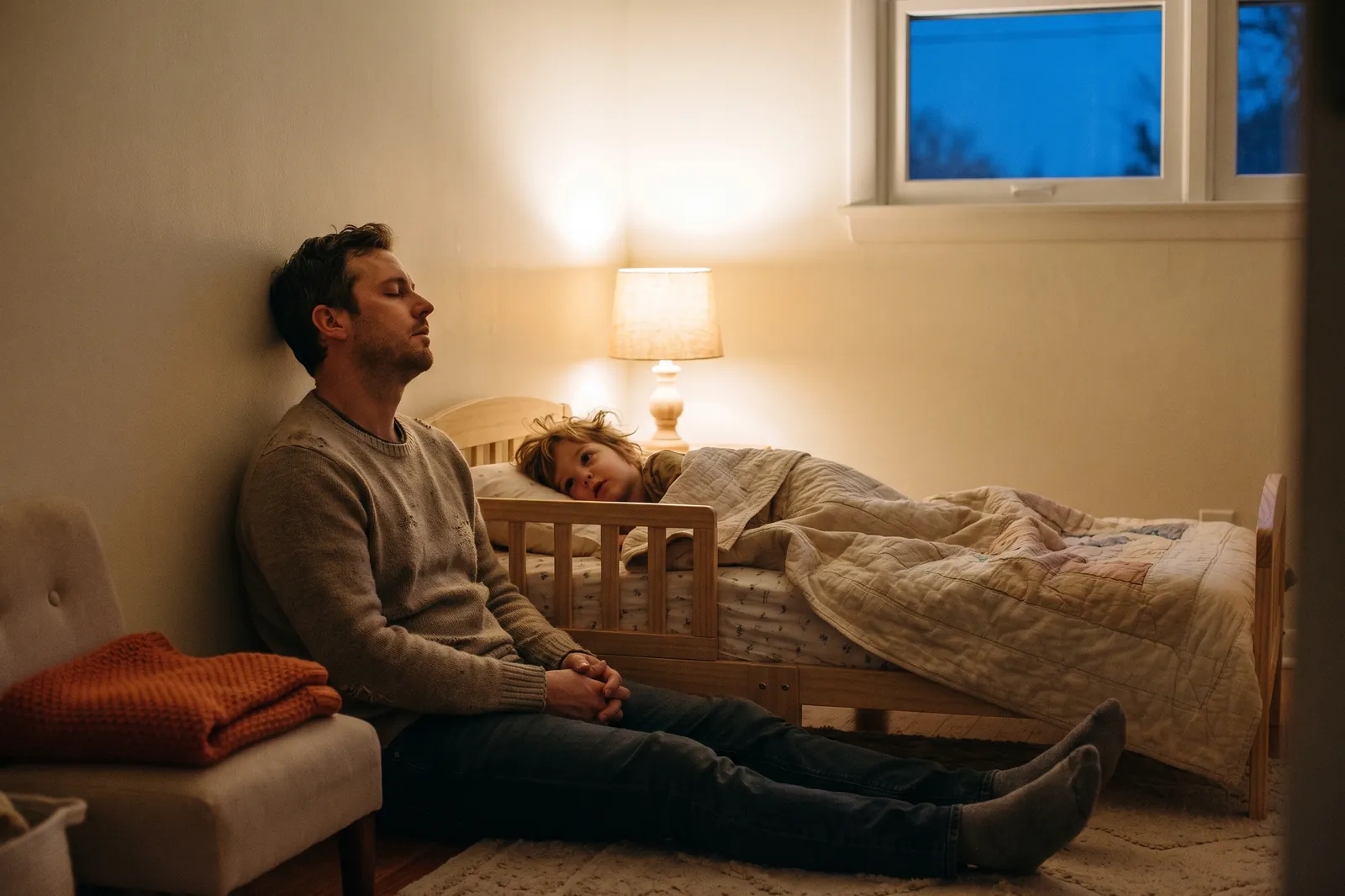
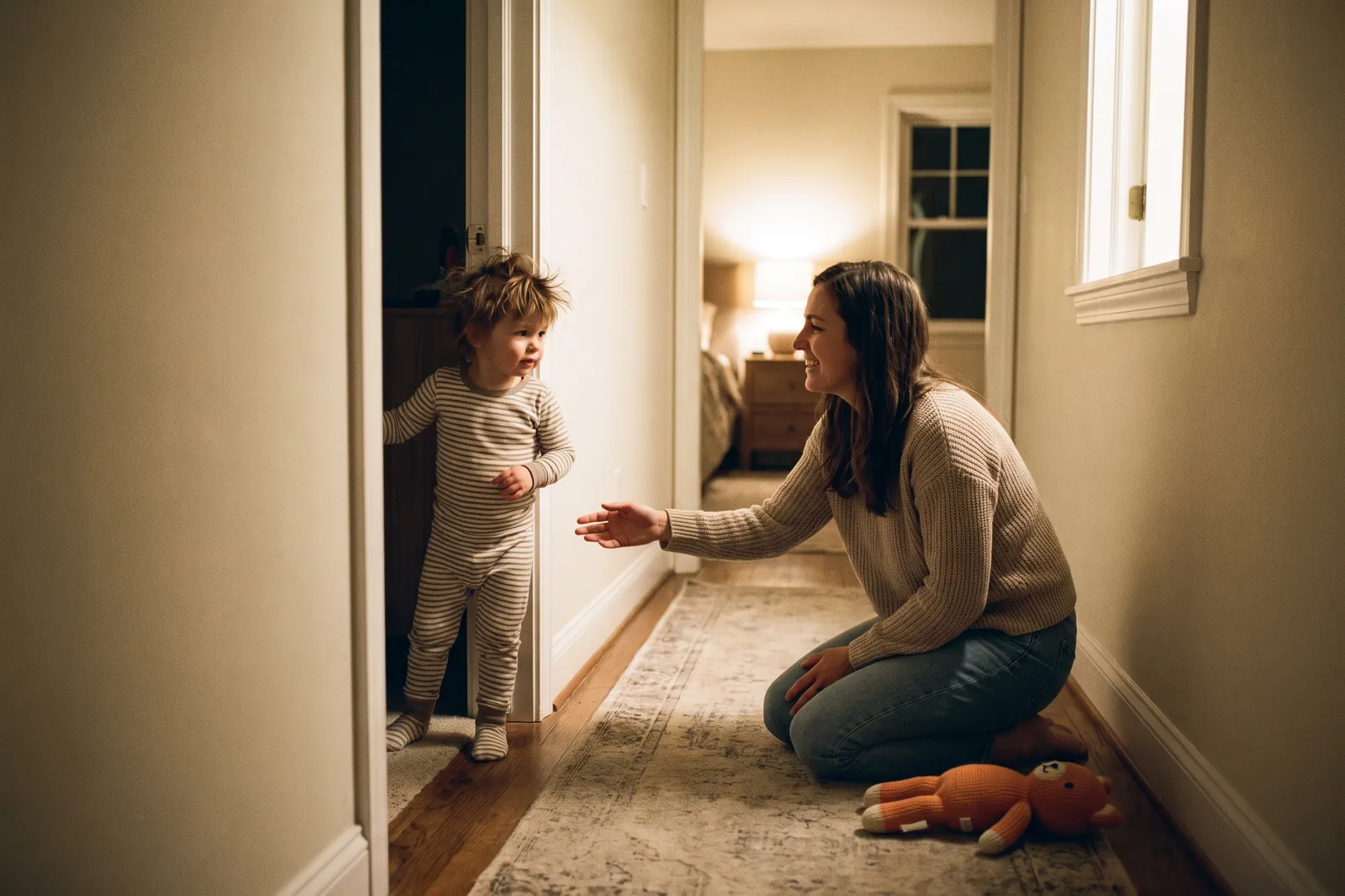
A bedtime routine for kids that ends with a book, not a fight
Same steps, same order, about half an hour, and a book at the end. How to build a night routine your child can follow almost on autopilot.
In this guide
The short answer
A good bedtime routine for kids is short, calm and the same every night. Turn screens off about an hour before bed, then follow the same few steps in the same order: bath or wash, pajamas, brush teeth, potty and a drink, then a book in bed and lights out at a regular time. The American Academy of Pediatrics sums it up as “brush, book, bed,” and its guidance for school-age kids suggests keeping the routine to no more than about 30 minutes.
Bedtime goes better when nobody has to decide anything. A bedtime routine for kids does exactly that: it turns the last half hour of the day into a familiar path your child can walk without negotiating every step. The American Academy of Pediatrics explains why it works: a predictable routine helps children understand and expect what comes next, and it may ease the stress some families feel at bedtime.
You do not need a perfect plan. You need a short one you can repeat on a tired Tuesday. Here is a simple version that ends where every good night should: with a book.
Why a bedtime routine for kids works
- It cues the body. The same steps in the same order signal that sleep is coming.
- It cuts the arguments. “What’s next?” has an answer that is not you. It is the routine.
- It is the first fix doctors suggest. In its advice on melatonin, the AAP notes that many children’s sleep troubles can be solved with good bedtime routines, and that melatonin should never be a substitute for one.
A simple bedtime routine, step by step
Count back from the time you want your child asleep. The American Academy of Sleep Medicine recommends 10 to 13 hours per 24 hours (including naps) for ages 3 to 5, and 9 to 12 hours for ages 6 to 12, so a child who wakes at 7 a.m. usually needs a bedtime somewhere in the evening that allows for that.
- About an hour before: screens off. HealthyChildren.org advises turning off all screens at least 60 minutes before bedtime to prevent sleep disruption. A calm activity can fill the gap: drawing, a puzzle, play-dough, a walk.
- Quick tidy-up. The AAP suggests a short tidy as part of the routine: books and toys back on the shelf, clothes in the hamper. It also marks the end of play.
- Bath or wash. Not every night needs a bath. A warm washcloth and clean pajamas can do the same job.
- Pajamas. Let them pick between two pairs. Small choices inside the routine help with the big one they do not get to make.
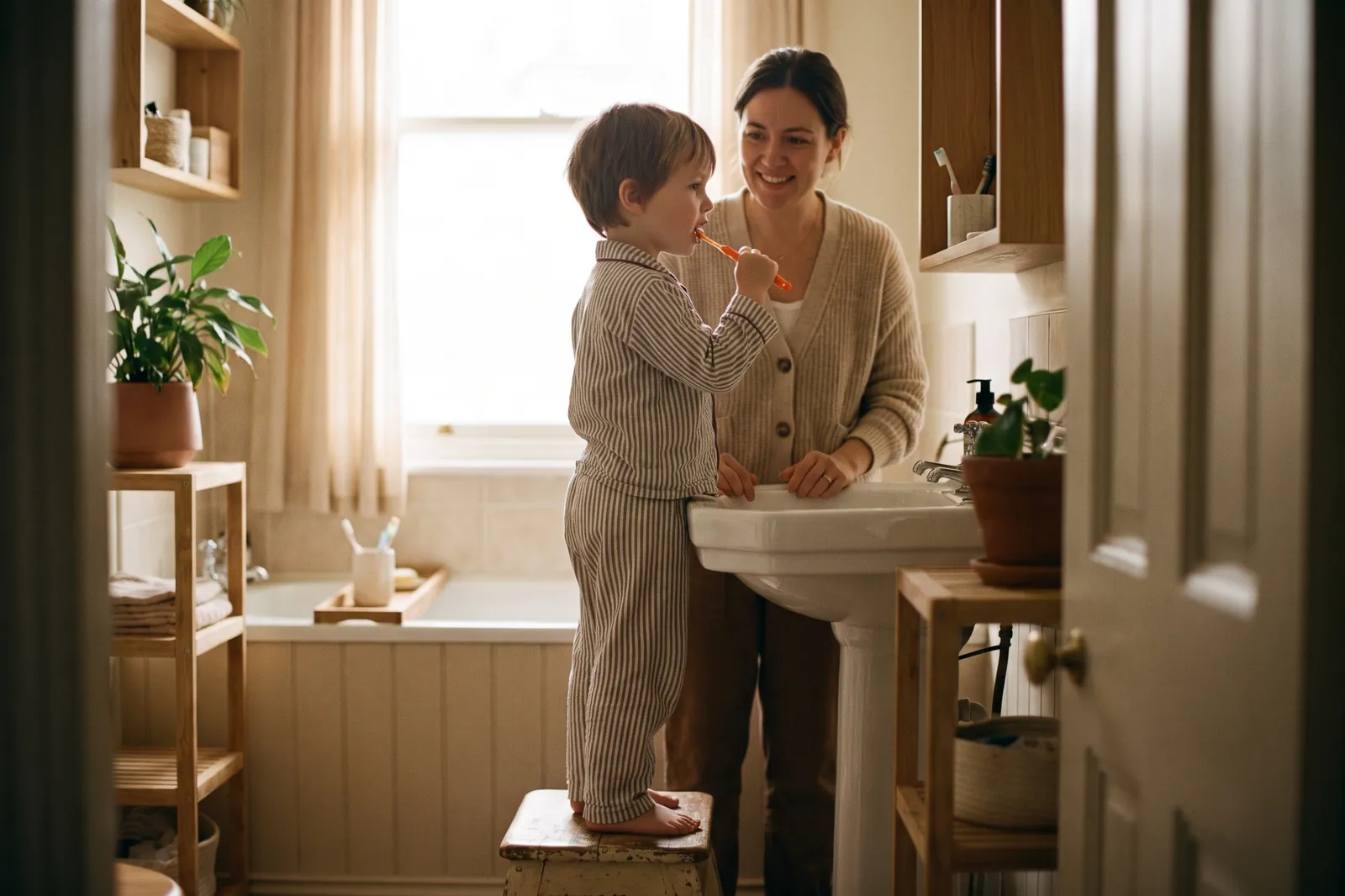
- Brush teeth. The first “brush” in the AAP’s brush, book, bed.
- Potty and a last drink. The AAP suggests taking care of needs before bed so they do not become reasons to get up later.
- Book in bed. One to three picture books, agreed on before you start, read with the lights low.
- Goodnight. A song, a quick “best part of today,” the same goodnight words every night, then lights out.
From tidy-up to lights out, aim for about half an hour. The AAP’s guidance for school-age children suggests keeping the routine to no longer than 30 minutes, and offering a choice of one story and one song rather than open-ended requests.
Toddler bedtime routine: keep it shorter
For ages 2 and 3, fewer steps work better. Bath (or wash), pajamas, teeth, one or two books, a song, bed. The AAP’s toddler tips add two helpful details: make bedtime the same time every night, and let your child take a favorite thing to bed, like a teddy bear or a special blanket. Toddlers also do better with choices between two options than with open questions. “Do you want the truck book or the moon book?” beats “What do you want to read?”
If your toddler is fighting the whole process, our guide on what to do when a toddler won’t sleep goes through the common reasons and fixes.
Night routine for kids ages 5 to 8
Older kids can take more of it over. The AAP suggests gradually stepping back and letting children become more in charge of their own bedtime routine as they grow. A few ideas:
- Let them run the first steps alone (pajamas, teeth, tidy) and join them for the book.
- Keep reading aloud even after they can read. Picture books and read-aloud chapter books both work. They can read a page to you, too.
- Add a few minutes of talk. For many kids, the dark and the quiet are when the real news of the day comes out.
- On weekends, the AAP suggests keeping wake-up times within an hour or so of the usual time, so Monday is not a shock.
A bedtime routine chart for kids
For children who cannot read yet, a picture chart turns the routine into something they can follow on their own. It does not need to be fancy:
- Take a photo of your child doing each step, or let them draw it: bath, pajamas, toothbrush, potty, book, bed.
- Put the pictures in order on one sheet and tape it at their eye level, near the bathroom or their bed.
- At each step, ask “What’s next on your chart?” instead of giving the instruction yourself.
The chart is a map, not a scorecard. Its job is to let the routine do the reminding so you do not have to.
Why the book goes last
The book is the best part of the routine for most children, which is exactly why it should come at the end: it is something to move toward. It is also the AAP’s own centerpiece. The Brush, Book, Bed program notes that reading aloud together, even just 15 minutes a day, helps improve a child’s language development and social-emotional skills. A nightly book is the easiest way to get there. Our list of the best bedtime books for kids has fifteen calm options.
On nights when you are too tired to read, an audiobook of a story you have already shared can stand in as a second listen. Think of it as a backup for your voice, not a replacement for your lap. Our own set, The Money & Business Library, comes with audiobook editions for exactly that use; full disclosure, we publish it. For other options, see our audiobook picks for kids.
When the routine stops working
- It keeps getting longer. Set the number of books before you start, and hold to it kindly.
- Bedtime has drifted late. An overtired child fights harder. The AAP warns that waiting for yawns and eye rubbing is probably too late.
- They keep getting up. That is its own problem with its own plan: see toddler won’t stay in bed.
- Fears have crept in. A night light, a comfort object and brief check-ins help. Our guide for when a 4 year old won’t sleep alone has the details.
Most routines wobble during illness, holidays and travel. That is fine. Go back to the same steps the next night, and within a few days it will feel normal again.
Questions parents ask
What is a good bedtime routine for kids?
A short, calm sequence repeated in the same order every night: screens off about an hour before, then bath or wash, pajamas, brushing teeth, potty and a drink, a book in bed and lights out at a regular time. The AAP sums it up as brush, book, bed.
How long should a bedtime routine take?
About 20 to 30 minutes from the first step to lights out. The AAP’s guidance for school-age children suggests keeping the routine to no longer than 30 minutes, and offering a set choice, such as one story and one song.
What time should kids go to bed?
Count back from wake-up time using the recommended sleep ranges. The American Academy of Sleep Medicine recommends 10 to 13 hours per 24 hours, including naps, for ages 3 to 5, and 9 to 12 hours for ages 6 to 12.
When should you start a bedtime routine?
As early as you like. The AAP encourages starting early with a simple routine such as brush, book, bed. A routine started in the toddler years is easier to keep than one introduced later, but it is never too late to start.
Sources
- Brush, Book, Bed: How to Structure Your Child's Nighttime Routine American Academy of Pediatrics, HealthyChildren.org
- Healthy Sleep Habits: How Many Hours Does Your Child Need? American Academy of Pediatrics, HealthyChildren.org
- Bedtime Routines for School-Aged Children American Academy of Pediatrics, HealthyChildren.org
- Toddler Won't Go to Sleep? 7 Tips to Help End Bedtime Battles American Academy of Pediatrics, HealthyChildren.org
- Melatonin for Kids: What Parents Should Know About This Sleep Aid American Academy of Pediatrics, HealthyChildren.org
- Recommended Amount of Sleep for Pediatric Populations: A Consensus Statement of the American Academy of Sleep Medicine (2016), Paruthi S. et al., Journal of Clinical Sleep Medicine American Academy of Sleep Medicine, via PubMed Central (National Library of Medicine)
Links checked on October 12, 2026. Guidance changes; the publishers above keep the current version.
Written by the WonderLab Journal editorial desk and checked against the sources above. Found something out of date? Tell us through the corrections page.