How to handle sibling rivalry without picking sides
Siblings fight. A lot. You do not have to referee every round. Why young brothers and sisters clash, and how to coach them toward working it out themselves.
Some sibling fighting is normal; one researcher who has studied it for decades notes that siblings aged 4 to 8 can have up to eight fights an hour. To handle sibling rivalry, stay calm and neutral, step in right away if anyone gets physical, and otherwise act as a coach: hear both sides, name the feelings and help them find a solution together. Teach the skills that prevent fights, give each child one-on-one time, and remember that fair does not always mean identical.
Two minutes of peace, then a shriek from the playroom: “She took it!” “He started it!” If you are wondering how to handle sibling rivalry without spending your whole day as a referee, start by letting yourself off the hook. Fighting between brothers and sisters is one of the most universal parts of family life. Laurie Kramer, a psychology professor at Northeastern University who has studied sibling relationships for more than 30 years, says siblings between 4 and 8 can have up to eight fights an hour.
The good news from her research: getting along is not fixed. It can be taught.
Why siblings fight
- Competing for you. Parent attention is the most valuable thing in the house. The American Academy of Pediatrics notes that preschoolers in particular may feel they need to compete for it, especially after a new baby arrives.
- Seeing only their side. Young children have a hard time seeing things from someone else’s perspective. To a four year old, the toy is obviously theirs because they want it.
- Different ages, different needs. A two year old knocking down a tower and a six year old who spent an hour building it are both acting their age. That does not make it hurt less.
- Tired, hungry, bored. Fights cluster at the same times as other meltdowns: before dinner, after school, on long car rides.
Sibling rivalry in toddlers and a new baby
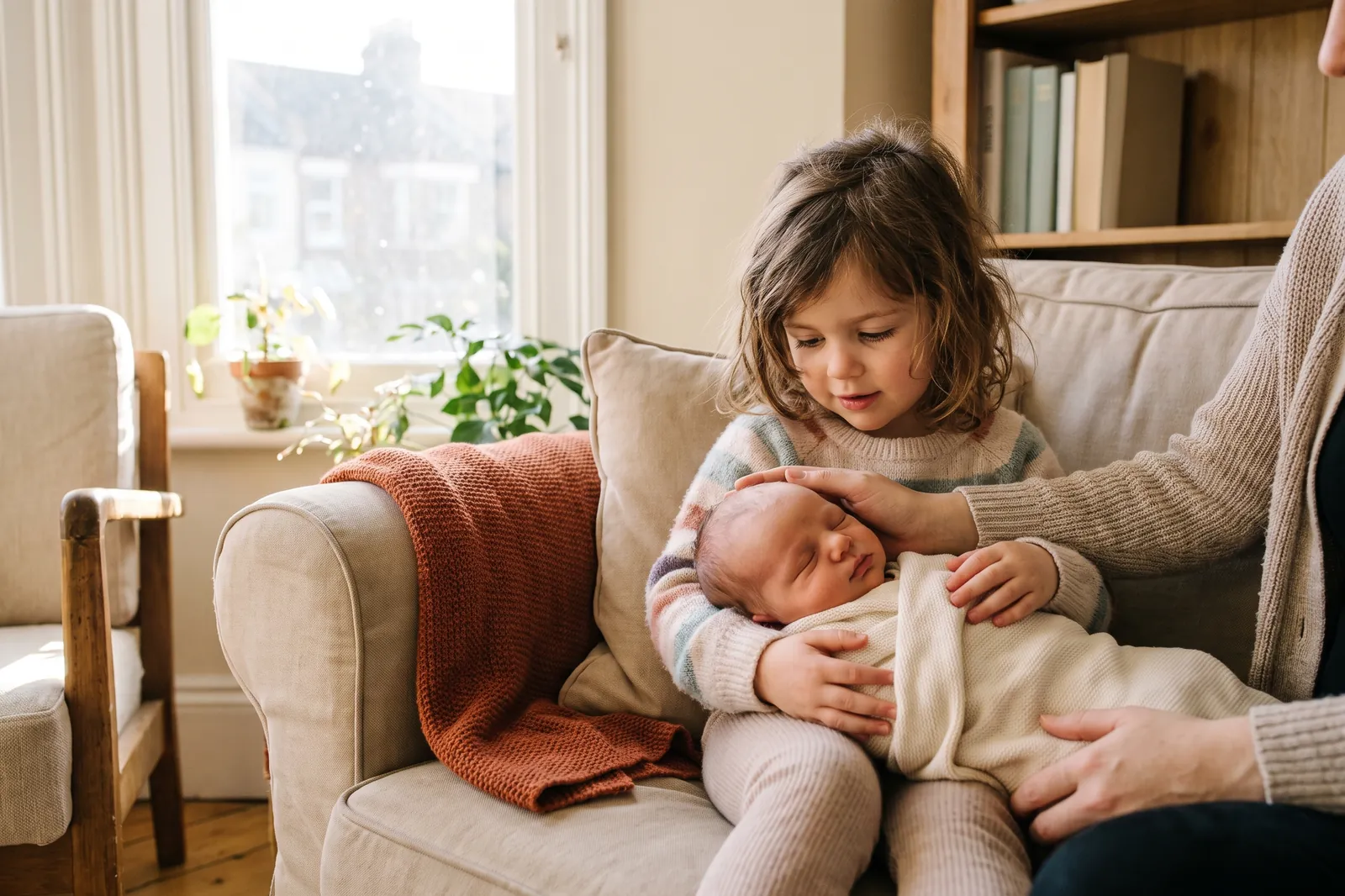
For many families, rivalry starts the day the new baby comes home. The AAP suggests expecting some regression in the older child: a potty-trained preschooler might start having accidents or ask for a bottle. That is their way of checking that they still have your love and attention. Instead of telling them to act their age, give them the attention they are asking for and praise their more grown-up moments.
A few other ideas from the AAP: set aside special time with the older child every day, invite them to help with the baby so they feel included, and ask visiting friends and family to spend a little time with the big sibling too. Our list of books about a new baby sibling can help before and after the arrival.
How to handle sibling rivalry when a fight breaks out
Knowing how to handle sibling fighting starts with one decision: whether to get involved at all.
Decide whether to step in
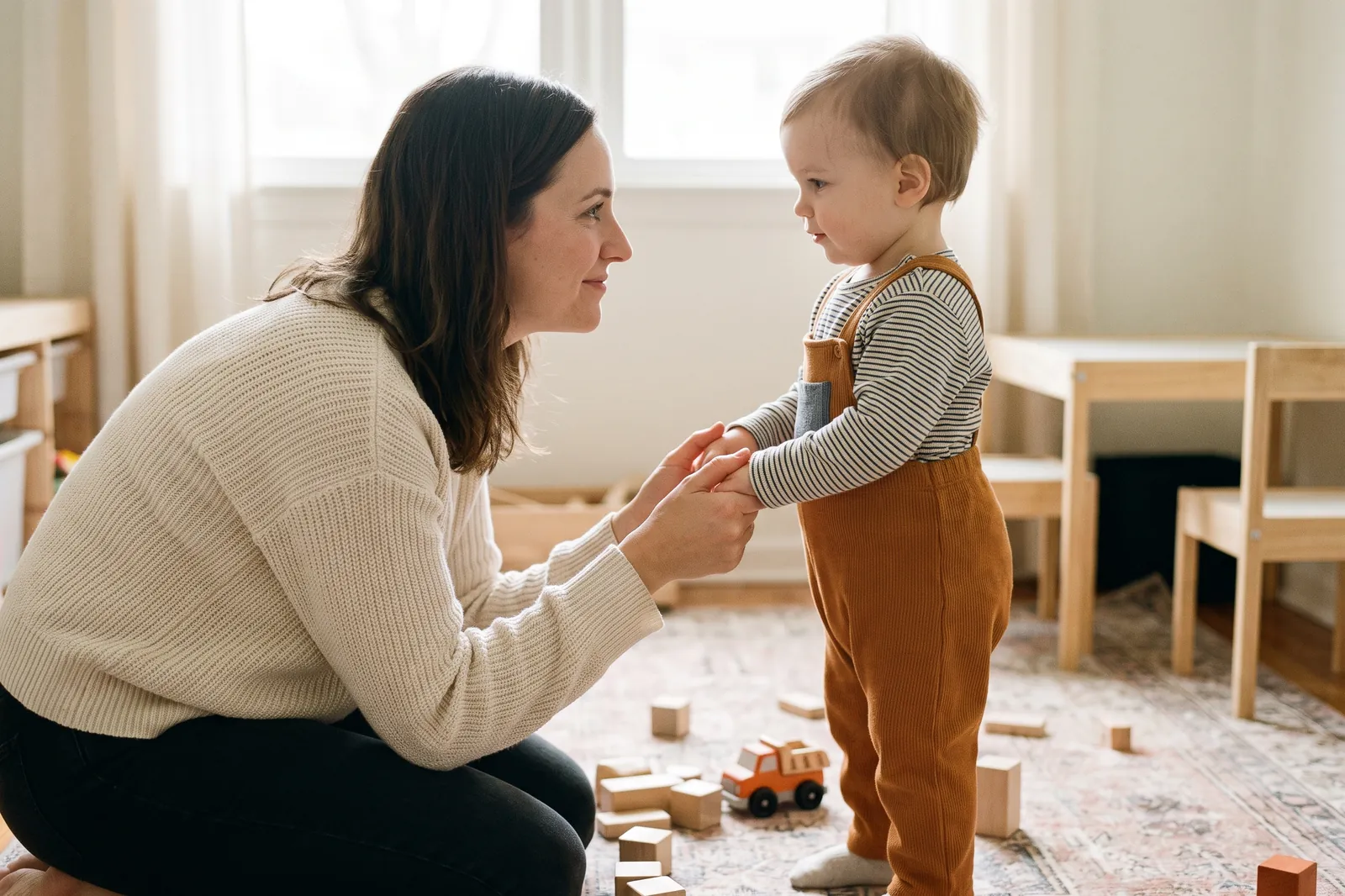
For a simple disagreement, the AAP suggests giving children a chance to solve it themselves. With toddlers you will need to step in more often, repeating simple rules like no hitting and taking turns. As children grow, you can do less.
Step in right away if anyone is getting hurt. The AAP advises pulling children apart and keeping them separate until they have calmed down, and making it clear that it does not matter who started it: there is no excuse for trying to hurt each other.
Don’t disappear completely
Here is a twist from Kramer’s research. Simply ignoring sibling conflict, or separating the children every time, turns out to be one of the least effective approaches when kids do not yet have the skills to resolve things on their own. Children may read your silence as permission. A better middle ground: let them know you hear the fight, encourage them to work it out and offer help if they need it.
Be a coach, not a judge
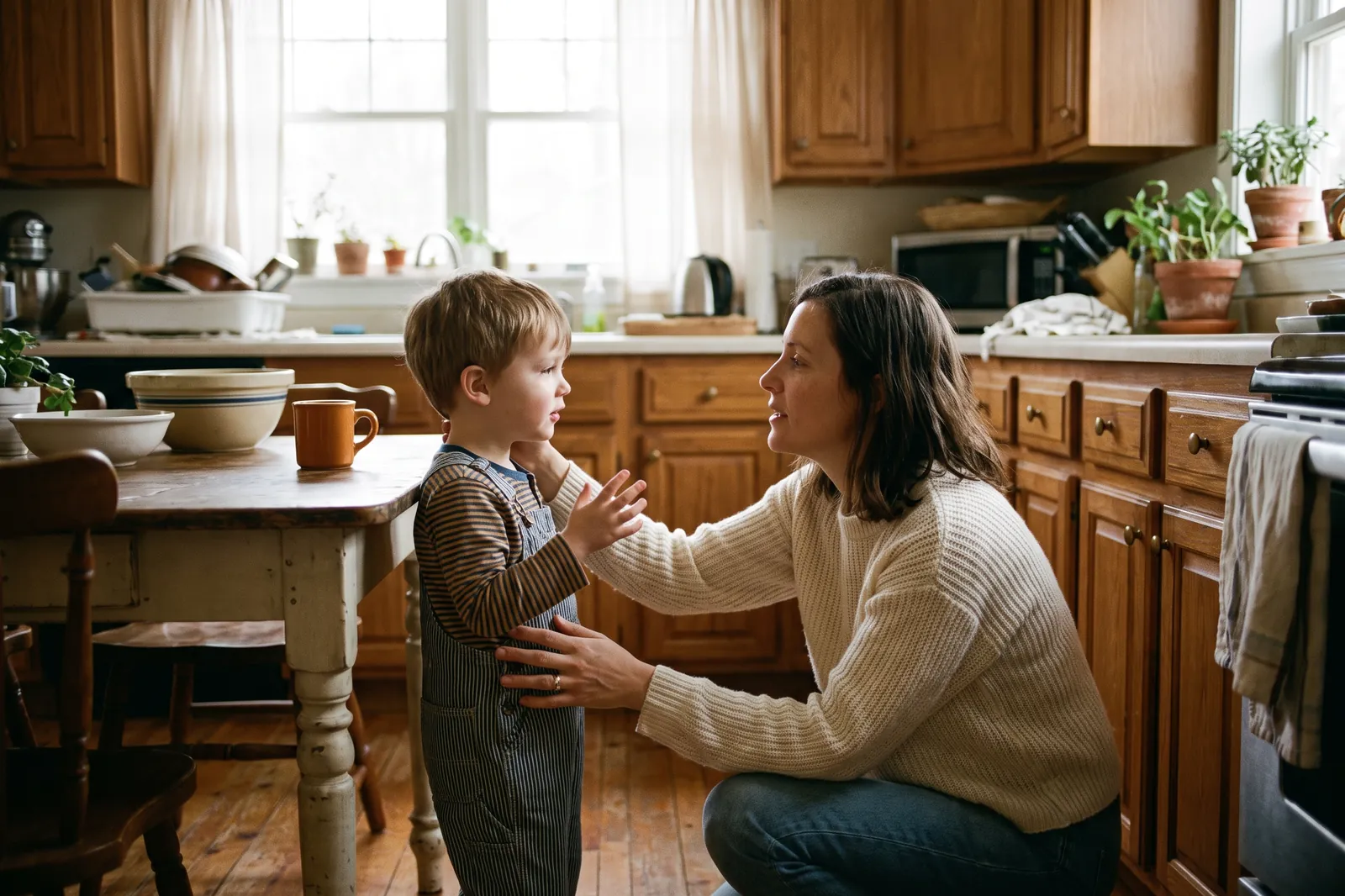
When you do step in, Kramer recommends what researchers call collaborative problem-solving. Ask each child for their side and what they want to happen. Then help them find a solution both can live with. You might say, “You both want the scooter. What could we do?” and let them suggest taking turns, a timer or a trade.
The AAP’s advice lines up: step in as a calm, neutral party, and listen fairly before making any decisions, even if you think you know who is at fault.
Take the prize off the table
For toddler tug-of-war, the AAP suggests acknowledging the conflict without taking sides, and if the argument is over a toy, putting the toy away for a while. No winner, no loser, nothing to fight about.
Try a turn-taking timer
Let the children decide how long each turn lasts, then put them in charge of handing the toy over when the timer rings. Praise them when they do it.
Sibling jealousy: fair isn’t always equal
Jealousy often comes from a sense that the other child gets more. Two ideas help.
- One-on-one time. The AAP recommends regular one-on-one time with each child, even a nightly chat at bedtime or a walk with the dog, so each child knows they have your full attention, without sharing it.
- Take turns choosing. It is easy to cater to the youngest because the older one “understands.” The AAP notes that this can create resentment, and suggests taking turns focusing on activities each child enjoys.
Children of different ages will get different bedtimes, privileges and kinds of help. That is fair, even when it is not identical. Saying so out loud (“You each get what you need, and that looks different at 3 and at 6”) helps children accept it.
Teach the skills that prevent fights
Kramer’s work points to a handful of skills that predict warmer sibling relationships, and ages 4 to 8 are an ideal time to practice them:
- Communication: asking a sibling to play, and accepting when they don’t want to.
- Perspective-taking: seeing a sibling’s wants as just as important as their own.
- Managing big feelings: calming down when a sibling is driving them up the wall.
- Solving conflicts: finding a way through a disagreement together.
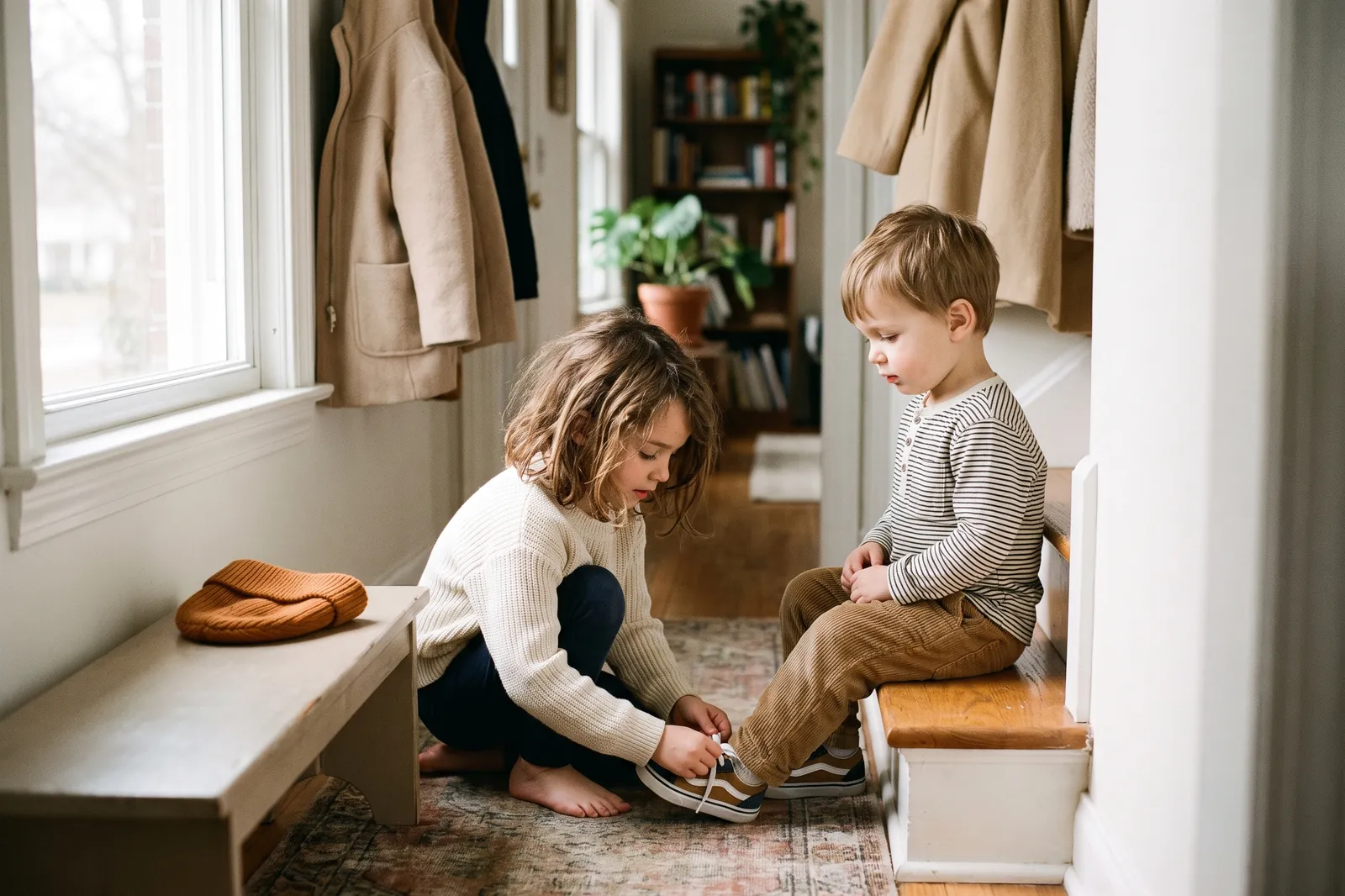
Play is a great place to practice. The AAP suggests team games where siblings work together, kids-versus-grown-ups games, and pretend play where they take turns being the shopper and the cashier. Clear family ground rules help too, such as no hitting and knocking before entering someone’s room. In a study of the online version of Kramer’s program, mothers reported greater warmth and less rivalry between their children, and the effects were still there months later.
When to worry
Everyday squabbles are normal, even frequent ones. Talk to your pediatrician if one child is regularly getting hurt, if the fighting is one-sided and leaves a child fearful or withdrawn, or if aggression seems unusual for your child’s age and lasts more than a few weeks. You do not need to wait for a crisis to ask.
Questions parents ask
Is sibling rivalry normal?
Yes. Fighting between siblings is a normal part of family life. Northeastern University psychologist Laurie Kramer notes that siblings aged 4 to 8 can have up to eight fights an hour. Her research also shows that the skills that help siblings get along can be taught.
Should parents intervene in sibling fights?
Sometimes. Let simple disagreements play out with a reminder that you are nearby and can help. Step in right away if anyone gets physical. Research by Laurie Kramer suggests ignoring conflict entirely is not very effective; coaching children through problem-solving works better.
How do I handle sibling jealousy over a new baby?
Expect some regression and respond with attention rather than criticism. The American Academy of Pediatrics suggests daily special time with the older child, inviting them to help with the baby and asking visitors to spend a moment with the big sibling too.
How do I stop my older child from hitting the younger one?
Step in every time, separate them until both are calm and make it clear that hurting is never OK, no matter who started it. Then help the older child name the feeling behind the hit and practice what to do instead. One-on-one time often reduces the jealousy driving it.
Sources
- Help your children get along (while keeping your own sanity intact)
- Getting along with your siblings can be taught, Northeastern research shows (2024)
- Sibling Relationships: How to Help Your Kids Build Healthy Bonds
- Preparing Your Older Child for a New Baby: How to Help Siblings Adjust
- Siblings as Playmates: 5 Ways to Help Prevent Squabbles
- What's the Best Way to Discipline My Child?
- 10 Tips to Prevent Aggressive Behavior in Young Children
Written by the WonderLab Journal editorial desk and checked against the sources above. Found something out of date? Tell us through the corrections page.