Toddler hitting: why they do it and how to stop it calmly
Hitting is one of the most common, and most upsetting, toddler behaviors. It is also a stage. What is behind it, and a calm routine that teaches gentle hands.
In this guide
The short answer
Toddler hitting is common and usually peaks around age 2, when feelings are huge, words are few and self-control has barely started. Stop it calmly every single time: hold their hand or move them away, say “No hitting. Hitting hurts” in a serious but not angry voice, name the feeling and show them what they can do instead. Praise gentle hands when you see them. Do not hit back or spank, which the American Academy of Pediatrics says makes aggression worse.
The first time your sweet toddler hits you, or the baby, or a friend at the playground, it can feel like a gut punch. Toddler hitting is one of the most common behaviors parents ask about, and it is a normal part of development. That does not mean you let it slide. It means you can respond calmly, because your child is not cruel. They are two.
Why toddlers hit
According to Zero to Three, aggressive behavior like hitting, kicking and biting usually peaks around age 2. That timing is not random.
- Big feelings, few words. Toddlers have very strong feelings but cannot yet put them into words. A hit can mean “I’m mad,” “You’re too close” or “I want that.”
- No brakes yet. Young children have little natural self-control, the American Academy of Pediatrics notes. A two and a half year old may be able to tell you the rule and still not be able to stop themselves.
- Empathy is brand new. Toddlers are only beginning to understand how others feel, so they do not yet connect their hit with someone else’s hurt.
- Overload. Hitting often shows up when a child is tired, hungry, overwhelmed or upset by a change, such as a goodbye at child care or a new sibling.
Zero to Three’s bottom line is useful: when a toddler hits, it is a sign they are out of control and need help calming down before any teaching can happen.
What to do the moment your toddler hits
Consistency matters more than any single script. Respond the same way every time, so your child learns the pattern.
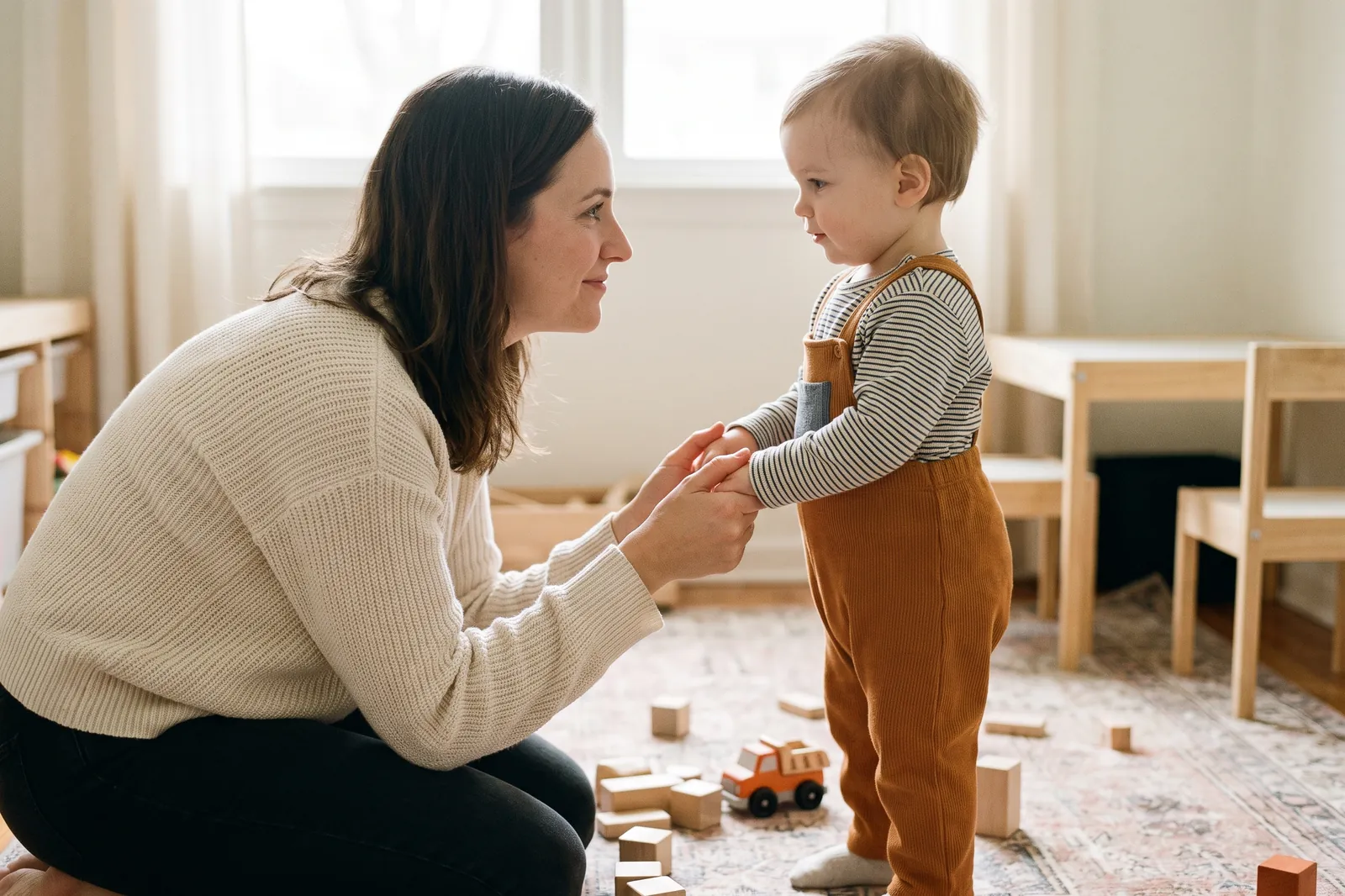
- Stop it right away. Gently take their hand and hold it at their side, or move their body away. The AAP says hitting should never be ignored.
- Stay calm. Take a breath. Your calm helps them calm down faster; your anger tends to raise their distress.
- Say it short and serious. “No hitting. Hitting hurts.” Use a matter-of-fact voice, not a yell, and pair it with a gesture. It takes many, many repetitions before words alone are enough.
- Name the feeling. “You’re really angry that he took your truck. It’s OK to be angry. It’s not OK to hit.”
- Check on the child who was hit. Comfort them where your toddler can see. It shows that hitting brings care to the other person, not more attention to the hitter.
- Show what to do instead. Zero to Three suggests offering ways to get the mad out: stomping feet, squeezing a pillow, ripping paper, jumping up and down. “Show me your mad feet!”
If things keep escalating, a short break somewhere quiet can help. The AAP describes time-outs as a useful last resort, about one minute per year of age, not the first move.
Toddler hitting me: why parents get hit most
Many parents notice that their toddler is an angel with the sitter and hits only them. The AAP explains why: toddlers test limits most with the people they trust most. They know you will keep them safe, so you get the full range of their feelings. It is not a sign that they love you less. It is often the opposite.
When you are the target, the routine is the same. Catch their hand, step back if you need to and say calmly, “I won’t let you hit me.” You can also set the limit and stay warm: “I’m going to hold your hands until you’re calm. Then we can have a hug.”
My 3 year old won’t stop hitting
If hitting continues past the peak, look for patterns. Zero to Three suggests asking a few questions:
- Where does it happen: at home, at child care, at the store, everywhere?
- When does it happen: before nap, at pickup, during transitions?
- What happened right before: a toy taken, a “time to go,” a sibling in their space?
- Has anything changed lately, like a move, a new baby or a new class?
Once you see the pattern, you can plan ahead. Give a heads-up before transitions, offer a snack before the witching hour and stay close during play with the friend who always triggers a scuffle. Keep your rules the same from day to day; if hitting sometimes gets them the toy, they will keep trying it.
And notice the wins out loud. “You stomped your feet when you were mad instead of hitting. Great job!” Praise for self-control is one of the strongest tools you have.
4 year old hitting when angry
By 4, most children have far more words, and you can start teaching what to do with anger. The AAP suggests telling your child to “use your words,” helping them find the words for their feelings, and explaining that it is OK to feel mad but not to hurt someone. If they hit anyway, move them away from the other children until they calm down, then talk about what happened.
The AAP also suggests waiting on the apology until your child understands what they did wrong, and helping them see the other child’s side by remembering a time someone hurt them. A forced “sorry” right after a hit means little. A real one, a few minutes later, teaches a lot. Stories can help here, too: our list of books about anger has picture books that give kids words for big, hot feelings.
Why hitting back or spanking backfires
It can be tempting to show a toddler “how it feels.” The AAP advises firmly against spanking or hitting children. Its policy statement explains that corporal punishment increases aggression in young children over the long run, and cites research in which children spanked more than twice a month at age 3 were more aggressive at age 5. It teaches that hurting someone is OK when you are frustrated, which is the opposite of the lesson.
If you have lost your temper before, you are human. The AAP’s advice is to cool down, apologize to your child and explain how you will handle it next time. That repair is a lesson in itself.
When to talk to your pediatrician
Some hitting is a typical part of early childhood. The AAP suggests talking with your pediatrician if your child seems unusually aggressive for longer than a few weeks and you cannot manage it on your own, or if you see warning signs such as injuries to themselves or others, attacks on adults, being sent home from child care or play dates, or your own fear for others’ safety. Zero to Three adds hitting “out of the blue” with no visible reason, or aggression that starts after a frightening event or major change. Asking early is never an overreaction.
Questions parents ask
Is it normal for a toddler to hit?
Yes. Zero to Three explains that hitting, kicking and biting usually peak around age 2, when toddlers have strong feelings but not the words or self-control to manage them. It is normal, and it still needs a calm, consistent response every time.
Why does my toddler hit me but not other people?
Toddlers test limits most with the people they trust most. The American Academy of Pediatrics notes that many toddlers behave better with sitters because they do not trust them enough to push limits. With you, they feel safe enough to show every feeling, including anger.
Should I put my toddler in time-out for hitting?
It can help as a last resort, not a first response. Start by stopping the hit, staying calm, naming the feeling and offering another way to show anger. If hitting continues, the AAP suggests a short time-out of about one minute per year of age in a quiet spot.
When do toddlers stop hitting?
Gradually, as words and self-control grow. Hitting usually peaks around age 2 and becomes less frequent through the preschool years, especially when parents respond consistently and praise gentle behavior. If aggression seems unusual or lasts more than a few weeks despite your efforts, talk to your pediatrician.
Sources
- Aggressive Behavior in Toddlers ZERO TO THREE
- 10 Tips to Prevent Aggressive Behavior in Young Children American Academy of Pediatrics, HealthyChildren.org
- Emotional Development: 2 Year Olds American Academy of Pediatrics, HealthyChildren.org
- Social Development in Preschoolers: Learning How to Share and Cooperate American Academy of Pediatrics, HealthyChildren.org
- What's the Best Way to Discipline My Child? American Academy of Pediatrics, HealthyChildren.org
- How to Give a Time-Out American Academy of Pediatrics, HealthyChildren.org
- American Academy of Pediatrics Updates Policy on Corporal Punishment American Academy of Pediatrics, HealthyChildren.org
Links checked on October 12, 2026. Guidance changes; the publishers above keep the current version.
Written by the WonderLab Journal editorial desk and checked against the sources above. Found something out of date? Tell us through the corrections page.