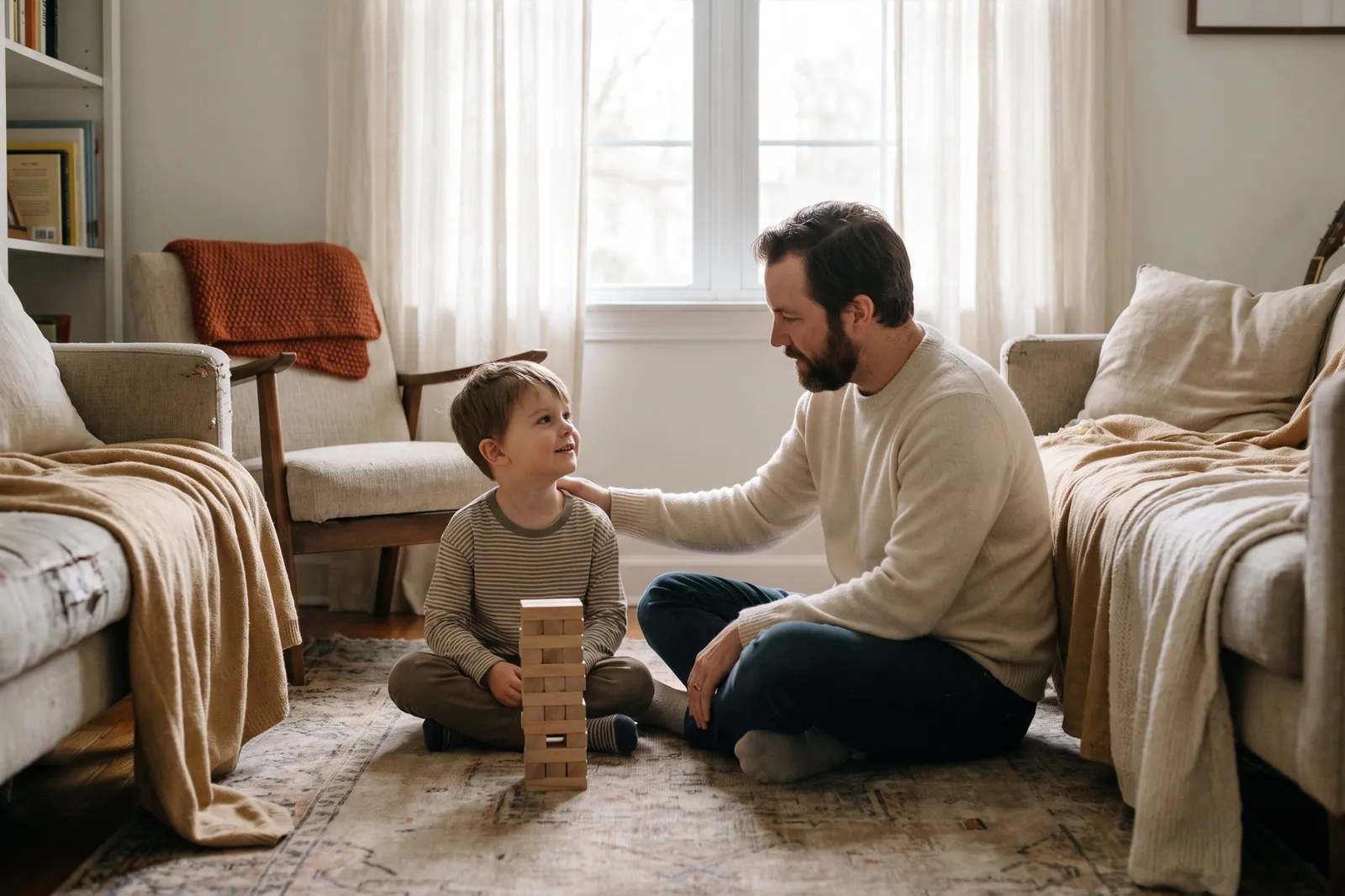
How to stop whining kids (ages 3 to 6) without giving in
Whining is one of the hardest sounds in parenting, and one of the most normal. What it usually means, and how to answer it without caving or snapping.

In this guide
The short answer
Whining is a normal way for young children to signal they are tired, hungry, overwhelmed or out of words, and it is most common between ages 2 and 4. To reduce it, meet the real need first, name the feeling, teach and practice the “regular voice” in calm moments, and do not let whining change your answer. For minor attention-seeking whining, the CDC suggests calmly removing your attention, then giving it back the moment your child asks in a regular voice.
It starts at breakfast and somehow lasts until bedtime: “Mooom, I want the bluuue one.” If you are searching for how to stop whining kids, you are probably running low on patience, and that is completely understandable. Whining is designed to get under our skin. It is also a stage. Zero to Three, the early childhood nonprofit, puts it plainly: whining is completely normal for toddlers and young children, and it usually peaks between ages 2 and 4.
Why does my child whine so much?
Whining is rarely about manipulation. More often, it is communication from a child who has not yet found a better tool.
- It’s the best they can do right now. Young children are still learning to calm their feelings and bodies. Whining can be the first sign that a child is starting to lose control and needs help to settle.
- They don’t have the words. “I’m sad about sharing” or “This sweater is too warm” are hard sentences for a three year old. A whine is sometimes their best attempt.
- The tank is empty. Zero to Three notes that children often whine when their emotional gas tank is on empty: hungry, tired or dealing with a lot of change.
- It works sometimes. If whining occasionally turns a no into a yes, children learn to keep trying. That is not a character flaw. It is learning.
The American Academy of Pediatrics adds that children often communicate their needs through behavior because they do not yet have the language to explain what is going on inside.
First, check the gas tank
Before you treat whining as a behavior problem, ask three quick questions. When did they last eat? How did they sleep? Has today been big, busy or full of change? A snack, a quiet cuddle or an early night fixes more whining than any strategy. If sleep is the issue, our bedtime routine guide can help.
How to stop whining kids: seven calm steps
1. Calm yourself before you answer
Whining charges adults up. A deep breath before you respond keeps you from answering a whine with a snap, which tends to make both of you louder.
2. Name the feeling
“You’re sad. You wanted the striped shirt today, and it’s dirty. That’s hard.” Zero to Three points out that people cannot be talked out of what they feel, but they settle faster when someone recognizes it.
3. Get closer
Sometimes the whine means “I need you.” Sitting down next to your child or offering a hug is not giving in. As Zero to Three says, it is giving your child what they need: “Your voice tells me you might need a snuggle.”
4. Teach the regular voice when nobody is upset
Practice at a calm time, and make it playful. Show the difference between a whiny voice and a regular voice, then practice asking: “Can I please have some water?” The AAP notes that by the preschool years, most children can learn to ask politely instead of grabbing, whining or screaming, especially when parents help them find the words.
5. Give a cue, then wait
In the moment, a short, friendly cue is enough: “Can you ask me again in your regular voice?” When they do, respond warmly and quickly so they see that the regular voice works.
6. Don’t let the whine change the answer
This is the step that makes the others stick. If the answer was no, whining should not turn it into yes. You can still be kind: “I hear you. The answer is still no. Would you like cheese or a banana instead?” Offering a small choice can shift the mood without reversing the limit.
7. Notice the good asks
Catch the moments when your child asks without whining and say so: “You asked for a snack in such a calm voice. Thank you!” The AAP recommends giving lots of attention to the behavior you want to see more of.
Should you ignore whining?
For minor, attention-seeking whining, the CDC suggests a technique it calls redirecting your attention: stay quiet and do not look at, touch or talk to your child while the whining continues, then give your attention back the moment it stops. A few honest warnings come with it. The whining usually gets worse before it gets better, every adult in the house needs to respond the same way, and it is not for a child who is hurt, sick, hungry, tired or truly upset. Those whines need comfort, not silence.
3 year old whining all the time
At 3, whining often peaks. Three year olds have far more wants than words, and transitions like drop-off, leaving the park or bedtime are prime time. Expect it, plan for it and lean on steps 2, 3 and 4. Distraction and silliness work well at this age, too: a funny voice, a pretend sneeze or pointing out the garbage truck can shift a mood faster than reasoning.
How to stop whining in a 5 year old
By 5, children have the words, so whining is more often about wanting something or not wanting to do something. The steps above still work, with two additions. Keep your rules predictable, because negotiating every time teaches that whining pays. And give your child a voice in small decisions, so they feel heard without needing to whine. If whining turns into a meltdown when you say no, our guide to 5 year old tantrums and our piece on the child who wants everything can help.
When whining is a signal
A sudden jump in whining can be a sign that something has changed: a new sibling, a move, a new school or stress at home. Look at what is happening in your child’s world, offer extra connection and keep routines steady. If your child seems unhappy most of the time, or the whining comes with changes in sleep, eating or mood that worry you, talk with your pediatrician.
Questions parents ask
Why does my child whine so much?
Usually because they are tired, hungry, overwhelmed or do not yet have the words for what they need. Zero to Three explains that whining is often a young child’s best attempt at communication and peaks between ages 2 and 4. If whining sometimes gets results, it can also become a habit.
Should I ignore my child’s whining?
Only minor, attention-seeking whining. The CDC suggests removing your attention while it continues and giving it back as soon as your child stops or asks in a regular voice. Do not ignore a child who is hurt, sick, hungry, tired or truly distressed, and expect whining to get worse briefly before it improves.
At what age does whining stop?
There is no set age, but whining is most common between 2 and 4, according to Zero to Three, and usually eases as children gain words and self-control. Teaching a regular voice, staying consistent with your answers and praising calm asks helps it fade faster.
Does whining mean my child is spoiled?
No. Zero to Three encourages parents to change the story they tell themselves: whining is a normal stage, not a sign of a spoiled or demanding child. Seeing it that way makes it easier to respond with calm instead of frustration, which also helps it pass.
Sources
- How to Cope (and Help!) When Your Child Whines ZERO TO THREE
- Tips for Redirecting Your Attention Centers for Disease Control and Prevention
- Social Development in Preschoolers: Learning How to Share and Cooperate American Academy of Pediatrics, HealthyChildren.org
- How to Shape and Manage Your Young Child's Behavior American Academy of Pediatrics, HealthyChildren.org
- Why Kids Act Out: Tips to Help Your Child Cope With Stress American Academy of Pediatrics, HealthyChildren.org
Links checked on October 12, 2026. Guidance changes; the publishers above keep the current version.
Written by the WonderLab Journal editorial desk and checked against the sources above. Found something out of date? Tell us through the corrections page.