Money activities for kids 4 to 8 you can do this week at home
Fifteen low-prep games and projects, sorted by setting, each built on one of the four ideas the CFPB suggests for young children: earning, saving, planning and shopping.
The best money activities for kids use real coins, a little pretend play and everyday errands. Set up a pretend store, sort and rub coins, run a grocery scavenger hunt, plan a small outing on a budget, and talk through a story’s money choices. Each one practices one idea from the CFPB’s list for young children: earning, saving, planning or shopping. Ten minutes at a time is plenty.
Young children learn money by doing, not by being told. A 2013 review for the UK’s Money Advice Service, by Cambridge researchers David Whitebread and Sue Bingham, concluded that for young children, learning from experience is more powerful than learning through instruction. So the best money activities for kids are short, hands-on and a little bit silly.
Each idea below is built on one of the four ideas the Consumer Financial Protection Bureau suggests for ages 3 to 5: earning, saving, planning and shopping. None needs anything printed or bought. Pick one this week and see what sticks.
Looking for the everyday store habits, like reading price tags and the one-dollar trip? Those live in our guide on how to teach kids the value of money, so this list sticks to games and projects.
Money games for kids with real coins
Real coins beat pictures of coins. Little hands learn size, weight and edges by touch. Supervise closely with younger children, since coins are small enough to be a choking hazard.
1. The coin sort (ages 4 to 5, shopping)
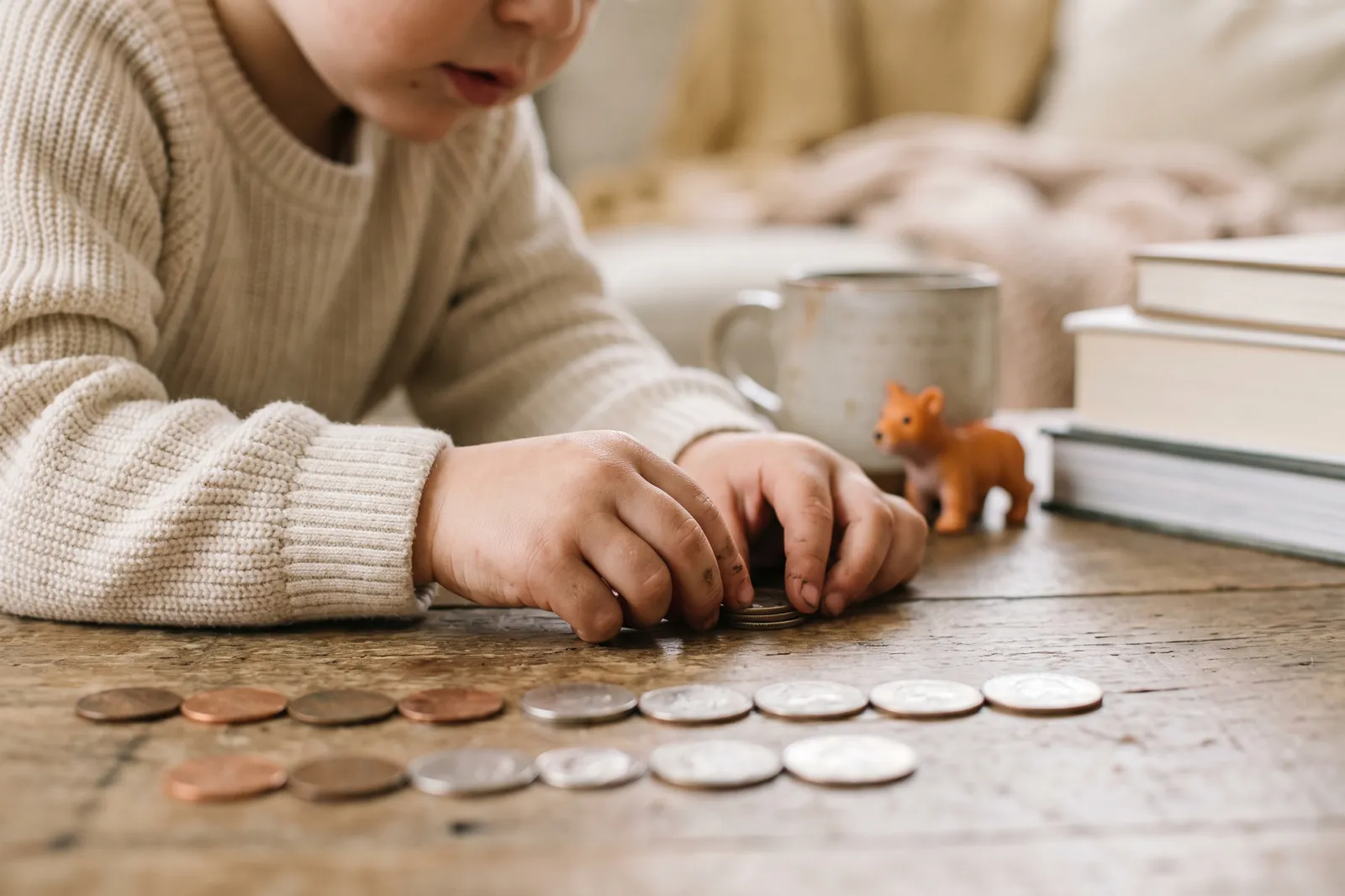
Dump a handful of change on a tray and sort it into muffin cups by kind. Then line up one of each, smallest to largest. Ask: “Which is biggest? Which is worth the most?” The dime is the smallest coin and worth more than the penny or the nickel, which surprises most four year olds. Our guide on how to teach kids to count money has the full coin rundown.
2. Coin rubbings (ages 4 to 6, shopping)
Put a coin under thin paper and rub over it with the side of a crayon. The picture appears like magic. Talk about who and what is on each coin. Keep a rubbing of each kind on the fridge as a reference card.
3. Coin match memory (ages 5 to 7, shopping)
Lay out pairs of coins face down under paper cups and play memory. For a harder round, match a coin to its value written on a card: a dime with “10¢,” a quarter with “25¢.”
4. Make a dollar (ages 6 to 8, planning)
Challenge: how many different ways can you make one dollar? Four quarters, ten dimes, twenty nickels, or mixes like two quarters, four dimes and two nickels. Write each way down. It turns counting into a puzzle.
Pretend play money activities
5. The pretend store (ages 4 to 8, shopping)
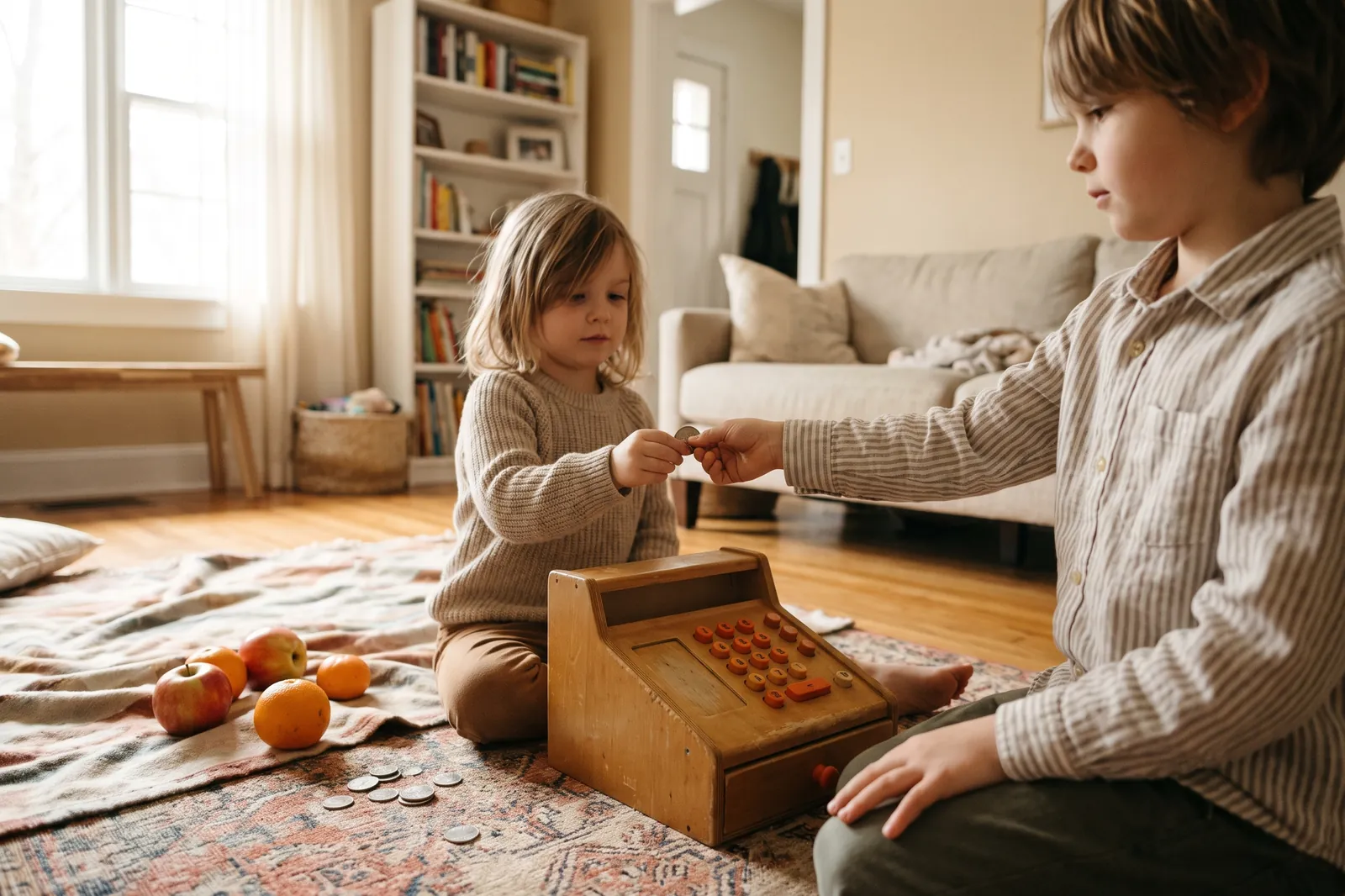
Raid the pantry, put sticky notes with prices on cans and boxes, and open a shop on the kitchen table. Your child is the shopper with a small purse of real coins, then the cashier. Keep prices low and round for four year olds. For seven and eight year olds, add change: pay with a dollar, get some back. The Cambridge review notes that understanding change usually arrives around age seven, so this is perfect practice.
6. The restaurant (ages 5 to 8, planning)
Your child writes a short menu with prices, takes your order and adds up the bill. Then switch roles. Ordering within a budget (“I have three dollars, what can I get?”) brings in planning without a single lecture.
7. Design your own money (ages 5 to 8, earning)
Every U.S. bill carries a portrait: George Washington on the $1, Abraham Lincoln on the $5. Ask your child whose face, or which favorite animal, they would put on their own bill, and what it would be worth. Then use the new money as the currency for the pretend store.
Money activities on everyday errands
8. Grocery scavenger hunt (ages 5 to 8, shopping)
Before a trip, give your child three missions: find a fruit that costs less than a dollar, find the cheapest box of crackers in the aisle, find something that costs more than five dollars. They report back. You check together.
9. Guess the receipt (ages 6 to 8, planning)
Before you pay for a small basket, everyone guesses the total. Closest guess picks the music on the drive home. Afterward, look at the receipt together and find the most expensive item.
10. Count the coin jar (ages 5 to 8, saving)
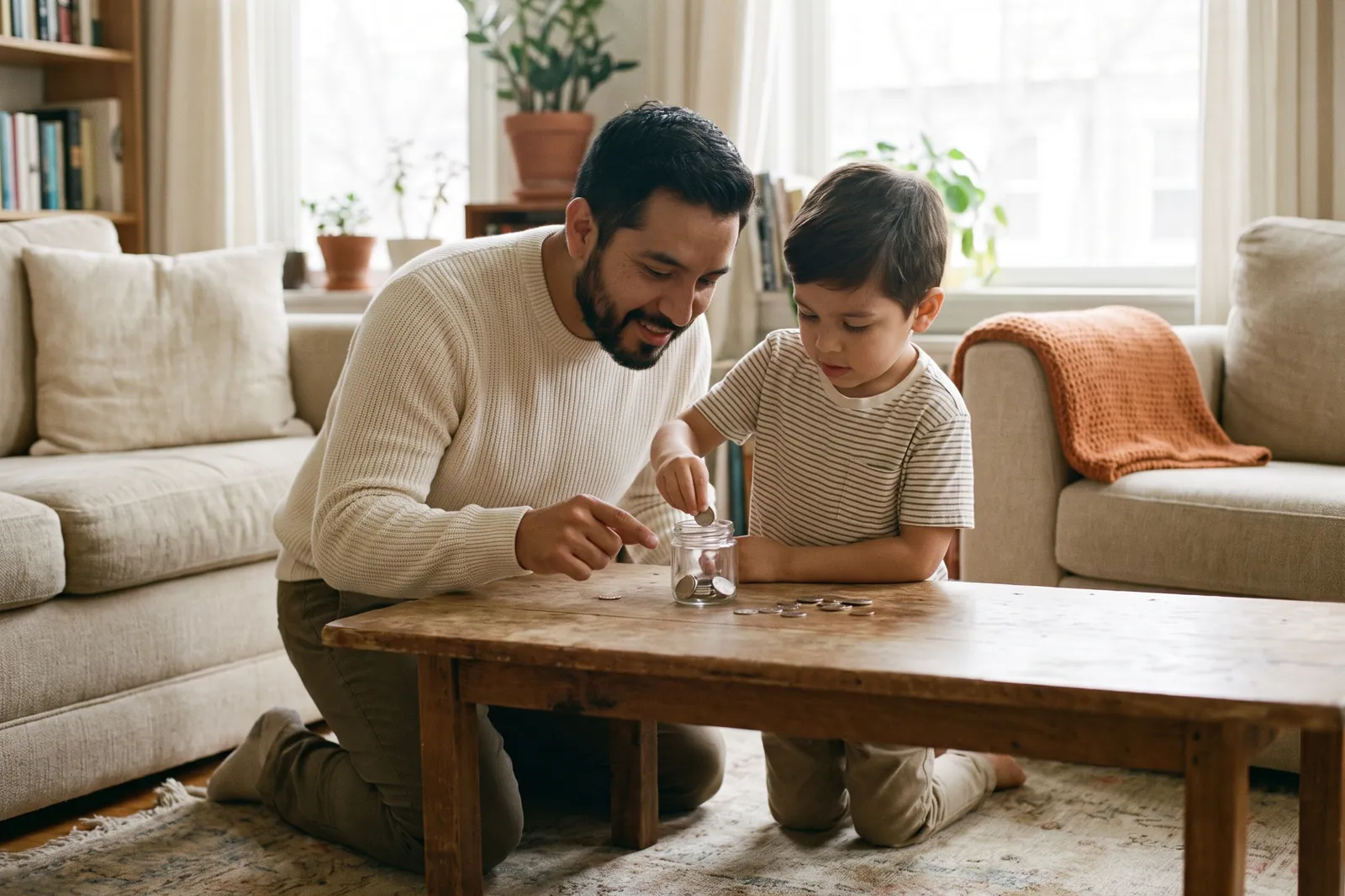
If your home has a jar of loose change, empty it together. Sort, count by kind, add it up and decide as a family what it will go toward. Seeing that small coins add up to something real is a saving lesson in itself.
Planning and earning activities for older kids
11. Plan a $10 picnic (ages 6 to 8, planning)
Give your child a budget and a goal: a picnic for the family. Together, list what you need, check prices on a store visit or a flyer, and adjust until it fits. The CFPB’s planning idea for young children is that you need to think ahead about what you will need, and a picnic makes that concrete.
12. The job board (ages 5 to 8, earning)
Post one or two extra jobs on the fridge, each with a price. Your child chooses whether to take one. It makes “you earn money by working” visible. For job ideas by age, see ways for kids to earn money.
13. Interview a grown-up about work (ages 5 to 8, earning)
Your child asks a grandparent, aunt or neighbor three questions: What was your first job? What did you buy with your first pay? What do you do now? The Cambridge review suggests that talking about the different kinds of work adults do is a valuable way to raise children’s awareness of earnings.
Story-based money activities
14. Stop at the choice (ages 4 to 8, all four ideas)
Read a picture book about money and stop at the moment a character decides how to spend. Ask: “What would you do?” Then act it out with real coins. The CFPB’s Money as You Grow Bookshelf pairs children’s books with reading guides for parents for exactly this. Our list of the best books for kids about money is a good place to find a story.
Full disclosure: we also publish our own set, The Money & Business Library, five picture books for ages 4 to 8 that follow money from a first dollar to a small business, with audiobook editions. In the first book, Penny Makes a Dollar, Penny wants something she can’t have, so she works out how to make it happen herself, which makes it a natural lead-in to the job board above.
15. Play a coin game online together (ages 5 to 8, shopping)
The U.S. Mint’s free Coin Classroom site has games, activities and lesson plans built around coins, including a counting game and one about making change. Play side by side and talk about each answer, so the game becomes a conversation.
How to make money activities for kids stick
- Keep it short. Ten minutes and stop while it is still fun.
- Repeat favorites. The pretend store on the fifth day teaches more than five new games.
- Use real money when you can. The Cambridge review notes that young children may not grasp that money is given up in a trade, and real coins make that visible.
- Let mistakes happen. Overspending at the pretend store costs nothing and teaches a lot.
For the bigger picture of what children understand at each age, start with our guide on how to teach kids about money.
Questions parents ask
What are some fun money activities for kids?
A pretend store with real coins, coin rubbings, a coin memory game, a grocery scavenger hunt and planning a small picnic on a budget. Each takes about ten minutes and practices one simple idea: earning, saving, planning or shopping.
What are good money games for kids ages 4 to 6?
Sorting coins by kind and size, coin rubbings with a crayon, and a pretend store with low, round prices. At this age the goal is getting to know the coins and the idea that you pay for things, not adding up totals.
How do you teach money management to young kids with activities?
Give them small, real decisions with a limit: a few coins at the pretend store, a budget for a picnic, a choice of whether to take a paid job. Talk afterward about what they would do differently. Short, repeated practice works better than a single big lesson.
Should kids use real money or play money?
Real coins when you can, with close supervision for younger children because coins are a choking hazard. Real money teaches the size, weight and value of each coin, and research summarized for the Money Advice Service suggests using real money helps children learn that money is given up in a trade.
Sources
Written by the WonderLab Journal editorial desk and checked against the sources above. Found something out of date? Tell us through the corrections page.