How to teach kids the value of money (without a lecture)
To a young child, prices are invisible. Six small habits at the store that make the value of a dollar something they can see, hold and weigh.

Make prices visible. Read price tags out loud together, compare two of the same thing, translate prices into things your child knows, and let them pay with a real dollar so they feel it leave their hand. Then turn yeses into either-ors and treat waiting as part of the price. Research for the UK’s Money Advice Service suggests most children only begin to understand money as an exchange around age 7, so these habits do the work long before a lecture could.
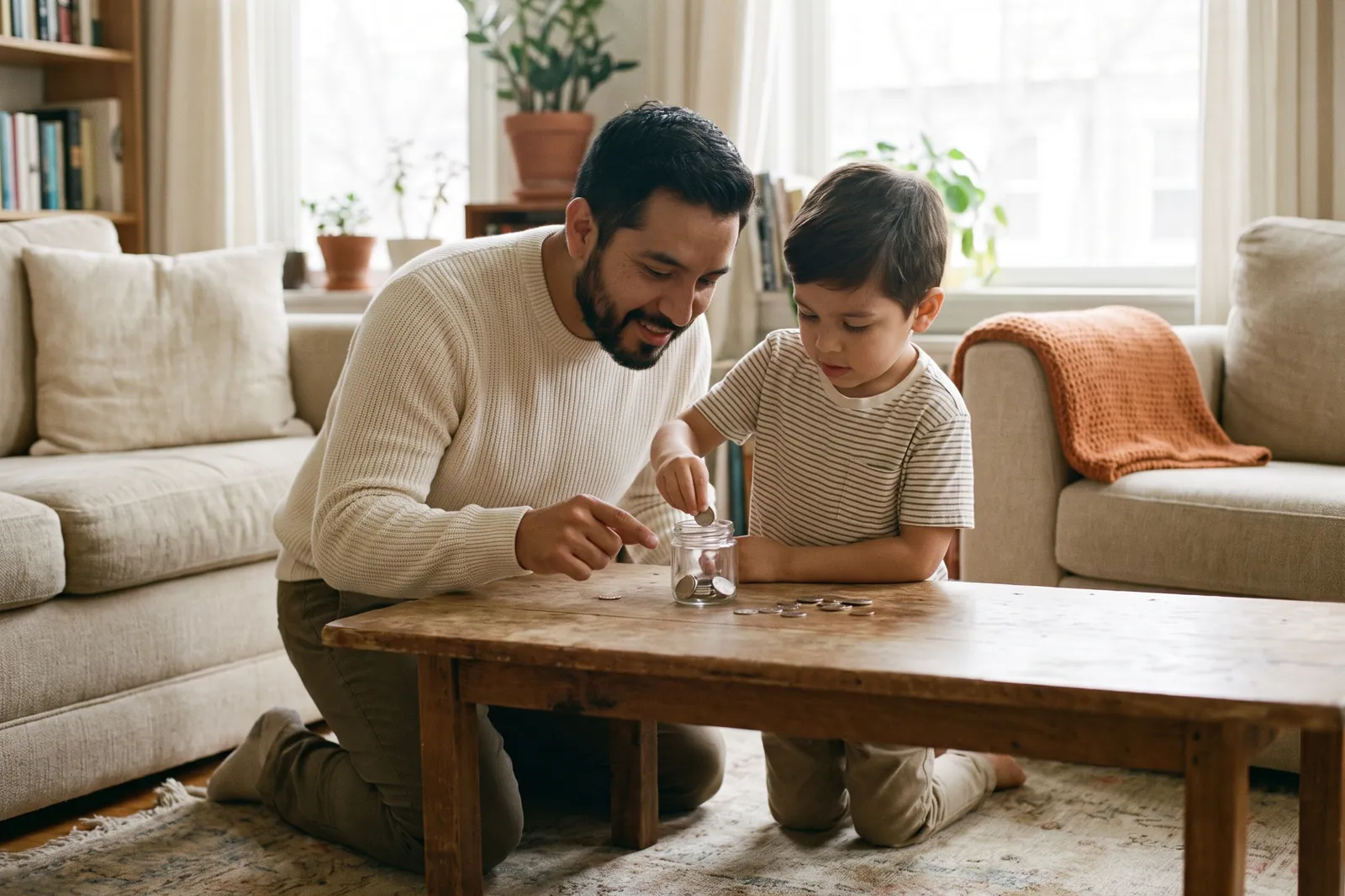
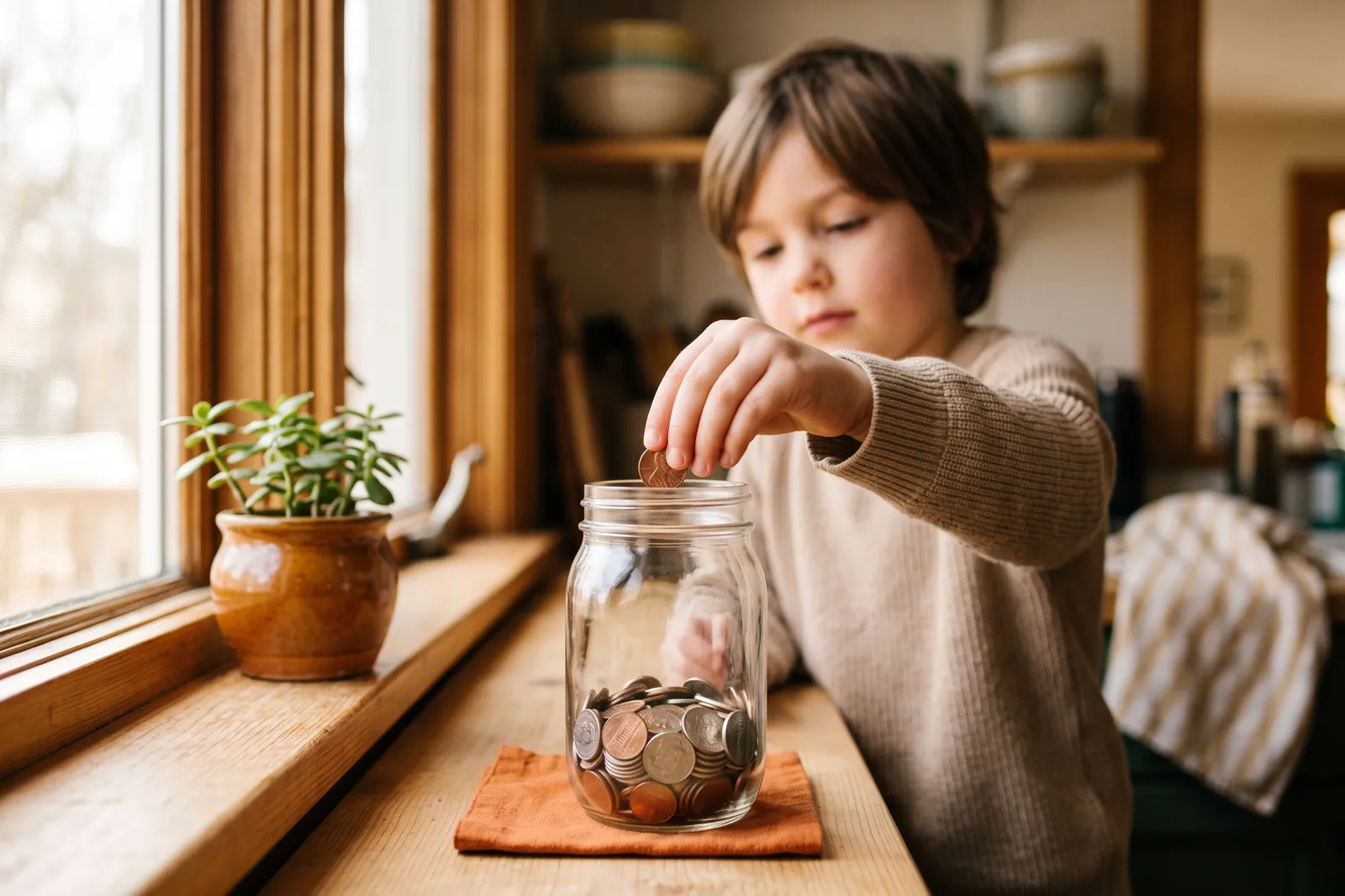
If your child has ever asked for a $40 toy in the same breath as a pack of gum, as if the two cost about the same, you are in good company. Learning how to teach kids the value of money starts with a simple fact: to a young child, prices are invisible. A dollar is just a word until they can see it, hold it, compare it and give it up. The good news is that you do not need a lecture to change that. You need a few small habits at the store.
This guide is about one skill, knowing what a dollar is worth. For the wider picture of what children understand at each age, start with our guide on how to teach kids about money.
Why the value of a dollar is hard for young kids to see
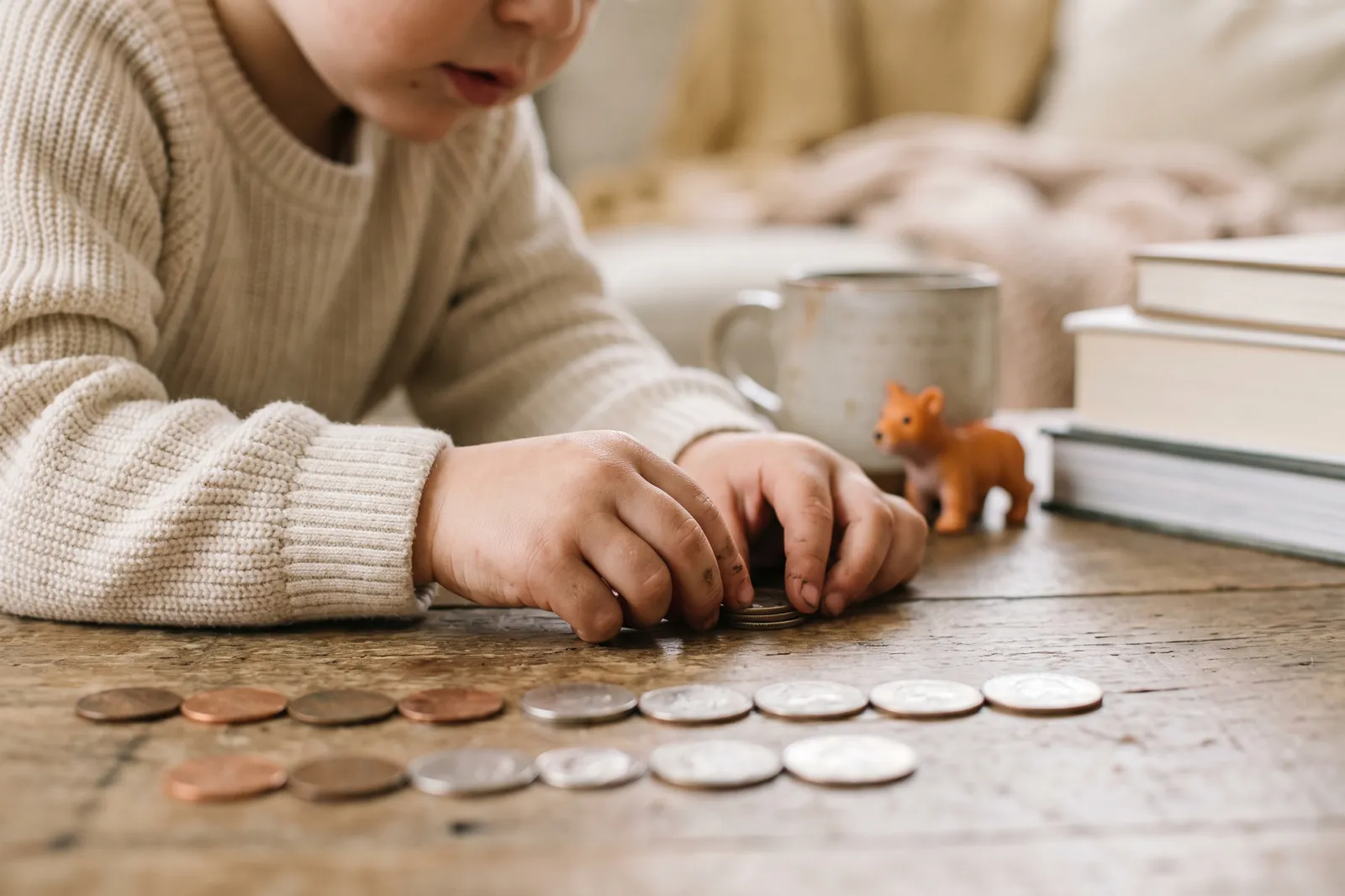
A 2013 review for the UK’s Money Advice Service, by University of Cambridge researchers David Whitebread and Sue Bingham, explains why. To understand value, a child has to stop judging money by how it looks. Offered five pennies or one coin worth the same, a very young child will probably pick the five, because five seems like more. The review describes a rough sequence:
- Ages 4 to 5: children know they have to pay for things, but may not understand that coins have different values.
- Ages 5 to 6: they start to see that some amounts are not enough to buy some things.
- Around age 7: they begin to understand money as an exchange, including why the cashier hands back change, and can start to hold the idea of value in their heads.
The same review notes that cards and checks only stand for money, which takes one more step of understanding. That is not a reason to worry about how you pay. It is a reason to make money visible on purpose now and then, so your child can see the trade happen.
How to teach kids the value of money at the store
These ideas come from the research above and from the CFPB’s Money as You Grow guidance. Pick one, try it for a few weeks, then add another.
1. Read the price tag out loud
Let your child find the price label and say the number with you. The Cambridge review suggests exactly this kind of moment: noticing price labels, comparing prices and choosing the less expensive item are decisions a child can watch or help with. Most of the learning is simply that every item has a number on it.
2. Compare two of the same thing
Hold up two boxes of cereal or two bags of apples and ask which costs less. Then say why you picked one: “This one is cheaper and we’ll eat it all the same.” The CFPB’s suggestion for kids 6 to 12 is the grown-up version of this game: shop around and compare prices before you buy. When you think out loud, the CFPB notes, your child gets to hear the reasoning behind the choice.
3. Translate prices into things they know
A big number means little to a five-year-old. A comparison means a lot. “That toy costs the same as a trip to the pool for our whole family” turns a price into something they can picture. Pick a unit your child cares about, like ice cream cones or rides on the carousel, and use it again and again.
4. Try a one-dollar trip
Give your child a single dollar (or a few) to spend at a store with small, affordable things. They choose, they hand it over, and it is gone. The Cambridge review describes this kind of trip as a way to teach that money can be spent only once, because young children sometimes expect to swap their choice later for free. If they regret it, that is the lesson working, not failing. Keep the amount small so a regret costs little.
5. Make it an either-or
“We can get the stickers or the bubbles today, not both.” A choice between two things teaches value faster than a yes or a no, because your child has to weigh one against the other. The review points out that when there is not enough money for something, a shopper has two options: buy something less expensive, or wait until enough has been saved.
6. Show the whole price
Outings carry hidden costs. The review gives the example of a trip to the movies: not just the tickets, but gas for the car, snacks and drinks, time and energy. Counting them up together, once in a while, shows your child that a “fun day” has a price too.
Teaching kids that waiting is part of the price
The CFPB’s key idea for ages 3 to 5 is simple: “You may have to wait and save up money before you can buy something you want.” For a young child, the wait is the hardest part of what a thing costs. Make it concrete. Take a photo of the price tag, write the number on the fridge and count it down in coins or in sleeps. Pick goals close enough to reach, because four and five year olds find it hard to picture events far in the future. When the time comes, ask again whether they still want it. Sometimes they don’t, and that teaches value too.
For more on the wait itself, see our guides to delayed gratification for kids and how to teach kids to save money.
A small family habit: the price tag pause
Some families find it easier to stick with a routine that has a name. We call this one the price tag pause. It is not a method from a study, just a handy way to bundle the steps above into one moment before anything goes in the cart:
- Look: find the price together.
- Say it: read the number out loud, or translate it into ice cream cones.
- Decide: buy it, swap it for something that costs less, or save for it.
It takes about ten seconds, and the point is the pause, not the answer. Over time your child starts doing the looking before you ask.
What to say when they ask “Can we buy it?”
- “Let’s look at the price first.”
- “Is this a today thing or a save-for-it thing?”
- “If we buy this, what won’t we buy?”
- “Not today. We’re saving for the beach.”
None of these needs to be perfect. Kids learn from hearing the same calm words many times, not from one big talk.
Where stories help
A picture book lets your child watch someone else run out of money without any of the disappointment being theirs. Alexander, in Judith Viorst’s Alexander, Who Used to Be Rich Last Sunday, starts the week with a dollar and ends it with almost nothing. Max and Ruby in Bunny Money watch their birthday money shrink one mishap at a time. Reading them together gives you a shared reference for the store: “Remember Alexander?” For more titles, see our list of the best books for kids about money.
Questions parents ask
At what age do kids understand the value of money?
Gradually. By four to five most children know you have to pay for things, by five to six they see that some amounts are not enough for some things, and around seven they begin to understand money as an exchange, including change, according to a University of Cambridge review for the Money Advice Service.
How do I explain the value of a dollar to a 5 year old?
Compare it to something they know. Tell them what a dollar can buy, such as a piece of fruit or a small sticker pack, then give them one to spend. Choosing, handing it over and seeing it gone teaches more than any explanation.
Should I let my child waste money on something I think is junk?
Within limits, yes. When the amount is small, a purchase they regret is a cheap lesson in value. Stay calm, skip the I-told-you-so, and ask what they would choose next time.
How do I teach the value of money if we mostly pay by card?
Narrate it. Say the total out loud and where the money comes from, and use cash now and then for small purchases your child can make. Cards stand for money, which is harder for young children to picture, so a little visible cash helps.
Sources
Written by the WonderLab Journal editorial desk and checked against the sources above. Found something out of date? Tell us through the corrections page.