How to teach kids to save money: small goals, clear jars, real waiting
Saving is a habit, not a trick. Seven steps that work with how young children actually think about time, plus what to do when they want to give up.
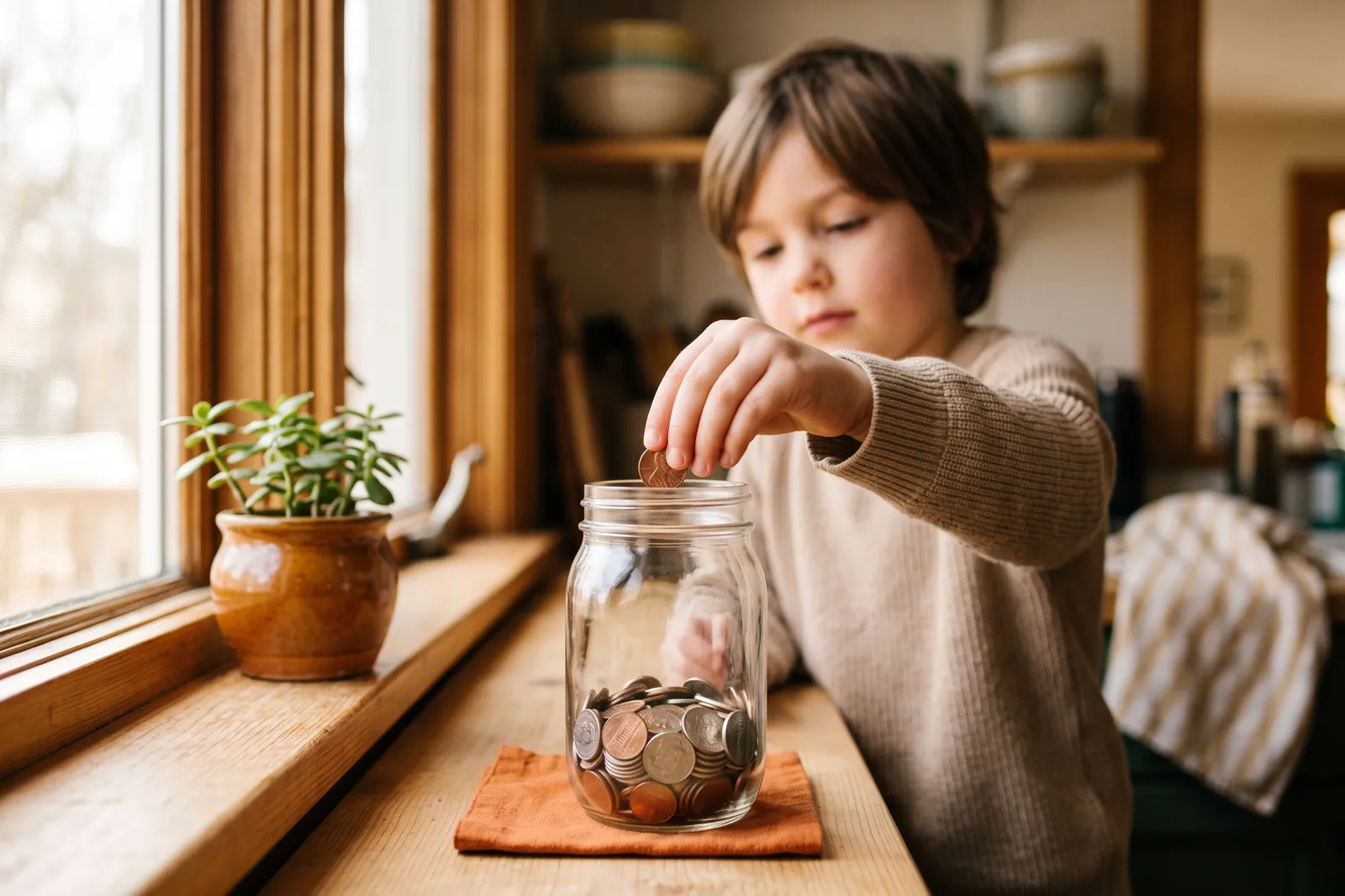
Help your child pick one thing they really want, keep the goal short enough to reach in days or weeks, and put the money somewhere they can see it, like a clear labeled jar. Track progress with a simple chart, let them add money from gifts or small jobs, and let them buy the thing when they get there. Expect to repeat it: in one study, preschoolers saved more on their second try than their first.
If you have wondered how to teach kids to save money when they would happily spend every coin the minute it lands in their hand, you are in good company. Saving asks a young child to give up something now for something later, and “later” is one of the hardest ideas for a four-year-old to hold.
That is not a reason to wait. It is a reason to make saving small, visible and repeated. Here is how.
Why saving is hard for young kids
A 2013 review for the UK’s Money Advice Service, by University of Cambridge researchers David Whitebread and Sue Bingham, explains that saving depends on two abilities still under construction in early childhood: planning, and delaying gratification. It also depends on a sense of the future. Four and five year olds find it hard to tell how far away an event is, the review notes, and even seven year olds rarely judge beyond about a month. Around eight, most children can place events months ahead.
The same review makes a point that takes the pressure off: many young children join in saving not because they understand it, but because they enjoy doing something grown-up, or want to do what their parents expect. That is fine. The understanding grows into the habit.
How to teach kids to save money in 7 steps
1. Let them choose the goal
Saving “for later” means nothing to a five-year-old. Saving for the purple ball at the toy store means a lot. In a 2011 study by Jennifer Metcalf and Cristina Atance, published in Cognitive Development, 3 to 5 year olds saved more when the reward waiting for them later was more appealing than the one on offer now. Let your child pick something they genuinely want, even if it is not what you would choose.
2. Keep it short
For a four or five year old, aim for a goal they can reach in a week or two. For seven and eight year olds, a few weeks to a month works. Longer goals can come once they have reached a few short ones. A first goal that takes forever teaches that saving does not work.
3. Make it visible
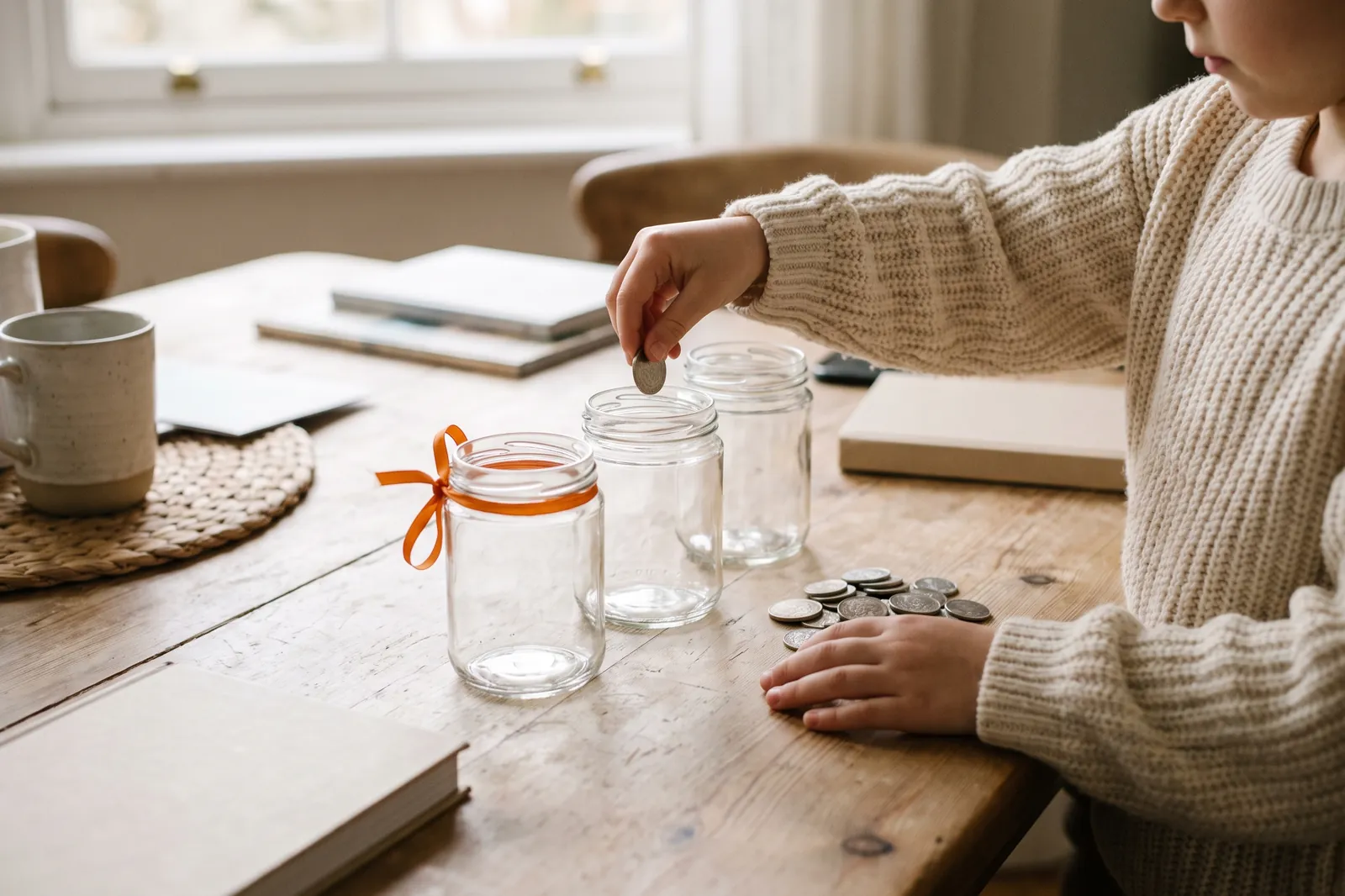
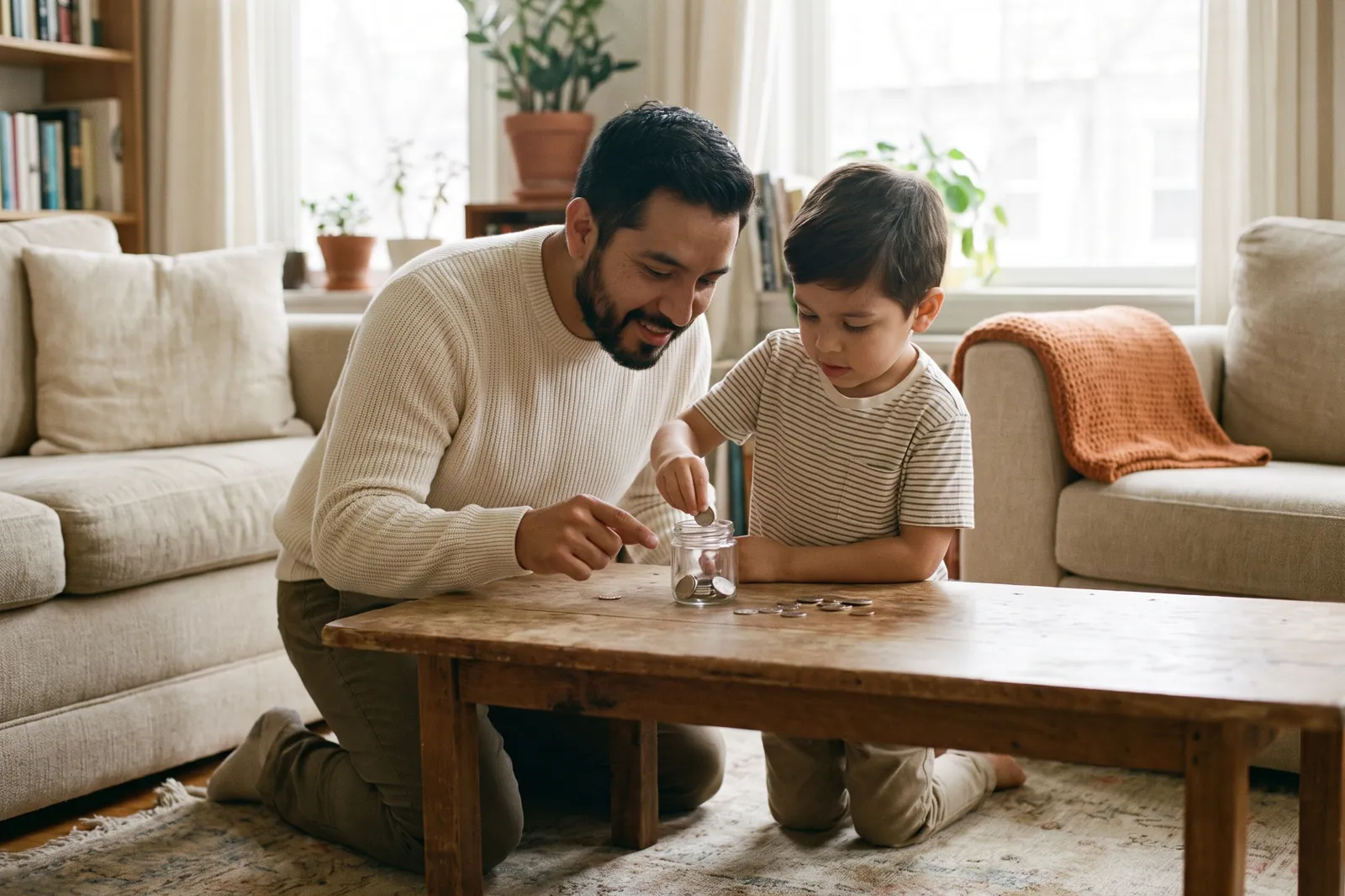
The CFPB’s suggestion for ages 3 to 5 is refreshingly simple: “Find a jar or can, and label it for saving.” A clear jar is even better, because your child can watch the coins pile up. Tape a picture of the goal to the front.
4. Track the progress
The Cambridge review suggests a savings chart where your child colors in a coin each time they add money, so they can see how much they have saved and how much is left. Draw the goal as a row of circles, one per dollar or quarter. Coloring the last one is a big moment.
5. Give them money to save
Saving needs something to save. Birthday money, coins from a grandparent, the tooth fairy or a small paid job around the house all count. Our guides to ways for kids to earn money and allowance for kids by age cover the earning side. Some families like to split every bit of money into separate jars; see save, spend, share jars.
6. Add a small match
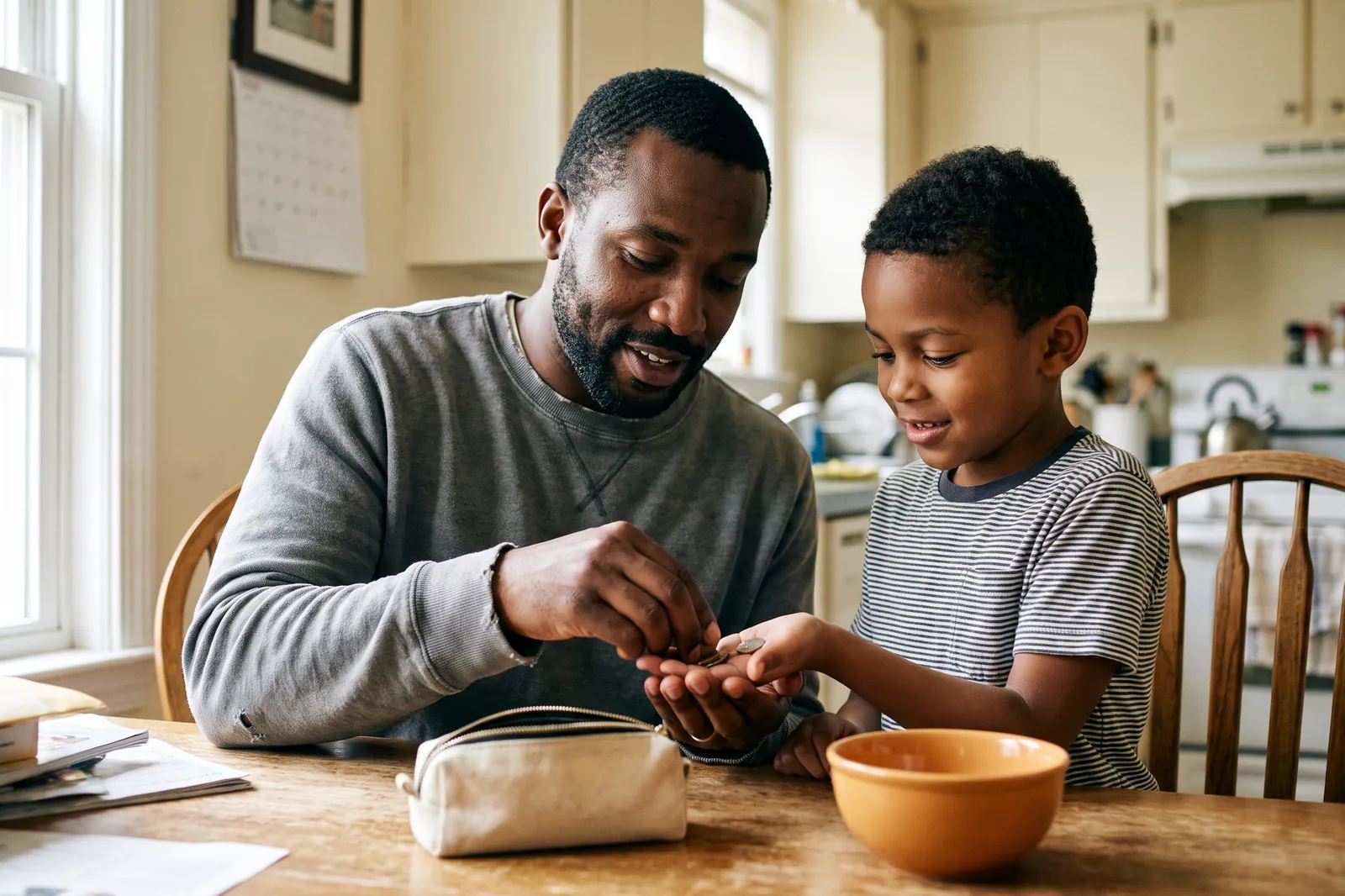
For ages 6 to 12, the CFPB suggests considering a “matching plan”: you add 25 cents for every dollar your child saves. It makes the goal arrive sooner, and it is a gentle first look at how saved money can grow. The same guidance encourages older kids to save at least a dime of every dollar they receive.
7. Let them buy it
When the jar is full, go to the store together and let your child pay. Before you do, ask once: “Do you still want it?” Sometimes the answer changes, and that is a lesson too. Either way, the payoff is what makes the next round of saving feel worth it.
Practice makes the habit
The first round may be bumpy. That is normal. In the Metcalf and Atance study, children saved significantly more on their second trial than on their first, and the older children in the study did not save significantly more than the younger ones. Saving improved with a little experience, not just with age. So run the cycle again: new goal, new jar, new chart.
What to say along the way
- “Some things are worth waiting for.” (That is the CFPB’s own conversation starter for ages 3 to 5.)
- “Look how full the jar is getting. How many more circles to color?”
- “You can spend it now, or keep saving for the ball. It’s your choice.”
- “Waiting is hard. Let’s go do something fun while the jar fills up.”
That last one matters. The Cambridge review describes research showing that children delay more easily when they have something else to think about, so planning a fun alternative together often works better than a lecture about patience. For more on the waiting itself, see our guide to delayed gratification for kids.
When they want to give up
Your child may raid the jar halfway for a candy bar. Try not to treat it as failure. A small, regretted purchase teaches more than a perfect run. Stay calm, skip the I-told-you-so, and ask what they want to do next time. If goals keep falling apart, make the next one shorter and the reward closer.
Older kids, around 7 and up, may be ready for the next step. The CFPB suggests visiting a bank or credit union together, opening a savings account with your child, and going back two or three times a year to deposit savings and watch the balance grow.
Picture books about saving
Little Critter: Just Saving My Money
Little Critter wants a new skateboard, and Dad says he needs to save his own money for it. He soon finds out that saving enough is not so easy. An early reader in a familiar series, it fits kids who are just starting their first jar.
Uncle Jed’s Barbershop
Ages 4 to 7In the segregated South, Uncle Jed is a talented barber who travels the county to cut hair and saves for the day he can open his own shop. Setbacks, from his young niece’s emergency operation to the bank failures of the Great Depression, stand between him and that shop, but he never gives up on his dream. It is a moving story about saving for something that matters, best for the older end of this range.
A Chair for My Mother and Curious George Saves His Pennies are two more classics about saving, both on our list of the best books for kids about money.
Questions parents ask
At what age should kids start saving money?
Around 3 to 5, with very short, simple goals. The CFPB suggests a labeled saving jar for this age. Expect real understanding of longer goals to grow slowly, as children get better at picturing the future between about 4 and 8.
Should my child have a piggy bank or a bank account?
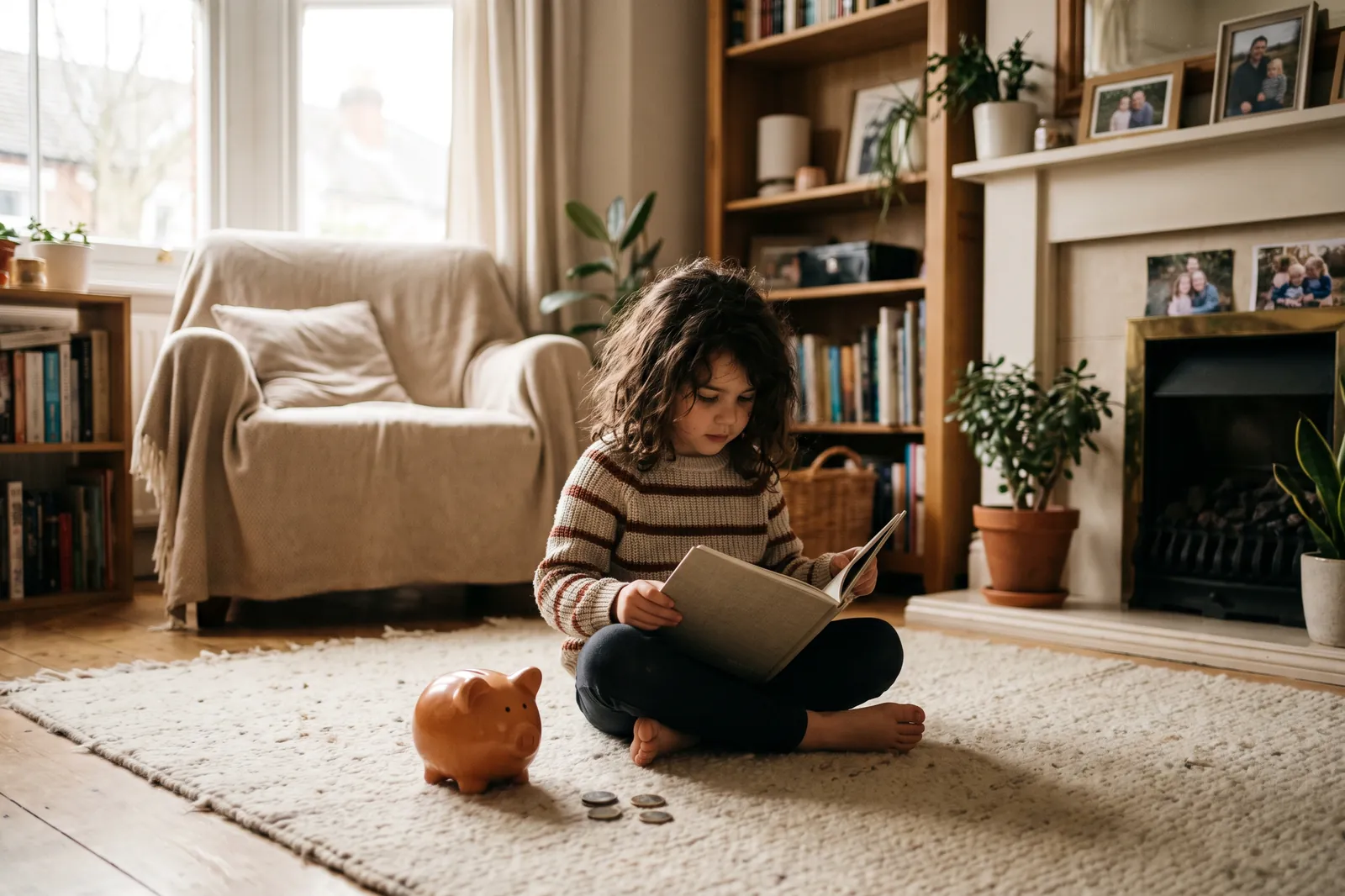
Start with something they can see, like a clear jar or piggy bank, because young children learn from watching money pile up. Around 7 and up, a savings account opened together can be a good next step, especially if you visit to make deposits.
How much of their money should a child save?
There is no single right amount. The CFPB suggests older kids save at least a dime of every dollar they receive. For a young child saving toward a specific toy, saving most or all of their money for a short time is fine.
Should I match my child’s savings?
It can help. For ages 6 to 12, the CFPB suggests a matching plan, such as adding 25 cents for every dollar your child saves. It shortens the wait and introduces the idea that saved money can grow.
Sources
- Young children and saving
- School-age children and saving
- Habit Formation and Learning in Young Children (May 2013), David Whitebread and Sue Bingham, University of Cambridge
- Do preschoolers save to benefit their future selves? (2011), Jennifer L. Metcalf and Cristina M. Atance, Cognitive Development 26(4)
- Uncle Jed's Barbershop, by Margaree King Mitchell
Written by the WonderLab Journal editorial desk and checked against the sources above. Found something out of date? Tell us through the corrections page.