How to get my child to listen without yelling
If you have asked five times and ended up shouting, you are in very good company. Why young kids tune out, and a calm routine that works better than volume.
- 01Why kids don’t listen (it’s usually not defiance)
- 02How to get my child to listen: four steps from the CDC
- 03Why yelling doesn’t work (even though it feels like it does)
- 04Fill the attention meter
- 05When your toddler won’t listen
- 06When your 5 year old won’t listen
- 07When to talk to your pediatrician
- 08Questions parents ask
- 09Sources
Get close before you speak: go to your child, get to eye level and say their name. Give one clear direction as a statement, not a question, and say what to do rather than what to stop. Then check whether they did it, follow through calmly every time and praise them when they listen. The American Academy of Pediatrics notes that yelling does not improve behavior over time, while calm, consistent follow-through and plenty of positive attention do.
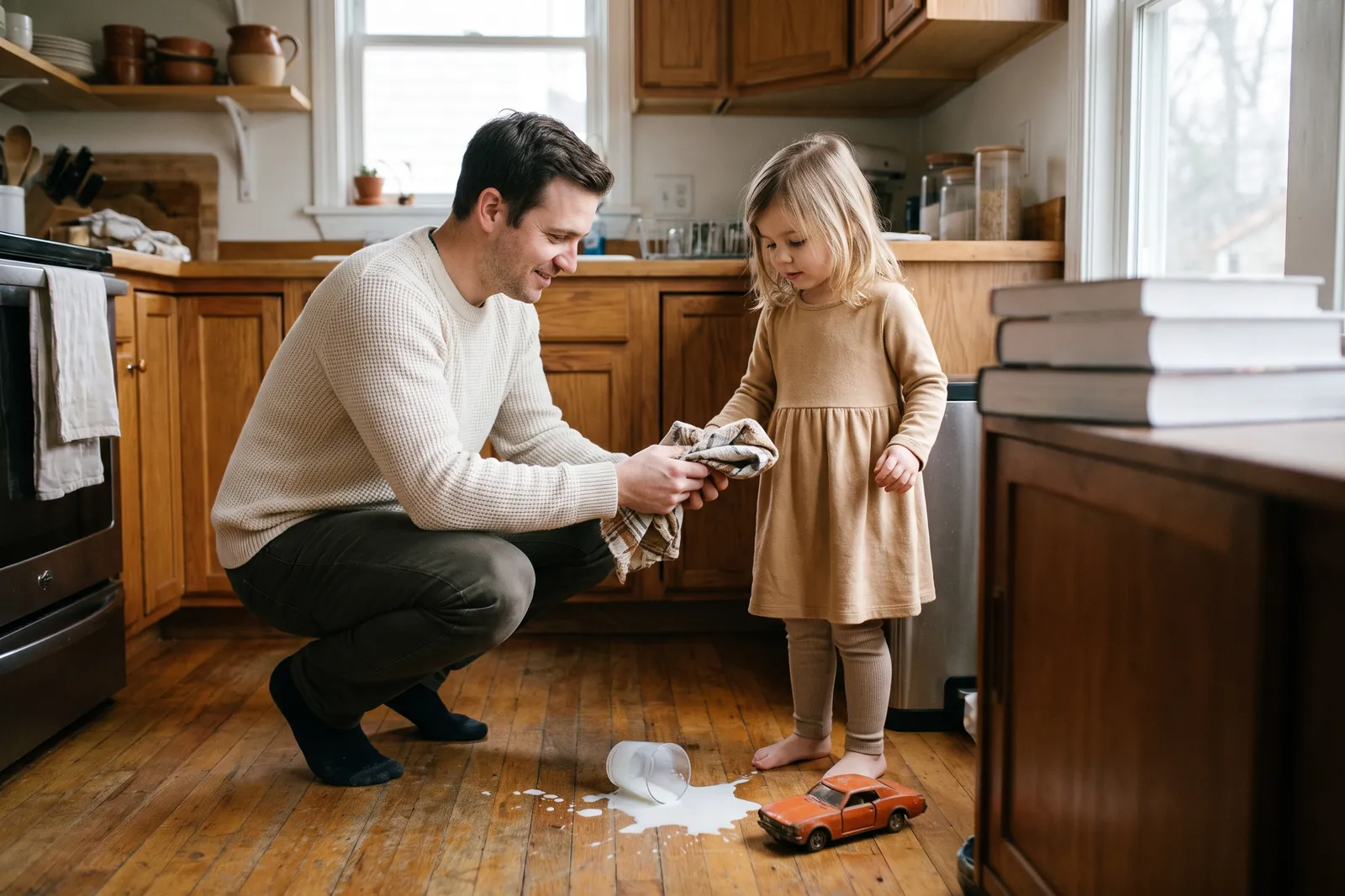
You asked nicely. Then you asked again. By the fifth time, you were yelling across the house, and they finally looked up. If you are wondering how to get my child to listen without that last step, start here: you are not a bad parent for yelling. Almost every parent does it. The American Academy of Pediatrics’ advice for those moments is gentle: cool down, apologize, explain how you will handle it next time and start over. That repair teaches your child something valuable too.
The rest of this guide is about needing to yell less often.
Why kids don’t listen (it’s usually not defiance)
- They are absorbed. A child deep in play may truly not register a voice from the next room.
- The direction was a question. “Can you put your shoes on?” sounds polite, but the CDC notes that questions invite a no.
- There were too many steps. “Go upstairs, brush your teeth, put on pajamas and pick a book” is four directions. The CDC recommends giving one at a time.
- Not listening gets attention. The AAP points out that we often leave kids alone when they behave and swoop in when they don’t. That attention can actually increase the behavior.
- Testing limits is part of growing up. The AAP describes occasional defiance as a normal way for children to discover rules and gain a sense of independence.
One more thing worth knowing: the AAP notes that a child who does not always respond when called may sometimes have a partial hearing loss, which is easy to mistake for inattention. If your child often seems not to hear you, mention it at the next checkup.
How to get my child to listen: four steps from the CDC
The CDC’s parenting guidance for 2 to 4 year olds breaks giving directions into four steps. They work well for older children too.
1. Get their attention first
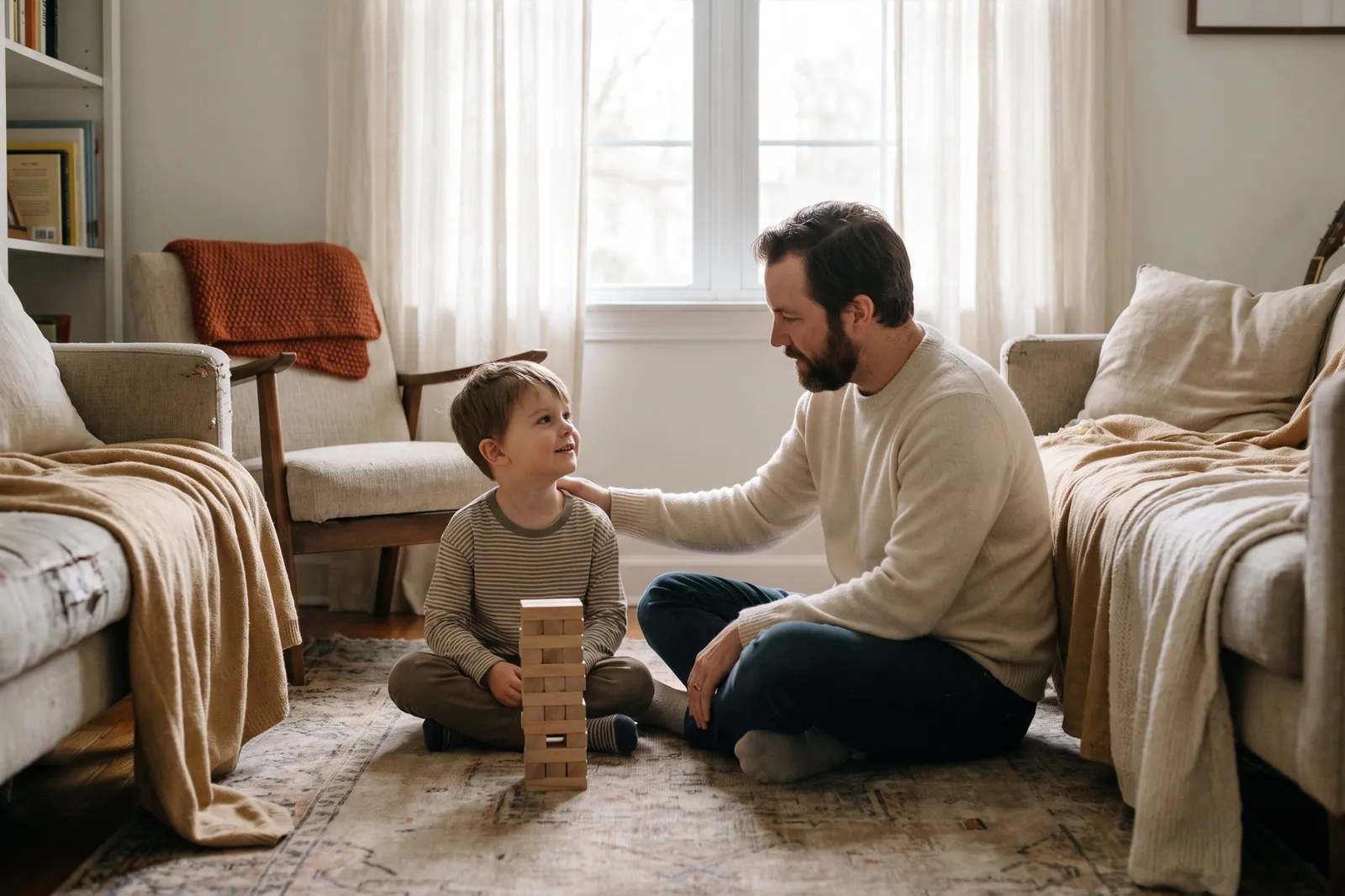
Walk over, get down to their eye level, make eye contact and use their name. One direction given up close beats five shouted from the kitchen.
2. Give one clear direction
- Make it a statement: “Please put your shoes on,” not “Can you put your shoes on?”
- Say what to do, not just what to stop: “Please walk inside” works better than “Stop running!”
- One step at a time, in a firm, calm voice, with a gesture if it helps.
- Offer a choice when you can: “The gray pants or the blue ones?”
3. Check whether they did it
Watch for a moment. If they followed the direction, great. If not, calmly repeat it once and say what will happen if they don’t. The CDC is specific that dawdling or “in a minute” counts as not following the direction, while a grumpy face as they comply can be overlooked.
4. Follow through, every time
Positive follow-through is praise or a high five: “You put your shoes on the first time I asked!” If they did not listen after the warning, follow through calmly with the consequence you named, such as losing a privilege or waiting longer for a fun activity. Consistency is what teaches children that your words mean something, so you no longer need volume to make the point.
Why yelling doesn’t work (even though it feels like it does)
Yelling often gets a child to move in the moment, which is why we keep reaching for it. But the AAP’s policy on discipline says that yelling at or shaming children is ineffective for correcting behavior over time, and that harsh verbal discipline can lead to more misbehavior. The AAP’s advice on disobedience makes the same point from the other side: children respond with more cooperation when parents stay calm, cooperative and consistent.
If you feel the yell rising, give yourself a short break, as long as your child is safe. Three slow breaths count. So does stepping into the next room for a minute.
Fill the attention meter
Children who get plenty of positive attention have less reason to collect the negative kind. The AAP suggests just five minutes of play, especially right after you get home, where your child picks the toy and leads. Describe what they are doing instead of directing it. Add frequent small moments of warmth, like a touch on the shoulder when they are playing nicely, and specific praise for listening: “Good job listening the first time!”
When your toddler won’t listen
Toddlers are still learning that words connect to actions, so keep directions very short and pair them with what you do. Zero to Three notes that it takes many, many repetitions before words alone are enough. Use your body to help: take their hand and walk them to the shoes. The AAP also suggests saving “no” for the things that matter most, like safety, and moving tempting or dangerous objects out of reach so you need it less.
When your 5 year old won’t listen
At 5, children understand far more, so explain the why behind a rule in a sentence or two. The AAP recommends clear, consistent rules explained in words your child understands, and letting preschoolers choose between acceptable options. Routines do a lot of quiet work at this age: if shoes, bag and coat happen in the same order every morning, there is less to argue about. If not listening turns into a meltdown when you hold the line, see our guide to 5 year old tantrums.
When to talk to your pediatrician
Most not-listening is ordinary childhood. Check in with your pediatrician if your child often does not respond to their name or to sounds, if defiance is a persistent pattern at both home and school, or if it comes with aggression, destructiveness or signs that your child is generally unhappy. Those are the situations the AAP flags as worth outside help.
Questions parents ask
Why won’t my child listen until I yell?
Often because the earlier requests were questions, came from across the room or were not followed through, so the yell becomes the real signal. Get close, give one clear direction as a statement and follow through calmly every time. Over time your calm voice becomes the signal instead.
How do I get my toddler to listen?
Keep directions very short and concrete, get down to their level and say their name first, and show them what you mean, such as walking them to the shoes. Zero to Three notes it takes many repetitions before words alone work. Praise every success specifically.
Is it normal for a 5 year old not to listen?
Yes, some testing of limits is a normal part of growing up, according to the American Academy of Pediatrics. Clear rules with simple reasons, predictable routines, small choices and consistent follow-through help. If defiance is constant at home and school, talk with your pediatrician.
What should I do after I yell at my child?
Cool down first, then reconnect. The AAP suggests apologizing, explaining how you will handle it next time and keeping that promise. This shows your child how to repair after a mistake. One bad moment does not undo a loving relationship.
Sources
Written by the WonderLab Journal editorial desk and checked against the sources above. Found something out of date? Tell us through the corrections page.