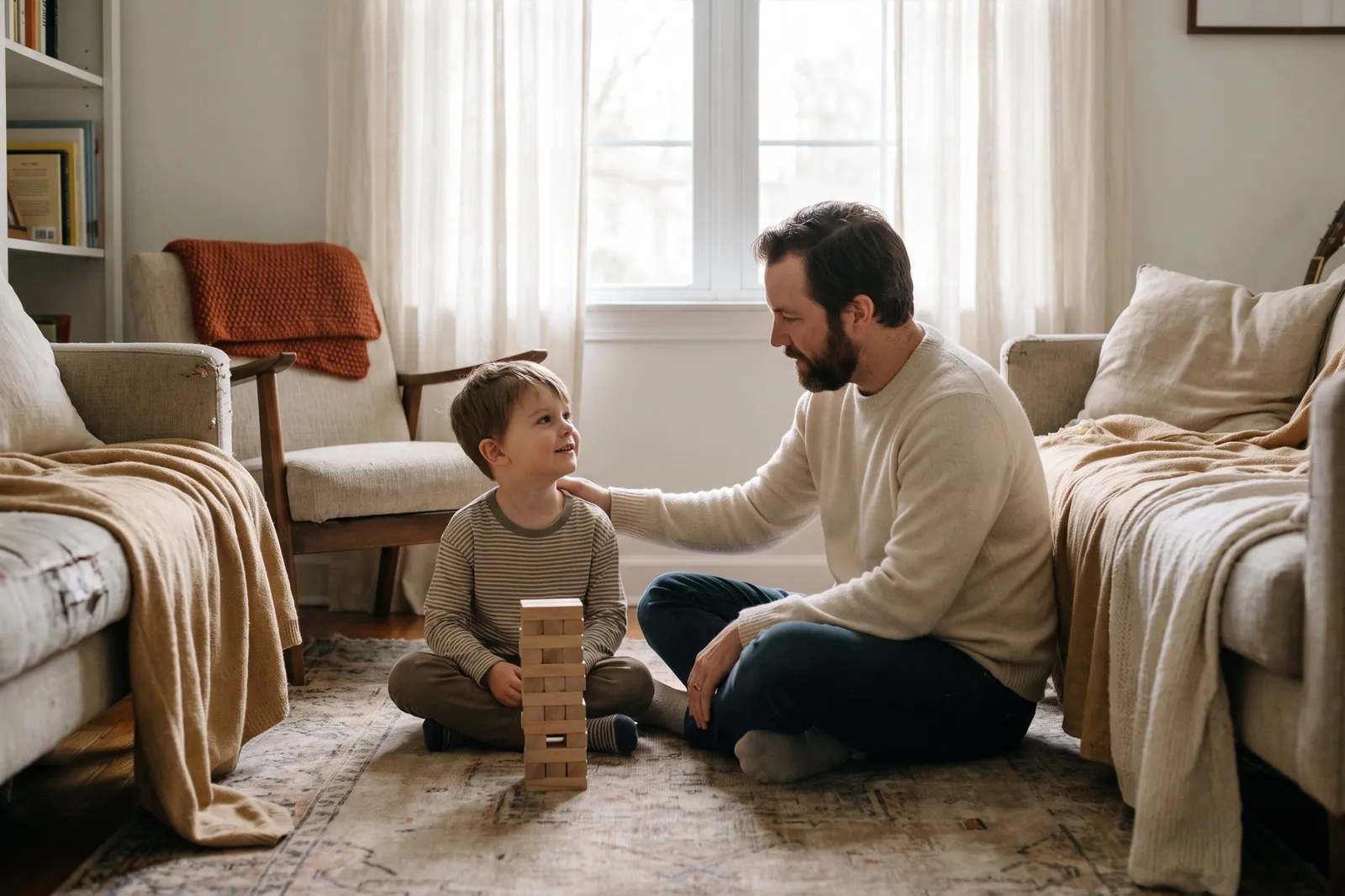
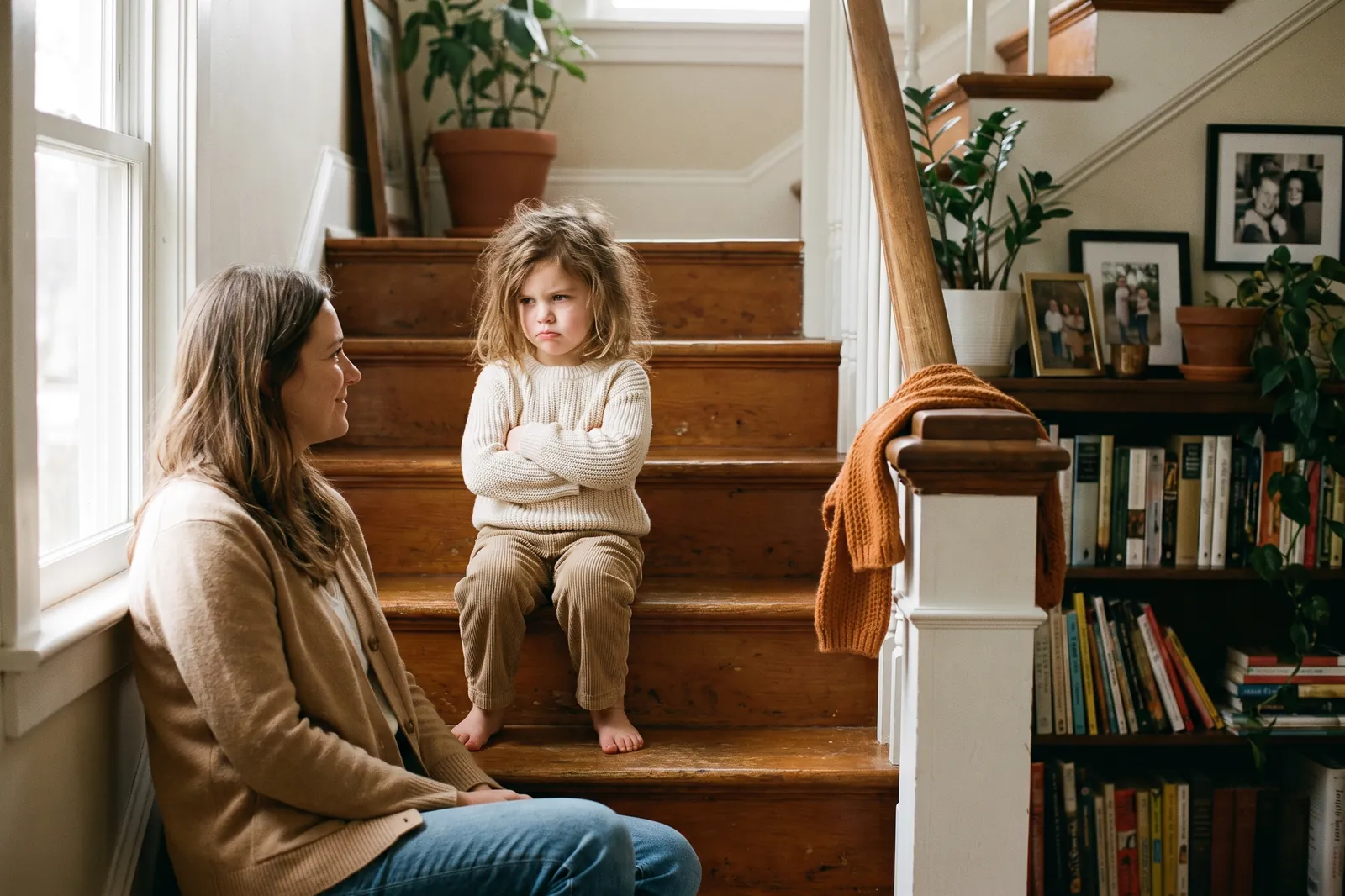
4 year old lying: is it normal, and how should you respond?
The first real fib can feel alarming. It is actually a developmental milestone. What researchers have learned about young children and lying, and how to make the truth feel safe.

- 01Is it normal for a 4 year old to lie?
- 024 year old lying and making up stories
- 03Why young kids lie
- 04How to respond when your 4 year old lies
- 05Why harsh punishment backfires
- 06Stories that praise honesty work better than scary ones
- 07What about 5 year old lying?
- 08When to get more help
- 09Questions parents ask
- 10Sources
Yes, it is normal. Lying emerges in the preschool years, and in lab studies most children aged 4 to 7 lied to cover up breaking a rule. Early lies are linked to growing thinking skills, like understanding what other people know. Respond calmly: say what you know, make telling the truth safe, thank them for honesty and model it yourself. Research suggests harsh punishment leads to more lying, not less.
The juice is on the floor, the cup is in their hand, and your child looks you in the eye and says, “I didn’t do it.” If 4 year old lying has you worried about your child’s character, here is some reassurance: it is one of the most common behaviors of the preschool years, and researchers see it as a sign of healthy development. Your job is not to stamp it out with fear. It is to make the truth feel safer than the lie.
Is it normal for a 4 year old to lie?
Yes. Psychologists Victoria Talwar and Kang Lee have studied lying in young children for decades, often with a simple game: a child is asked not to peek at a toy while the adult leaves the room. Most children peek. When the adult returns and asks, many deny it. As their 2008 paper summarizes, earlier studies found that about a third of 3 year olds lied about peeking, while the majority of children between 4 and 7 did.
Their 2008 study in Child Development found that children’s first denials were linked to two growing skills: understanding that other people can believe something different from what you know, and inhibitory control, the ability to hold back an impulse. A first lie is, in a sense, a new thinking skill being tried out.
The American Academy of Pediatrics makes a similar point from a different angle. A child who lies is showing that they know they did something wrong, and trying to avoid your disappointment shows that their conscience is working.
4 year old lying and making up stories
Not every untrue sentence is a lie. The AAP notes that children younger than 6 often have difficulty telling reality from fantasy, so the line between truth and fiction is blurry for them. At 4, imagination is in full swing: a dragon ate the broccoli, they flew to the moon at preschool, their stuffed rabbit broke the lamp.
Tall tales like these are play, not deceit, and they do not need correcting. You can gently help your child sort the two with a light question: “Is that a true story or a pretend story?” Save your attention for lies that cover up something they did.
Why young kids lie
- To avoid trouble. The AAP says that children raised in loving homes usually first lie after doing something they know is wrong, because they are afraid of disappointing you or being punished.
- Wishful thinking. “I already brushed my teeth” can be what they wish were true.
- To save face. When expectations feel very high, the AAP notes, a lie can be a child’s way of protecting themselves in a situation that feels hard.
How to respond when your 4 year old lies
1. Skip the trap
If you saw them draw on the wall, “Did you draw on the wall?” sets up a lie. Say what you know instead: “I see marker on the wall. Let’s clean it up together.”
2. Let them know you know, calmly
The AAP suggests letting your child know right away that you are aware they are not telling the truth, without a big reaction. “Hmm, I don’t think that’s what happened. Let’s try again.”
3. Make the truth the safer choice
The AAP offers two sentences worth borrowing: “I want you to tell me only the truth, and I will always tell you the truth, so that we can always believe each other.” And: “You will get in much less trouble if you tell the truth instead of lying.” Then keep that promise.
4. Thank them for the truth
When your child admits something, even after a first denial, notice it: “Thank you for telling me. That was brave.” Then deal calmly with the problem itself.
5. Fix the problem, not the child
Connect the consequence to what happened: spilled juice gets wiped up, a broken toy gets put away. A related, calm consequence teaches more than a punishment for the lie.
6. Model honesty, even the small stuff
The AAP calls your own example probably the most important way to teach honesty. Children notice the little “white lies” adults tell for convenience, like “Tell them I’m not home,” and the double standard can confuse them.
Why harsh punishment backfires
It seems logical that a big punishment would make a child think twice. Research suggests the opposite. In a 2011 study in Child Development, Talwar and Lee compared 3 and 4 year olds from two schools in West Africa, one that used harsh physical punishment and one that did not. Children from the punitive school were more likely to lie about peeking at a toy, and they were better at keeping their lies going.
In plain words: fear makes children better liars. The AAP agrees that harsh punishment is usually not very effective, and that parents who overreact can push a child to keep lying to protect themselves.
Stories that praise honesty work better than scary ones
Here is a finding parents can use at bedtime. In a 2014 study in Psychological Science, Kang Lee and colleagues read children aged 3 to 7 one of several classic stories after the peeking game. Stories that focus on the bad consequences of lying, such as Pinocchio and The Boy Who Cried Wolf, did not make children more honest. The tale of young George Washington and the cherry tree, where the boy is praised for confessing, made children about three times more likely to tell the truth.
The lesson: show what honesty earns rather than what lying costs. Our list of books about lying gathers picture books that do exactly that.
What about 5 year old lying?
Lying does not usually disappear at 5. It gets more skillful. In Talwar and Lee’s research, most 3 to 5 year olds gave themselves away by blurting out the name of the toy they claimed not to have seen, while about half of 6 and 7 year olds managed to play dumb. The AAP adds that after about age 6, children can clearly tell truth from fantasy, so lies become more deliberate. The same calm approach still works: make the truth safe, praise it and model it.
When to get more help
Occasional lying in young children is expected. The AAP suggests that a child with a long history of frequent, chronic lying should be seen by a counselor or mental health professional, because it can signal stress at home or elsewhere. If lying seems constant, or comes with other worries about your child’s behavior or mood, your pediatrician is a good first call.
Questions parents ask
Is it normal for a 4 year old to lie?
Yes. Research by Victoria Talwar and Kang Lee found that the majority of children aged 4 to 7 lied to hide a broken rule in lab games, and early lying is linked to growing thinking skills such as understanding what others know. The American Academy of Pediatrics notes that a lie shows a child’s conscience is working.
Should I punish my child for lying?
Keep it calm and connected to the problem rather than the lie. The AAP says harsh punishment is usually not very effective, and a 2011 study found that children in a punitive school lied more and more skillfully. Make telling the truth the safer choice, and thank your child when they do.
How do I know if it’s a lie or imagination?
Ask what the story is for. Tall tales about dragons or flying to the moon are play, and the AAP notes children under 6 often blur fantasy and reality. A lie usually covers something they did, like a spill or a broken rule. A gentle “Is that a true story or a pretend story?” helps.
Why does my 5 year old keep lying?
At 5, lying often becomes more frequent and more skillful as thinking skills grow, and children lie most to avoid trouble or disappointment. Respond calmly, avoid questions that set up a lie, praise honesty and model it. If lying is constant or comes with other worries, talk to your pediatrician.
Sources
- When Children Lie: What Parents Can Do
- Social and cognitive correlates of children's lying behavior (Talwar and Lee, Child Development, 2008)
- A punitive environment fosters children's dishonesty: a natural experiment (Talwar and Lee, Child Development, 2011)
- The moral of the story? Spare kids those cautionary tales (on Lee et al., Psychological Science, 2014)
- Emotional Development in Preschoolers
Written by the WonderLab Journal editorial desk and checked against the sources above. Found something out of date? Tell us through the corrections page.