4 year old won’t sleep alone? Why it happens and how to fix bedtime
Monsters, shadows, “just stay until I’m asleep.” Why sleeping alone gets hard at four and five, and a step-by-step plan that keeps everyone’s dignity intact.
In this guide
The short answer
When a 4 year old won’t sleep alone, the cause is usually a mix of new fears and a habit of falling asleep with you. Both are normal. Take the fear seriously, make the room feel safe (a night light, a comfort object), then step back gradually: sit by the bed, then by the door, then check in briefly on a schedule. A bedtime pass, one free trip out of the room per night, helped 3 to 6 year olds in a small randomized trial. Expect progress over a couple of weeks, not one night.
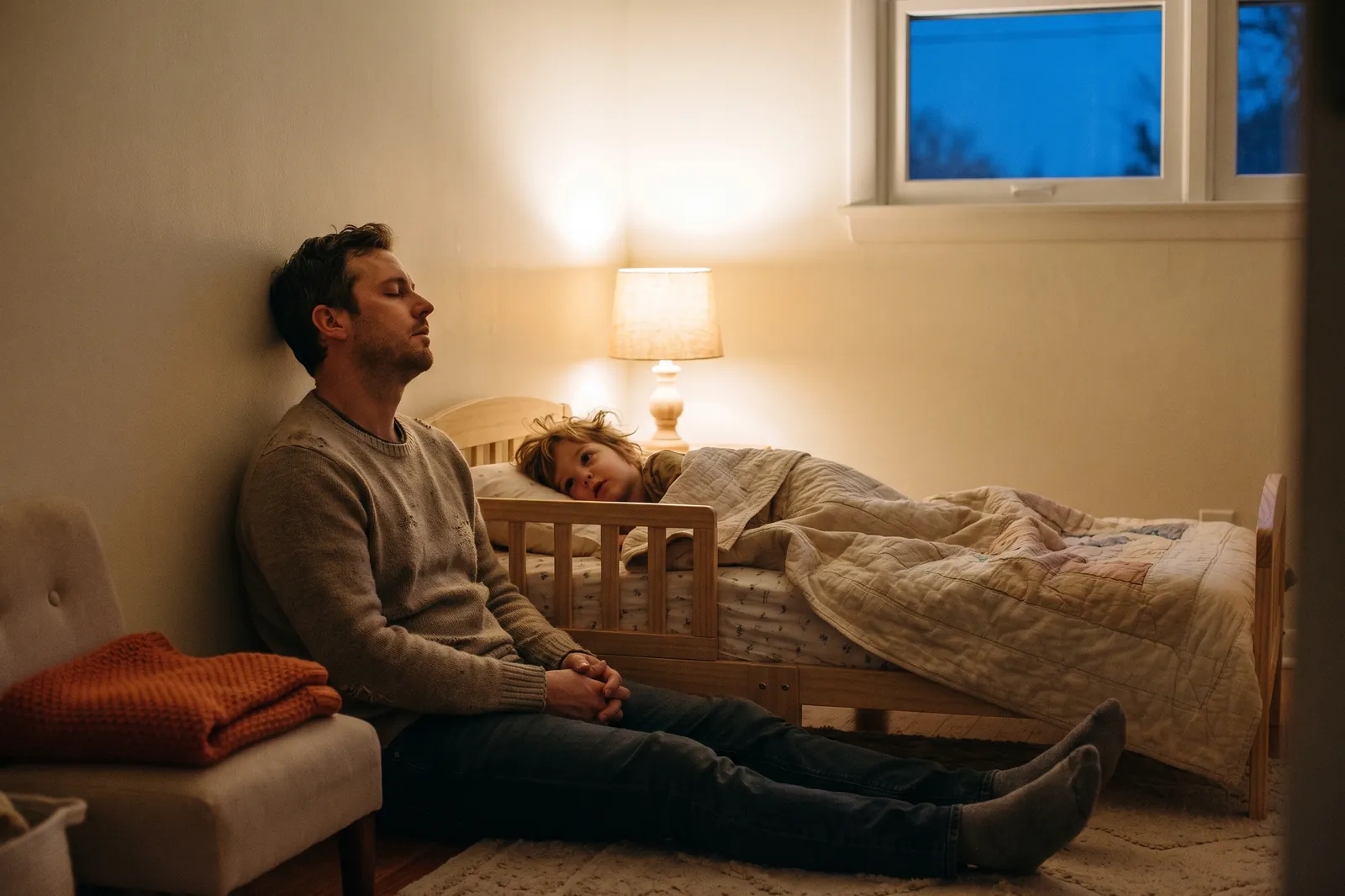
Your child slept on their own for years. Then, somewhere around four, it stopped. Now your 4 year old won’t sleep unless you lie down with them, or they appear at your bedside at midnight with a very serious face. If you are reading this at the end of a long day with a small foot in your back, here is something that might help: this is one of the most common bedtime problems there is, and it is very fixable.
This guide is about ages 4 and 5, when fears and sleeping alone become the main event. If your child is younger and the battle is getting to sleep at all, start with toddler won’t sleep.
Why your 4 year old won’t sleep alone
Their imagination has outgrown their sense of what is real
Four is a golden age for pretend play, and the same imagination that turns a box into a spaceship can turn a dark closet into something with teeth. Cincinnati Children’s Hospital puts it plainly: it is normal for young children to be afraid of the dark and of going to bed, and most children have nighttime fears at some point. Nightmares are common at this age too. HealthyChildren.org notes that they are most common between ages 3 and 12.
They have learned to fall asleep with you
If you have stayed until they drift off, even for a good reason like an illness or a move, your presence has become part of how they fall asleep. Then when they wake briefly in the night, as everyone does, they look for that same condition again. This is not a bad habit you created. It is simply how sleep associations work, and they can be changed gently.
Bedtime is when they miss you most
For a child who has been at preschool or kindergarten all day, bedtime may be the first quiet stretch with you. Some of “don’t go” is really “I’m not done being with you.” A few minutes of undivided attention earlier in the routine can take the pressure off the moment you leave.
How much sleep a 4 or 5 year old needs
The American Academy of Sleep Medicine recommends that children ages 3 to 5 sleep 10 to 13 hours per 24 hours, including naps. Many five year olds no longer nap, so most of that comes at night. If bedtime has drifted late because of the nightly negotiations, an earlier start can actually make the whole thing easier.
How to help a 4 year old sleep alone, step by step
First, a word without judgment. Plenty of families share a bed or a room happily, and if it works for yours, there is nothing to fix. This plan is for the families who would like their evenings, or their side of the bed, back. For what it is worth, the AAP’s bedtime tips for toddlers recommend that children sleep in their own bed.
1. Talk about it in the daytime
Fears feel smaller in daylight. Ask what worries them about bedtime and listen without laughing or arguing. Then make a plan together: “Starting this week, I’ll sit with you for a bit, and then you’ll practice being brave in your bed.”
2. Make the room feel safe
Cincinnati Children’s suggests a night light can help children feel secure at night, even ones who are not afraid of the dark. Let your child pick a comfort object to keep watch. HealthyChildren.org also suggests dealing with anything in the room that looks scary, like a shadow on the wall or a robe hanging on the door. Move it, and show them what it really is.
3. Keep the routine calm and the same
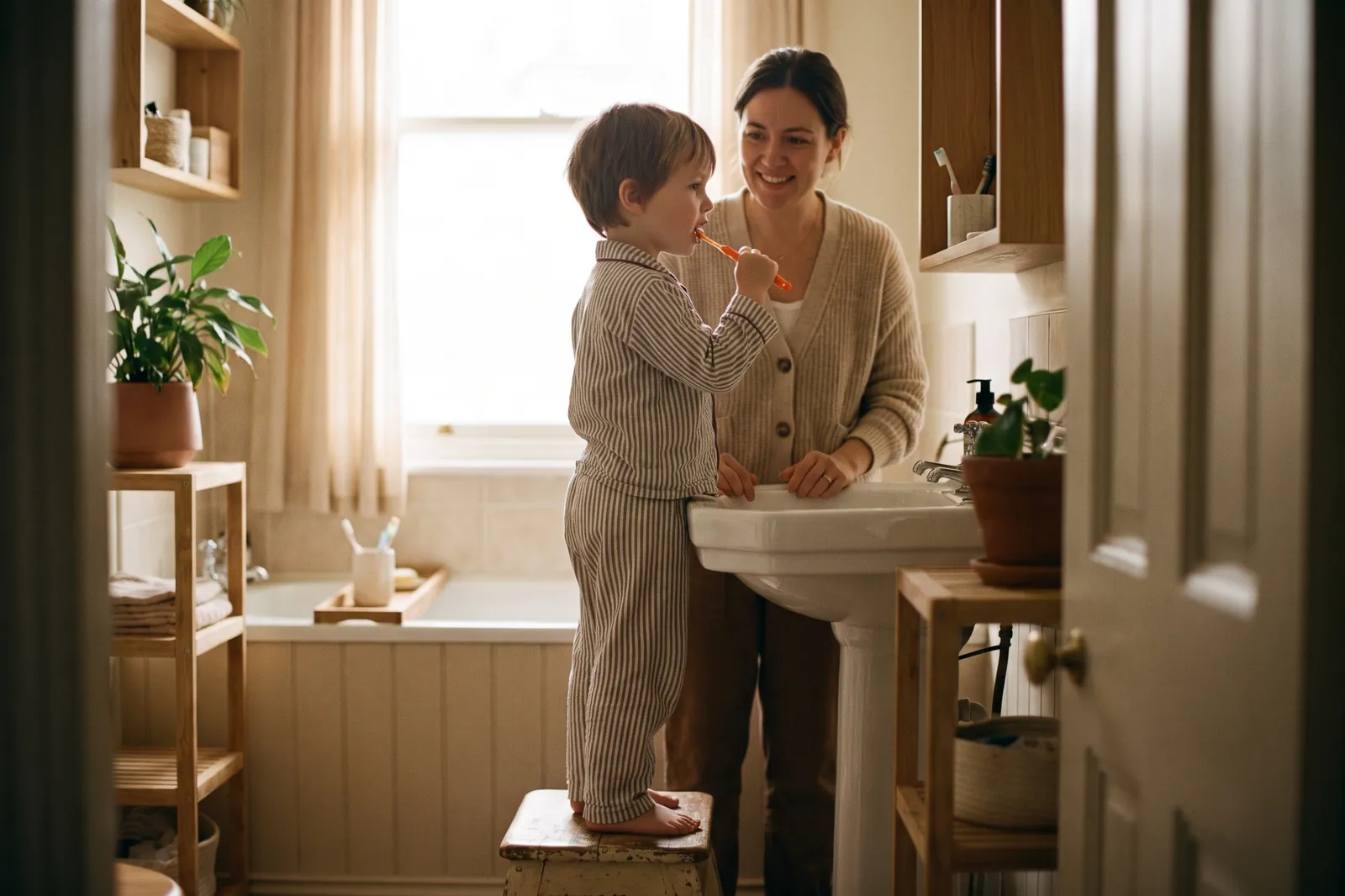
A predictable routine, ending with a book in bed, signals that sleep is coming. Cincinnati Children’s advises keeping scary shows, videos and stories away from bedtime. Our bedtime routine guide has a simple version, and our list of bedtime books includes gentle stories about the dark, like Can’t You Sleep, Little Bear? by Martin Waddell.
4. Step back gradually
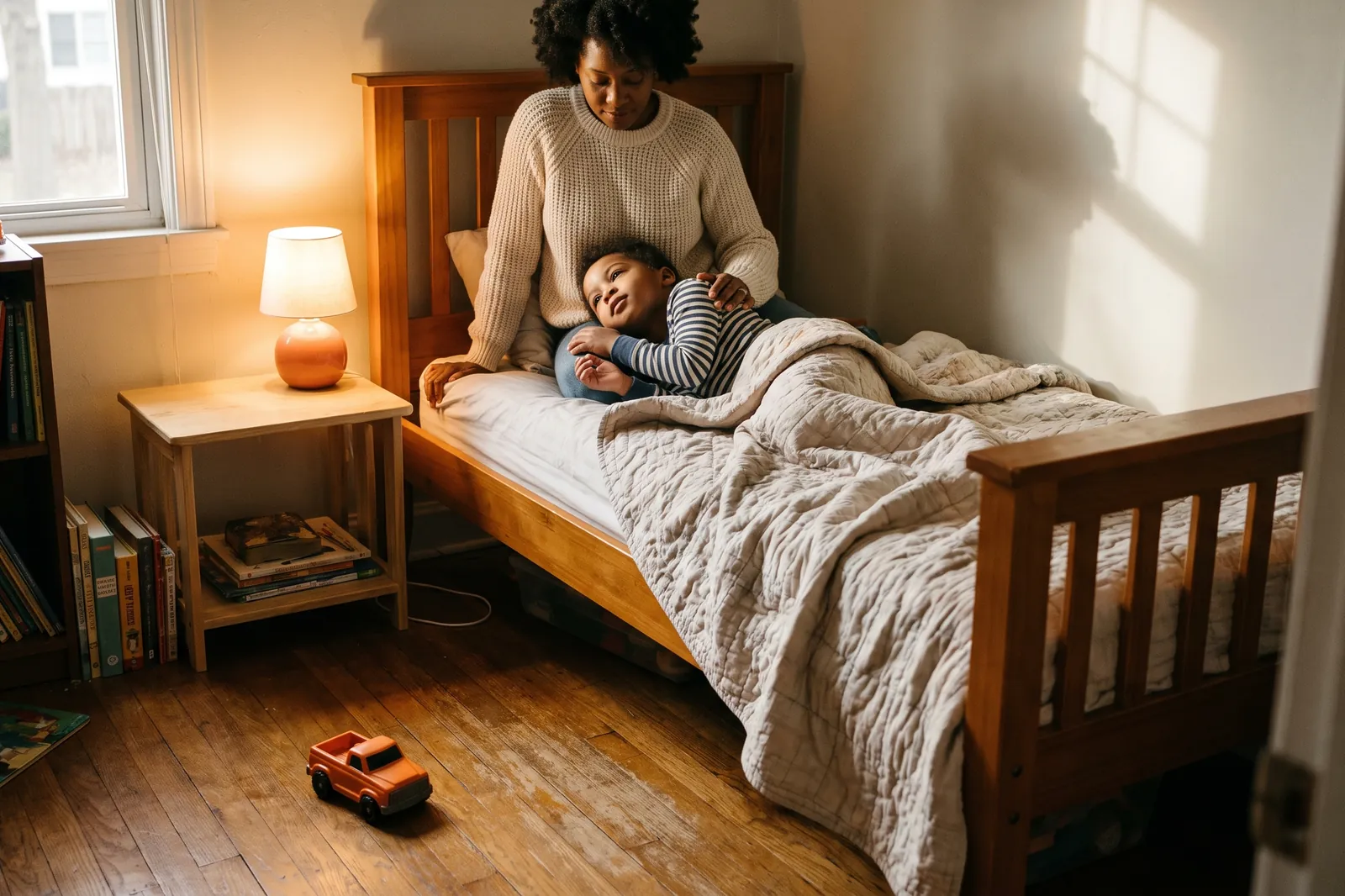
Instead of going from lying in bed with them to leaving the room, move in stages over several nights each: lie next to them, then sit on the bed, then sit in a chair by the bed, then in the doorway, then just outside it. Keep your presence calm and a little boring. The aim is for your child to fall asleep while you are slightly farther away each week.
5. Promise check-ins, and keep the promise
Many children can let you go once they know you will come back. Cincinnati Children’s describes brief check-ins at growing intervals: after 5 minutes, then 10, then 15, then 20, until your child is asleep. Keep each one short and reassuring. Children usually fall asleep while waiting for the next one.
6. Try a bedtime pass
This one has research behind it. In a randomized controlled trial with nineteen children ages 3 to 6, published in the Journal of Pediatric Psychology, children got a card they could trade for one visit from a parent or one trip out of the room after bedtime. After the pass was used, parents calmly ignored further calls. Children in the pass group left their rooms and called out much less often, and the effect held at three months. Make the pass together, keep it on the nightstand, and celebrate in the morning if it was never used.
7. Notice the brave nights
Morning is the time to celebrate: “You stayed in your bed all night. How did that feel?” Pride in their own courage is a stronger motivator for a five year old than any prize.
When a 5 year old won’t sleep without you
At five, children can describe their worries in much more detail, and new stresses often show up at bedtime first: starting kindergarten, a new sibling, a move, a grown-up conversation they overheard. If your 5 year old won’t sleep alone all of a sudden, look for what changed during the day. Talking about it in the afternoon often helps more than anything you do at night. Stories help too: our list of books about anxiety for kids has picture books that give worries a shape and a size.
If they come into your bed in the night
Decide in advance what you will do at 2 a.m., because nobody makes good decisions at 2 a.m. If you want them in their own bed, walk them back calmly, with as few words as possible, every time. It is tiring for a few nights. If they have woken from a nightmare, comfort comes first: HealthyChildren.org advises going to your child quickly, reassuring them that you are there and will not let anything harm them, and helping them settle once they are calm.
When to talk to your pediatrician
Bedtime fears at four and five are a normal part of growing up. Talk with your pediatrician if:
- the fears are severe, last for weeks despite your efforts, or also show up during the day. Cincinnati Children’s notes that persistent bedtime anxiety may be worth a professional evaluation;
- night terrors keep happening;
- your child snores loudly or seems to pause in their breathing during sleep;
- you are thinking about melatonin. The AAP says it should only be used after a discussion with your pediatrician.
Mostly, though, this is a phase with an end. One day soon you will say goodnight, walk out of the room, and realize you did not hear another word.
Questions parents ask
Is it normal for a 4 year old to not want to sleep alone?
Yes. Nighttime fears are common in young children, and four is when imagination takes off. Many children also fall asleep with a parent for a while after an illness, a move or a new sibling. Both can be changed gently, step by step.
How do I get my 5 year old to sleep in their own bed?
Talk about the plan during the day, make the room feel safe with a night light and a comfort object, and step back gradually over a couple of weeks. Brief, promised check-ins and a bedtime pass, good for one trip out per night, help many children.
Should I let my scared child sleep in my bed?
It is a family decision, and comforting a frightened child is never wrong. If you want them to sleep in their own bed, comfort them in their room instead, then walk them back calmly whenever they come to yours. Consistency for a week or two usually settles it.
What is a bedtime pass?
A card your child can trade for one visit or one trip out of the room after bedtime. Once it is used, you calmly ignore further calls. In a small randomized trial with 3 to 6 year olds, it cut down on calling out and leaving the room.
Sources
- Bedtime Fears: Helping Overcome Them Cincinnati Children's Hospital Medical Center
- Nightmares and Night Terrors in Preschoolers American Academy of Pediatrics, HealthyChildren.org
- Recommended Amount of Sleep for Pediatric Populations: A Consensus Statement of the American Academy of Sleep Medicine (2016), Paruthi S. et al., Journal of Clinical Sleep Medicine American Academy of Sleep Medicine, via PubMed Central (National Library of Medicine)
- Toddler Won't Go to Sleep? 7 Tips to Help End Bedtime Battles American Academy of Pediatrics, HealthyChildren.org
- Evaluating the Bedtime Pass Program for child resistance to bedtime: a randomized, controlled trial (2007), Moore B.A. et al., Journal of Pediatric Psychology PubMed, National Library of Medicine
- The bedtime pass: an approach to bedtime crying and leaving the room (1999), Friman P.C. et al., Archives of Pediatrics & Adolescent Medicine PubMed, National Library of Medicine
- Melatonin for Kids: What Parents Should Know About This Sleep Aid American Academy of Pediatrics, HealthyChildren.org
Links checked on October 12, 2026. Guidance changes; the publishers above keep the current version.
Written by the WonderLab Journal editorial desk and checked against the sources above. Found something out of date? Tell us through the corrections page.