How to get kids interested in reading: 12 ideas that work at home
No reading logs, no bribes. Twelve small, low-pressure ideas that make books something your child reaches for, not something they are told to do.
In this guide
The short answer
To get kids interested in reading, make books feel like a pleasure, not a task. Let them choose, keep reading aloud even after they can read, follow their obsessions, reread favorites without guilt and keep books within reach. In Scholastic’s Kids & Family Reading Report, 89% of children said their favorite books are the ones they picked out themselves.
Some children grab every book in sight. Others would rather do almost anything else. If you are wondering how to get kids interested in reading, start by taking the pressure off, for them and for you. Interest grows from enjoyment, and enjoyment grows from small, repeated good moments with books. Here are twelve ideas that fit into an ordinary week, for children from about 3 to 8.
How to get kids interested in reading: 12 ideas
1. Let them choose
This is the single biggest lever. In the seventh edition of Scholastic’s Kids & Family Reading Report, which surveyed school-age children, 89% agreed that their favorite books are the ones they picked out themselves, and 88% said they are more likely to finish a book they chose. Let your child pick at the library, even if the choice is the same truck book for the fifth week running.
2. Keep reading aloud, even after they can read
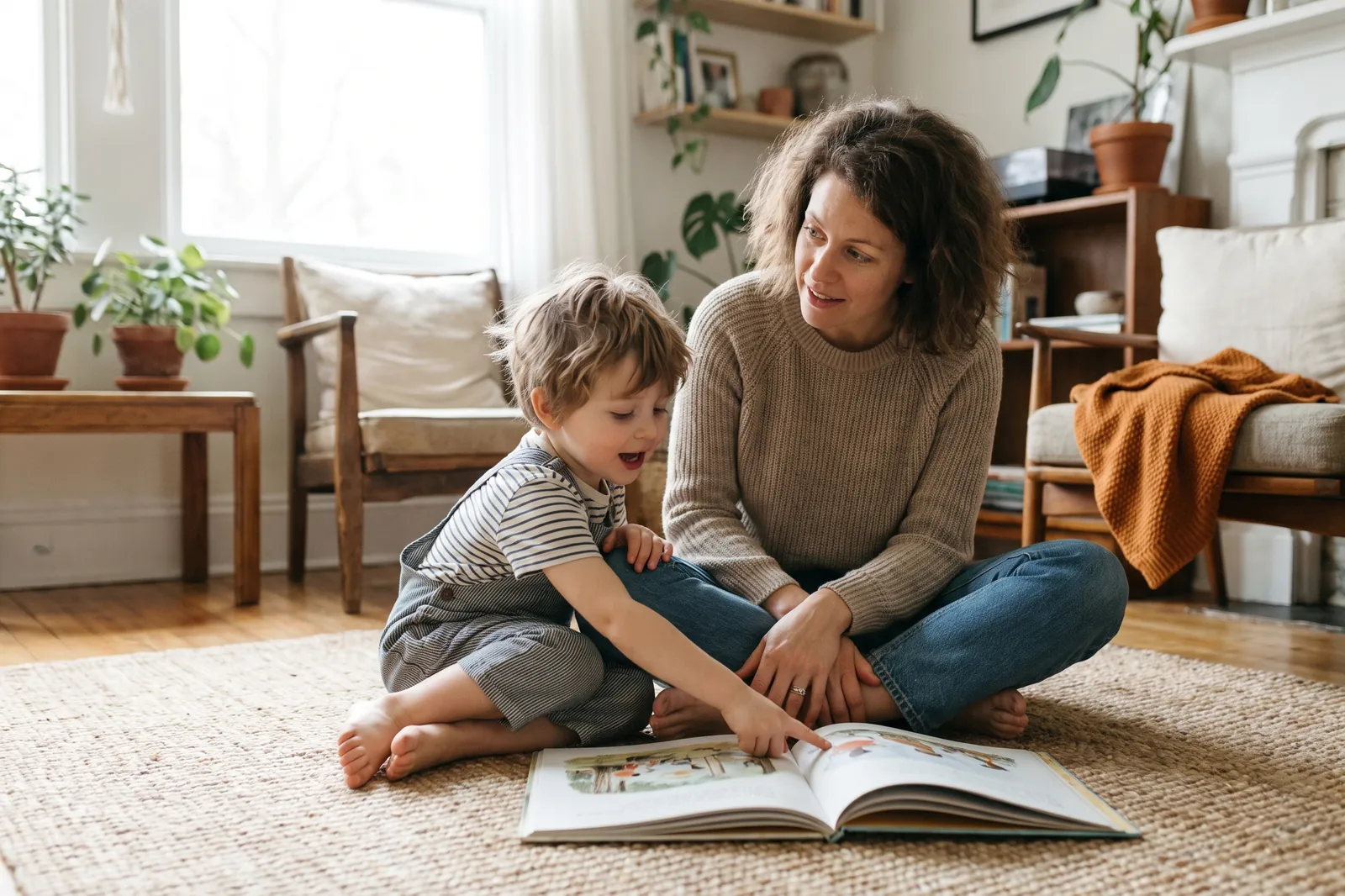
The American Academy of Pediatrics’ advice for parents is to keep reading to and with your child after they learn to read. Your reading voice can carry stories that are still too hard for them, and that is how they discover what books can be.
3. Make it part of bedtime
A book at the end of the day is predictable, cozy and yours together. Dr. Perri Klass, lead author of the AAP’s 2024 literacy statement, suggests making books part of the bedtime routine to connect and wind down. Short on time? One short book still counts.
4. Follow their obsessions
Dinosaurs, trucks, horses, sharks, ballet. The CDC’s tips for parents of 5-year-olds suggest exactly this: if your child loves animals, get library books about animals. An interest they already have is the fastest way into a book.
5. Remember that all reading is good reading
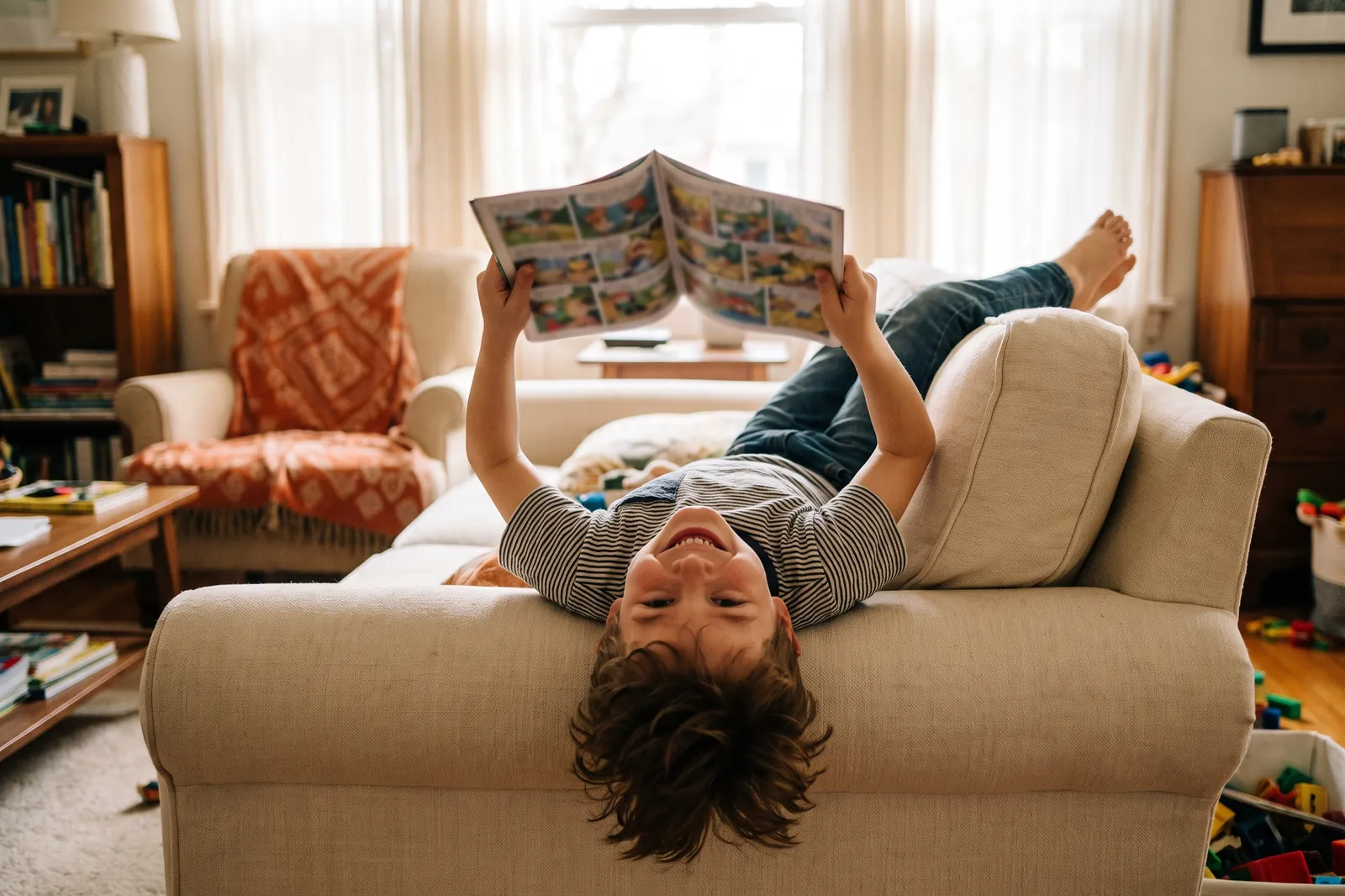
Comics, joke books, kids’ magazines, the cereal box, a cookbook in the kitchen. The AAP’s tips say anything goes. A child who loves reading jokes aloud is a child who loves reading.
6. Reread favorites without guilt
Reading the same book for the hundredth time can feel like a rut. It is not. In a 2011 study, 3-year-olds who heard the same stories repeatedly learned new words from them, while children who heard different stories with the same new words did not. Familiar books let children notice more, and the confidence of knowing what comes next is part of the fun.
7. Let them tell the story
Pause before the last word of a rhyme and let them finish it. Ask, “What’s happening in this picture?” This is the heart of dialogic reading, developed by psychologist Grover Whitehurst, in which the adult helps the child become the teller of the story. Children who get to talk tend to want to come back.
8. Get a library card
Most communities offer free library access, and many libraries run reading programs, story times and summer challenges. A library trip turns choosing books into an outing, and a stack of free books takes the worry out of picking a dud.
9. Keep books within reach
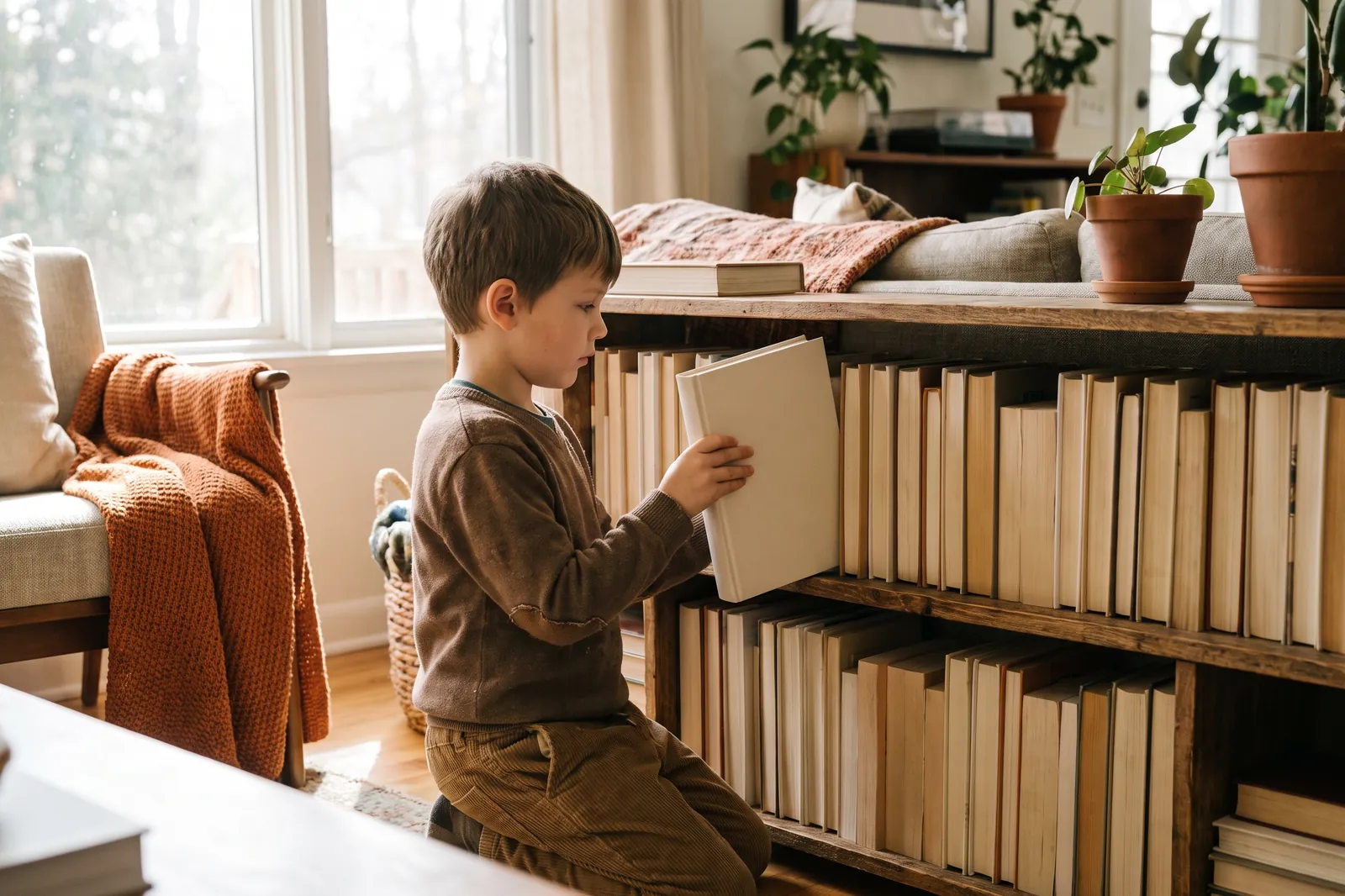
A basket by the couch, a few books in the car, a low shelf in their room. The AAP’s tips point out that when a book is always within reach, kids are more likely to pick one up, even for a few minutes. A cozy reading nook with a pillow and a lamp helps too.
10. Find a series
Characters they already know make the next book easy to start. Series are why so many children go from one early chapter book to twenty. Full disclosure, since we publish one: our Money & Business Library is a five-book sequence for ages 4 to 8 that follows money from a first dollar to a small business, built to be read in order.
11. Bring stories into the car
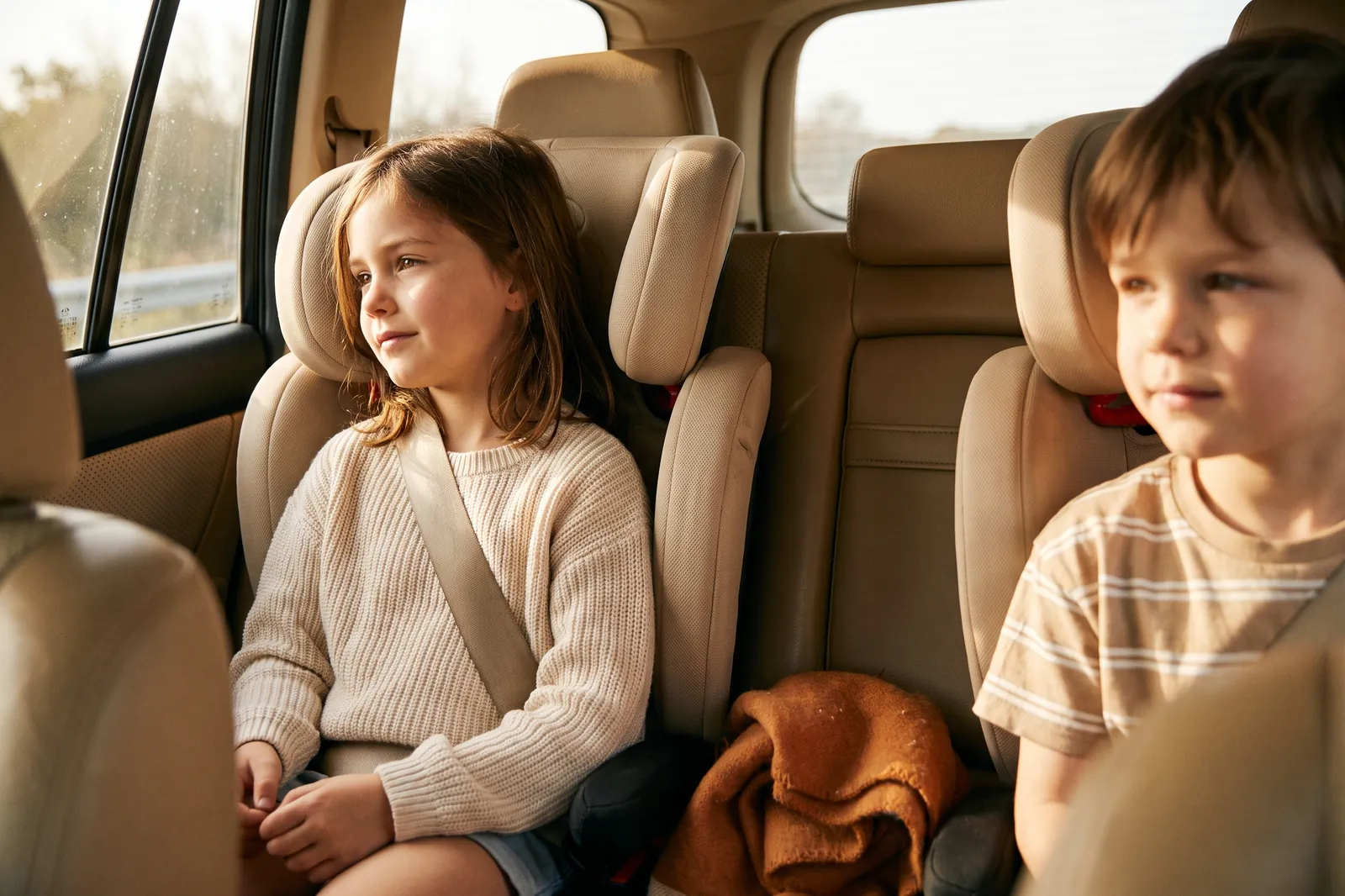
The AAP suggests taking books along for car rides and waiting rooms. On longer drives, an audiobook the whole family can hear, followed by a chat about what happened, keeps the story going when nobody’s hands are free. See our list of the best audiobooks for kids.
12. Let them see you read
The AAP’s first tip is the simplest one: if kids see you reading, they are more likely to pick up a book themselves. A novel, a magazine, a recipe: it all shows them that reading is something grown-ups choose to do.
How to make reading fun for kids, not a chore
- Stop while it is still fun. Whitehurst’s own advice on reading with young children ends with “Keep it fun.” Five happy minutes beat twenty tense ones.
- Pick funny books. In the same Scholastic report, the share of kids who want books that make them laugh rose by 10 points since 2016.
- Do the voices. You do not need to be good at it. Children love a growly giant read badly.
- Skip the quiz. A question or two about the story is a conversation. Ten is a test.
- Never use reading as a punishment. Books should never be the thing that replaces playtime after a bad day.
How to get my child to read more when they resist
Resistance is common, and it usually says more about the moment than about the child. A tired five-year-old at 8 p.m. is not rejecting books forever. Try a different time of day, a shorter book, a funnier book or a different reader, like a grandparent on a video call. Reading together still counts as reading, and for children who are just learning, it is most of the reading they will do.
Children also learn to read at different ages, and many do not read independently until first grade or later. If you have concerns about your child’s speech, hearing, attention or how they are learning to read, talk with your pediatrician or your child’s teacher. Asking early is never an overreaction. For more ideas, see our guide to books for kids who don’t like reading and our look at how many books to read to your child a day.
Questions parents ask
How do I get my child to love reading?
Make books a pleasure rather than a task. Let your child choose what to read, keep reading aloud together, follow their interests and keep books easy to reach. In Scholastic’s Kids & Family Reading Report, 89% of children said their favorite books are the ones they picked themselves.
At what age do kids get interested in reading?
Interest in books can start in babyhood, when children enjoy pictures, rhymes and a parent’s voice. The AAP recommends shared reading from birth. Interest in reading on their own often grows in kindergarten and first grade, as children start to decode words, but every child moves at their own pace.
Do comic books and graphic novels count as reading?
Yes. The AAP’s tips for parents say all reading is good reading, including comic books and kids’ magazines. Comics combine words and pictures, which can help a child follow a story and keep them coming back for more.
Should I make my child read every day?
A daily habit helps, but forcing it tends to backfire. Aim for a short, pleasant reading moment most days, often read aloud by you. If your child resists, change the time, the book or the reader rather than adding pressure.
Sources
- Kids & Family Reading Report, 7th Edition: Finding Their Story, Access Matters Scholastic
- Kids & Family Reading Report, 7th Edition (PDF) Scholastic
- 10 Tips to Help Your Child Fall in Love with Reading American Academy of Pediatrics, HealthyChildren.org
- Beyond Literacy: Shared Reading Starting at Birth Offers Lifelong Benefits (September 2024) American Academy of Pediatrics, HealthyChildren.org
- Milestones by 5 Years: tips and activities Centers for Disease Control and Prevention
- Get the Story Straight: Contextual Repetition Promotes Word Learning from Storybooks, Horst, Parsons and Bryan, 2011 Frontiers in Psychology, via PubMed Central
- Dialogic Reading: An Effective Way to Read Aloud with Young Children, by Grover J. Whitehurst Reading Rockets
Links checked on October 12, 2026. Guidance changes; the publishers above keep the current version.
Written by the WonderLab Journal editorial desk and checked against the sources above. Found something out of date? Tell us through the corrections page.