The best books for 3 year olds, picked by what they love right now
A green sheep, a grumpy monkey, a dot you can press and a monster you can send away. Picture books for the age of “again!”
The best books for 3 year olds have a pattern to predict and something to do. Start with Where Is the Green Sheep? and From Head to Toe for joining in, add Press Here and Go Away, Big Green Monster! for hands-on fun, and Grumpy Monkey or The Feelings Book for emotions. Rosie’s Walk lets them in on a joke the hen never sees.
Three is the age of “again!” Your child knows exactly which book they want, can spot the page where the dog hides and will tell you, loudly, when you skip a word. The best books for 3 year olds are built for that: a pattern to predict, a question to answer, something to touch, shout or count, and feelings big enough to matter but small enough to settle by the last page. Here are the picture books we would put on a three-year-old’s shelf, sorted by what they do best.
Every title below is a real, published book, checked against a library record or the American Library Association’s award lists. Most are easy to find at any public library.
What 3 year olds love in a book right now
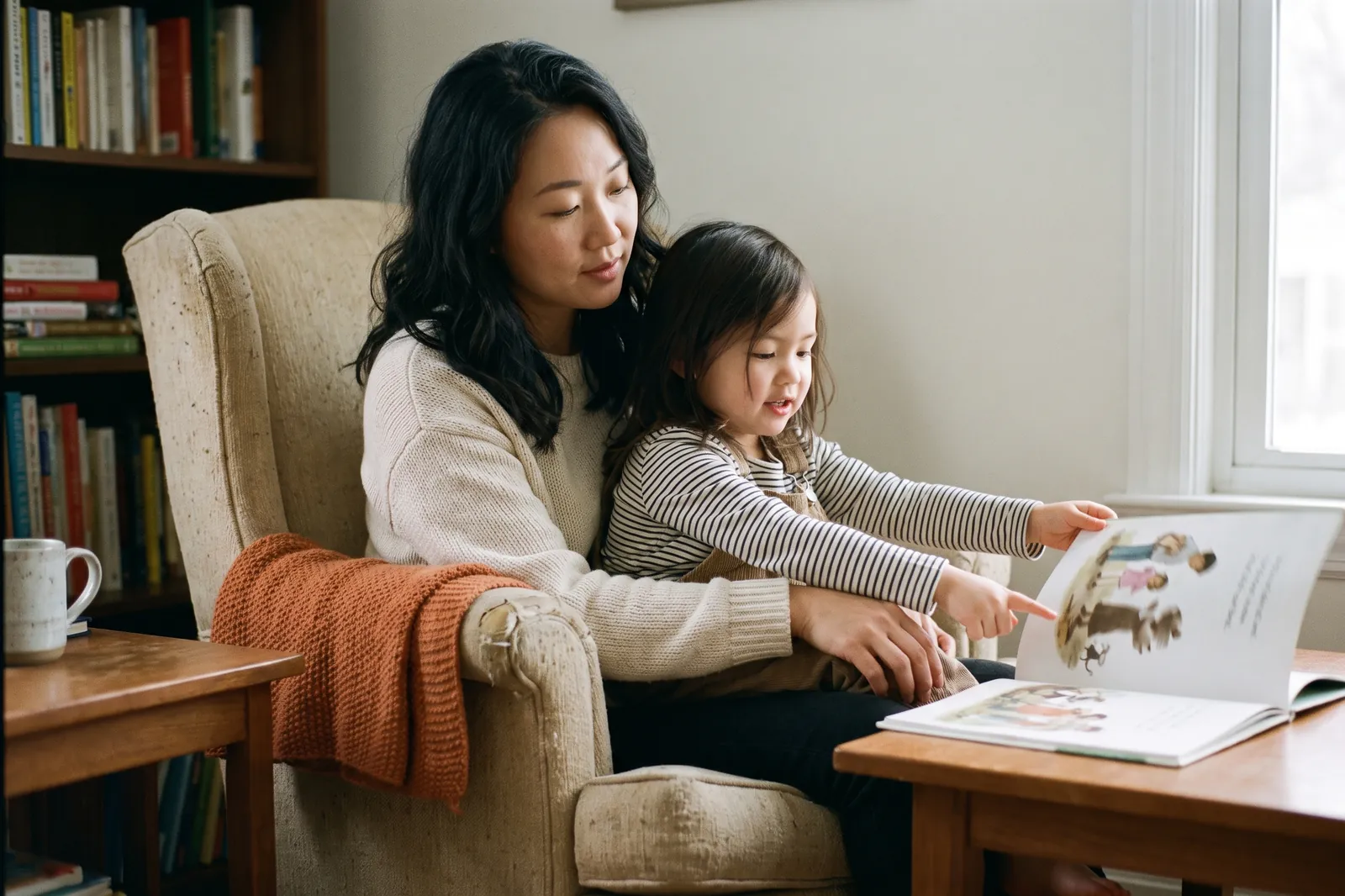
The American Academy of Pediatrics lists what a three-year-old can do with a book: name the ones they want to share, pretend to read a favorite aloud, tell you how a story is like something they have seen or done, ask questions about it, and “correct” you if you skip a word or page. The CDC’s milestones for this age include saying what action is happening in a picture or book when asked, like “running” or “eating”, and asking who, what, where and why questions. So look for:
- Patterns they can predict. A repeated question, a rhyme, a color that comes back on every page.
- Things to do. Press, shake, count, point, roar.
- Pictures with action. Something happening that they can name and talk about.
- Feelings with a name. Grumpy, scared, silly, sleepy, and how they pass.
Best books for 3 year olds who love to join in
From Head to Toe
A book to act outA giraffe bends its neck, a monkey waves its arms, an elephant stomps its foot, and each one asks the reader: can you do it? The answer, every time, is “I can do it!” Three-year-olds get up and copy every move, which makes it a great book for wiggly readers.
Where Is the Green Sheep?
Picture bookThere is a red sheep, a blue sheep, a bath sheep and a bed sheep, but where is the green sheep? The question repeats on every spread, so your child can shout it, and the answer waits quietly on the last page. Short, funny and very easy to reread.
Is Your Mama a Llama?
Rhyming picture bookLloyd the llama asks his friends whether their mamas are llamas, and each one answers in a rhyme that hints at their real mother. The last word of each answer sits on the next page, so a three-year-old can guess the animal before you turn. Guessing right never gets old.
Jamberry
Rhyming picture bookA boy and a bear go berry picking, and the rhymes tumble out: blueberries, strawberries, raspberries and more. The words are pure sound and fun to bounce on a knee. It is a happy book for the child who likes the music of language before the meaning.
Books that let them press, shake and count
Press Here
Interactive picture bookA yellow dot on the first page and an instruction: press here. Turn the page and there are two dots. Shake the book, tilt it, blow on it, and the dots seem to respond. It feels like magic to a three-year-old and works with no screen at all.
Go Away, Big Green Monster!
Die-cut picture bookWith each page a monster’s face appears piece by piece: two big yellow eyes, a long bluish-greenish nose, sharp white teeth. Then your child gets to send each piece away until the monster is gone. It hands a small child control over something scary, which is why it is a bedtime favorite.
Freight Train
Caldecott Honor, 1979A train of brightly colored cars rolls through tunnels, past cities and over trestles, faster and faster until it is gone. Very few words, lots of color and motion. Perfect for a child who stops everything when a real train goes by.
Best books for 3 year olds about emotions
Grumpy Monkey
Picture book about feelingsJim Panzee wakes up grumpy for no reason, and his friends keep telling him how to cheer up. He insists he is not grumpy, until he is very, very grumpy. A gentle, funny way to say that a bad mood is allowed and does not need fixing right away.
The Feelings Book
Picture book about feelingsBright, simple pictures and short lines about all kinds of feelings, from silly to scared to wanting to be alone. There is no plot, so it works well in small doses. Three-year-olds often point at the page that matches how they feel, which is a conversation starter all on its own.
The Pout-Pout Fish
Rhyming picture bookThe pout-pout fish is sure he is meant to be glum, and he says so in a rhyming refrain that kids love to drag out. His sea friends try to cheer him, and then a surprise changes his mind. A good one for practicing your saddest fish face together.
Simple adventures to share
Mr. Gumpy’s Outing
Picture bookMr. Gumpy sets off in his boat, and one by one the children and animals ask to come along. He says yes, as long as nobody squabbles, flaps or hops. Of course, everyone does, and into the river they all go. Then they dry off and walk home for tea. A gentle, funny story with a pattern a three-year-old can predict.
Rosie’s Walk
Picture bookRosie the hen goes for a walk around the farmyard, and a fox follows her the whole way. Rosie never notices, and every time the fox pounces, something goes wrong for him instead. The words tell one story and the pictures tell another, and three-year-olds love being the only ones who see the fox.
How to read with a 3 year old
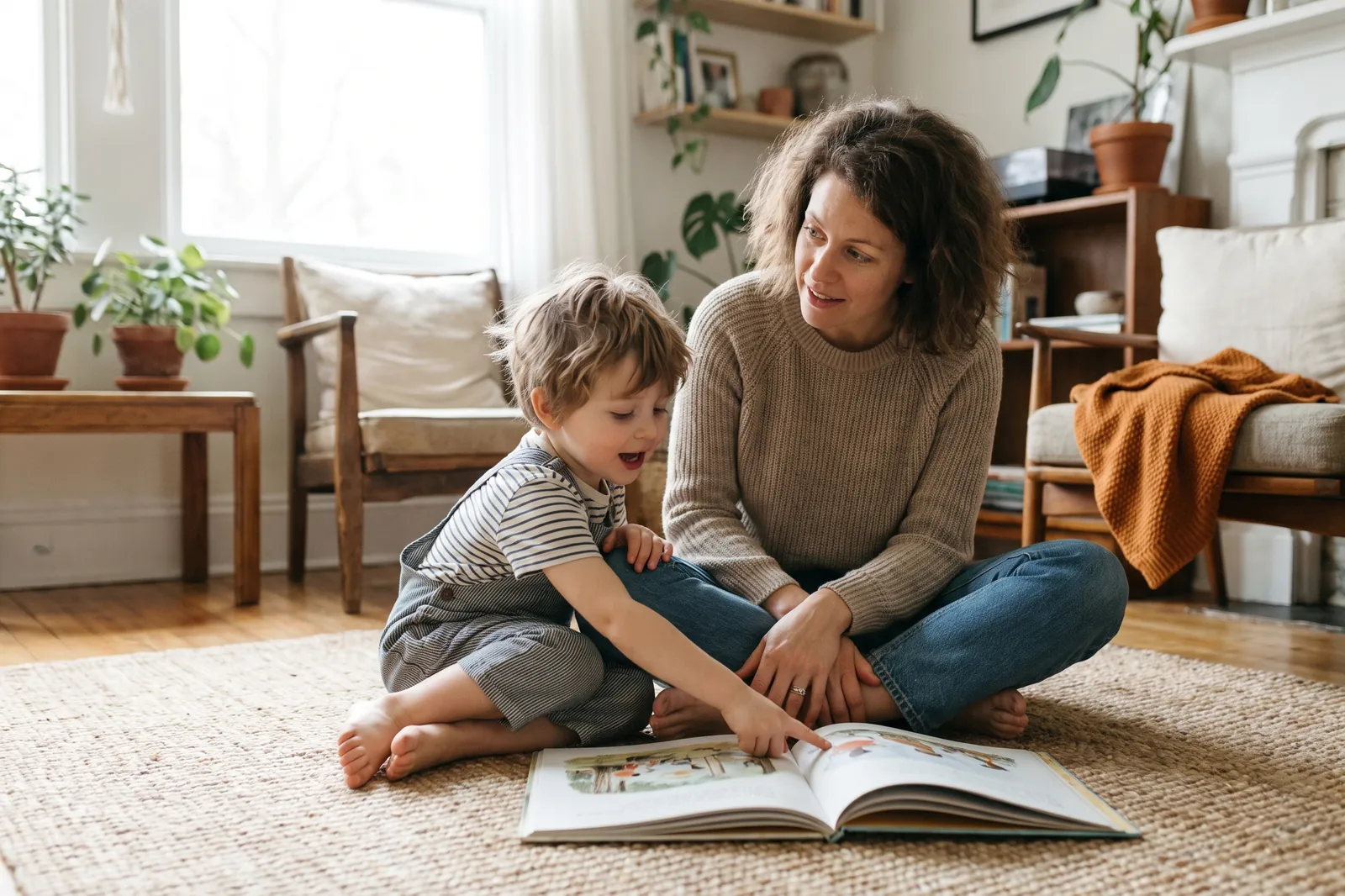
- Let them pick, and pick again. The AAP suggests letting your child name the books they want to share. If it is the same one every night, that is fine.
- Ask about the pictures. “What is the bear doing?” “Can you find all the blue things?” The second one comes straight from the AAP’s tips for this age.
- Pause for the pattern. Stop before the repeated line and let them say it.
- Keep it short and cozy. The AAP suggests setting aside 10 to 20 minutes for books, with the TV off, as part of the bedtime routine.
Every child grows at their own pace. If something about how your child talks or understands worries you, bring it up at the next checkup, or call sooner. Your pediatrician would rather hear it early.
Our own picture-book set starts at 4, so it is not on this list. When you are ready to move up, see our picks for 4 year olds, and for bedtime ideas, our guide to the best bedtime books for kids.
Questions parents ask
What kind of books are best for 3 year olds?
Short picture books with a pattern, a rhyme or a repeated question they can join in on, plus books they can touch or act out. Three-year-olds also like simple stories about feelings and pictures with clear action they can name.
What are good books for 3 year olds about emotions?
Grumpy Monkey by Suzanne Lang shows a bad mood that is allowed to pass on its own, The Feelings Book by Todd Parr names lots of feelings in bright pictures, and The Pout-Pout Fish shows a glum mood changing in a way that makes kids laugh.
How long should I read to my 3 year old?
The American Academy of Pediatrics suggests setting aside 10 to 20 minutes for sharing books, with the TV off, as part of a regular bedtime routine. Shorter is fine on busy days. What matters most is that it is a cozy habit.
Is it OK to read the same book every night?
Yes. The AAP notes that three-year-olds love to pretend to read a favorite book and will correct you if you skip a word or page. That only happens with books they have heard many times.
Sources
Written by the WonderLab Journal editorial desk and checked against the sources above. Found something out of date? Tell us through the corrections page.