The best read-aloud chapter books for 5 to 8 year olds
A boy who rescues a dragon, a mouse on a motorcycle and a cricket in the subway. Chapter books to share, one chapter a night.

In this guide
The short answer
The best read aloud chapter books start short and grow. For 5 year olds, try My Father’s Dragon by Ruth Stiles Gannett and Toys Go Out by Emily Jenkins. For first grade, The Mouse and the Motorcycle and Mr. Popper’s Penguins. For 7 and 8, The Cricket in Times Square and The Miraculous Journey of Edward Tulane.
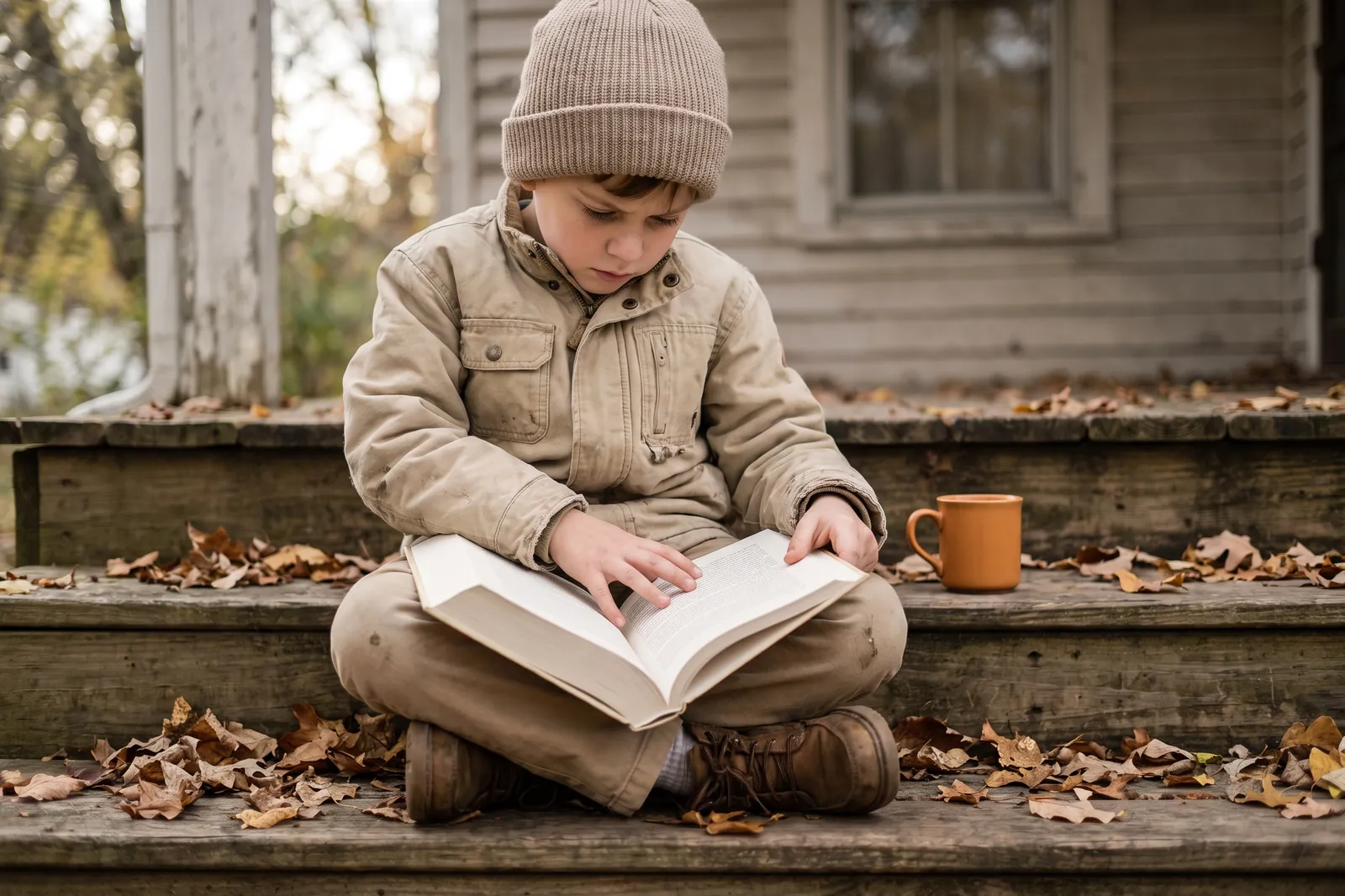
There is a moment, usually somewhere between five and eight, when a child is ready for longer stories than they can read alone. That is what the best read-aloud chapter books are for. A chapter a night, the same characters waiting tomorrow, and pictures that now live mostly in your child’s head. These are the books we would start with, from gentle first chapter books to longer classics for a seven or eight year old.
Every title below is a real, published book, checked against a library record or the American Library Association’s Newbery lists. We have noted where a story has sad or scary moments, so you can choose with your child in mind.
Why read chapter books aloud
The American Academy of Pediatrics is clear on this: the best thing parents can do to encourage a love of books is to read aloud, and not to stop once children learn to read for themselves. A chapter book read aloud lets a child follow a story well above their own reading level, live with characters for weeks, and practice imagining a scene with only a few pictures to help.
The AAP’s tips work well here too: read every day, even for a few minutes; stop and ask what your child thinks will happen next; and you don’t have to finish a book if your child loses interest.
Best read aloud chapter books for 5 year olds and up
Short chapters, lots of pictures, and nothing too frightening. Good first steps for kindergartners.
My Father’s Dragon, by Ruth Stiles Gannett, illustrated by Ruth Chrisman Gannett
Newbery Honor, 1949. Elmer Elevator runs away to Wild Island to rescue a baby dragon, packing a bag of very specific supplies, including chewing gum, lollipops and tangerines. Each wild animal he meets is outsmarted with one of them. Short chapters, a map and clever problem-solving make it a perfect first chapter book for five and up.
Toys Go Out, by Emily Jenkins, illustrated by Paul O. Zelinsky
Illustrated chapter book. Six connected stories about a little girl’s toys: a stuffed buffalo called Lumphy, a plush stingray called StingRay, and a ball called Plastic who is not sure what she is. Their adventures happen in a dark backpack, by a scary washing machine and on the little girl’s bed. Funny, tender and very easy to read in short sittings.
The World According to Humphrey, by Betty G. Birney
Chapter book. Humphrey is the class hamster in Room 26, and he goes home with a different student every weekend. From his cage he notices everyone’s problems and quietly helps solve them. Kids love the idea of a class pet who sees everything, and the series is long.
Best read aloud chapter books for 1st grade
A little longer and a little bolder. These suit six and seven year olds who are ready to sit for a full chapter.
The Mouse and the Motorcycle, by Beverly Cleary
Chapter book. Ralph is a mouse who lives in a hotel, and when a boy named Keith checks in with a toy motorcycle, Ralph learns to ride it. Then he gets into real trouble. Short chapters and a mouse-sized view of the world make it a bedtime hit.
Mr. Popper’s Penguins, by Richard and Florence Atwater
Newbery Honor, 1939. Mr. Popper is a house painter who dreams of the South Pole. Then a penguin arrives in the mail. Then a second penguin, then a lot more, and the Poppers have to find a way to pay for them all. It is old, but the slapstick still lands.
Pippi Longstocking, by Astrid Lindgren
Chapter book. Pippi is nine, lives alone with a horse and a monkey, and is the strongest girl in the world. The children next door, Tommy and Annika, cannot believe their luck. Pippi breaks every rule with total confidence, and six and seven year olds find her thrilling.
The Trumpet of the Swan, by E.B. White
Chapter book. Louis is a trumpeter swan born without a voice. His father steals a trumpet so Louis can make a sound, and Louis then has to work to pay the debt back. A gentle, funny story about honesty and finding your own voice from the author of Charlotte’s Web.
Longer classics for 7 and 8 year olds
Bigger stories with bigger feelings. Preview these, or read them together, so you can pause for questions.
The Cricket in Times Square, by George Selden, illustrated by Garth Williams
Newbery Honor, 1961. Chester Cricket arrives in New York by accident, in a picnic basket, and ends up in a subway station newsstand run by a boy named Mario’s family. With his new friends Tucker Mouse and Harry Cat, he discovers he can play music like nobody else. A lovely, city-sized adventure.
James and the Giant Peach, by Roald Dahl
Chapter book. James lives with two cruel aunts until a strange gift grows a peach as big as a house. Inside are giant insects who become his friends, and the peach rolls away to sea. Pure Dahl: funny, strange and a bit dark, so it suits kids who enjoy a little scare.
The Hundred Dresses, by Eleanor Estes
Newbery Honor, 1945. Wanda Petronski wears the same faded dress every day, yet says she has a hundred dresses at home. The other girls tease her about it, and one of them, Maddie, stays quiet when she knows she shouldn’t. Short and powerful, it leads to real talks about teasing and standing up.
The Miraculous Journey of Edward Tulane, by Kate DiCamillo, illustrated by Bagram Ibatoulline
Chapter book. Edward is a very vain china rabbit who is loved by a girl named Abilene but loves no one back. Then he is lost at sea and passes from owner to owner, and slowly learns what love is. It is beautiful and sad in places, so it is best for seven and up, read together.
How to read a chapter book aloud
- Recap first. Ask, “Where did we stop?” Remembering yesterday’s chapter is part of the fun.
- Stop on a cliffhanger. Ending at a tense moment makes tomorrow’s reading something to look forward to.
- Let them draw. Some kids listen better with crayons in hand. That is still listening.
- Don’t force it. If a book isn’t working after a few chapters, put it down and try another. The AAP says you don’t have to finish.
Picture books still have a place on the same couch, on nights when a chapter feels like too much. Our own set, The Money & Business Library, is five illustrated picture books for ages 4 to 8 (full disclosure: we publish it), and makes a shorter read for those evenings. You can see it in the box below.
For more ideas, see our guides to the best books for 7 year olds, the best audiobooks for kids for car rides, and how much to read to your child each day. Charlotte’s Web, the read-aloud many of us remember, is in our guide to gifts for grandkids.
Questions parents ask
What is a good first chapter book to read aloud to a 5 year old?
My Father’s Dragon by Ruth Stiles Gannett is a classic first choice: short chapters, a map, pictures and a clever hero. Toys Go Out by Emily Jenkins is another gentle option, made of connected stories you can read one at a time.
What are the best read aloud chapter books for 1st grade?
The Mouse and the Motorcycle by Beverly Cleary, Mr. Popper’s Penguins by Richard and Florence Atwater, Pippi Longstocking by Astrid Lindgren and The Trumpet of the Swan by E.B. White all suit six and seven year olds who can listen for a full chapter.
When should I start reading chapter books to my child?
Many children are ready to listen to a short chapter book around five, especially one with pictures. Watch for a child who can follow a story across several nights and asks what happens next. Keep picture books in the mix too.
Should I keep reading aloud after my child can read?
Yes. The American Academy of Pediatrics advises parents not to stop reading aloud once children have learned to read for themselves. Read-alouds let them enjoy stories above their own reading level.
Sources
- Tips to Help Your Child Enjoy Reading Aloud American Academy of Pediatrics, HealthyChildren.org
- Tips for Encouraging Kids to Read, by Jessica Snyder Reading Rockets
- Newbery Medal and Honor Books, 1922 to present Association for Library Service to Children, American Library Association
Links checked on October 12, 2026. Guidance changes; the publishers above keep the current version.
Written by the WonderLab Journal editorial desk and checked against the sources above. Found something out of date? Tell us through the corrections page.